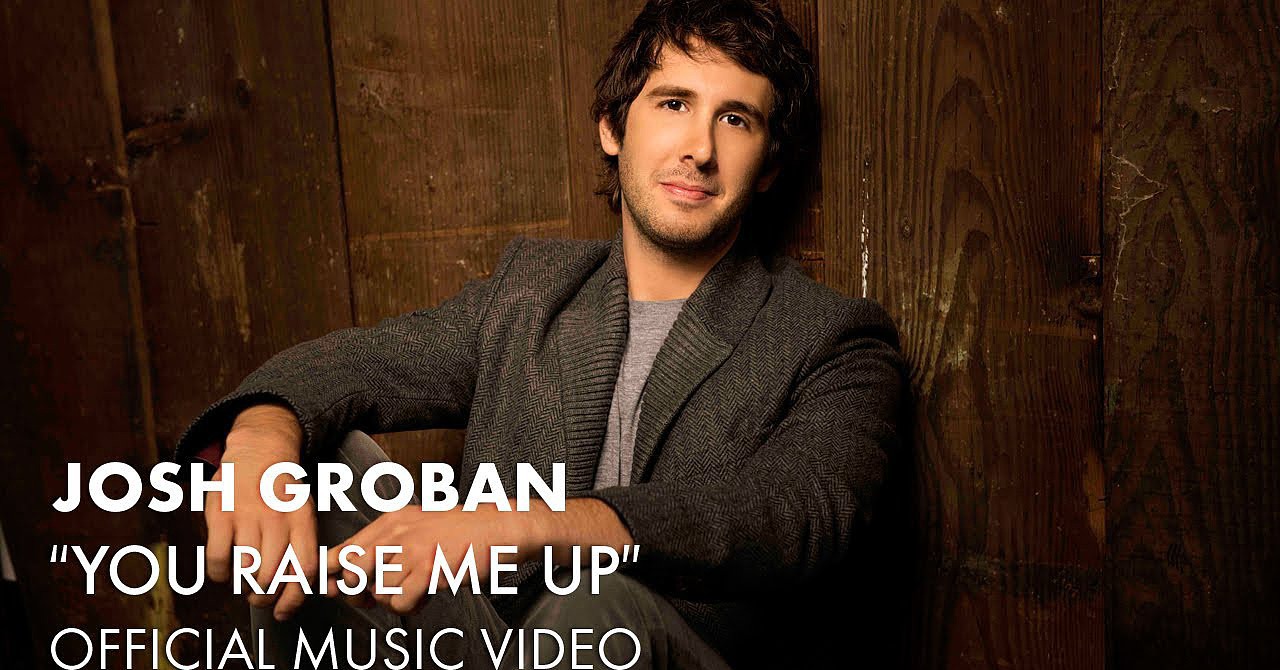
It is almost impossible to walk into a graduation, a funeral, or a high-stakes talent show without hearing those swelling violin notes. You know the ones. Then comes that voice—rich, operatic, and seemingly effortless. You Raise Me Up by Josh Groban has become the definitive modern anthem for "getting through it." But if you think this song started with Josh, or that it was an instant smash hit when it first arrived, you're actually mistaken.
The story is weirder than that.
The Irish-Norwegian Secret Behind the Song
Most people assume this is an old Irish folk hymn or something Josh Groban's team whipped up in a Los Angeles studio. Neither is true. The song was actually written by Rolf Løvland of the Norwegian duo Secret Garden. Løvland is a melodic genius—he also wrote "Nocturne," which won Eurovision—and he originally composed this piece as an instrumental titled "Silent Story."
He felt the melody needed words. He reached out to Irish novelist and songwriter Brendan Graham after reading Graham's novels. It was a bit of a "cold call" in the music world. Graham penned the lyrics in 2001. Secret Garden released it featuring singer Brian Kennedy, and while it did okay in Ireland and Norway, it didn't set the world on fire. It was a sleeper.
Then came David Foster.
The legendary producer heard the track and realized it was the perfect vehicle for his new protégé, a curly-haired kid from California named Josh Groban. Josh was young. He was still finding his footing between the worlds of pop and classical. When You Raise Me Up by Josh Groban dropped as part of his 2003 album Closer, something shifted. It wasn't just a cover; it became the definitive version that basically erased the memory of the original for most listeners.
Why the Song Actually Works (Musically Speaking)
Have you ever noticed how the song feels like it’s physically lifting you? That isn't just your imagination or the lyrics. It’s the modulation.
In music theory, moving from one key to a higher one is a classic trick to increase emotional tension. You Raise Me Up does this masterfully. It starts in a grounded, humble place. Josh’s lower register is warm, almost conversational. As the choir kicks in—specifically the African Children's Choir in some of the most famous live performances—the key jumps. Then it jumps again.
By the time he hits the final chorus, he’s singing a full step or more higher than where he started. It creates a literal sense of "raising."
Honestly, the lyrics are remarkably simple. "I am still and wait here in the silence / Until you come and sit awhile with me." There’s no complex metaphor. No poetic gymnastics. It taps into a primal human need for support. Whether you interpret the "You" as a deity, a parent, a spouse, or a mentor, the song acts as a blank canvas for your own grief or gratitude.
The Billboard Struggle and the "Mom" Factor
You might think a song this famous was a #1 hit on the Billboard Hot 100. It wasn't. Believe it or not, it only peaked at #73 on the main Hot 100 chart.
Wait. How?
The song lived—and thrived—on the Adult Contemporary (AC) charts. It spent weeks at #1 there. It was the kind of song that didn't need teenager-driven radio play or MTV rotations to survive. It spread through word of mouth, church services, and talk shows. Oprah Winfrey loved it. When Oprah loves a song, the song becomes a permanent fixture of the American cultural psyche.
Josh Groban once mentioned in an interview that he initially worried the song might be "too sentimental." It’s a valid fear. There is a fine line between "moving" and "cheesy." But Groban’s vocal delivery is what saved it. He doesn't over-sing the beginning. He waits. He builds. That restraint is what makes the payoff at the end feel earned rather than forced.
The Westlife Connection and Over 125 Covers
While we're talking about You Raise Me Up by Josh Groban, we have to acknowledge the competition. Shortly after Josh made it a hit in the U.S., the Irish boy band Westlife released their version. In the UK and Ireland, their version is often the one people think of first. It went straight to #1 in the UK.
Since then, the song has been covered over 125 times by artists ranging from Aretha Franklin to Selena Gomez. It’s become a "standard." In the music industry, a "standard" is a song that transcends the artist who first made it famous. It belongs to the public now.
Common Misconceptions
- Is it a religious hymn? Not originally. Brendan Graham wrote it as a secular piece of poetry, but its themes of being "raised up" by a higher power made it a natural fit for contemporary Christian music (CCM) circles.
- Did Josh Groban write it? No. He has never claimed to, but his arrangement is the one most subsequent covers try to emulate.
- Was it a movie theme? Not initially, though it has been used in countless TV shows and films since. Its cinematic quality makes it a "go-to" for music supervisors looking for an emotional climax.
The Viral Moments That Kept It Alive
In the age of YouTube and TikTok, the song has found a second (and third) life. There is a very specific "Groban Effect" where people film themselves or others singing the high notes in stairwells or empty churches because of the natural reverb.
One of the most powerful moments in the song's history didn't even happen in a recording studio. It was Josh performing it at the Super Bowl XXXVIII halftime show as a tribute to the crew of the Space Shuttle Columbia. That performance cemented the song as a "healing" track. It moved from being a pop song to a piece of national service.
How to Lean Into the Song’s Impact
If you are a musician or a choir director looking to tackle this track, or just a fan who wants to appreciate it more, there are a few things to keep in mind.
First, the tempo is everything. If you rush it, you lose the "waiting in the silence" vibe of the first verse. It has to feel heavy at the start.
Second, pay attention to the bagpipes or the violin in the bridge. That Celtic influence isn't just for flavor; it’s a nod to the song’s roots in Løvland and Graham’s heritage. It provides a texture that breaks up the "pop" feel and makes it feel ancient and grounded.
Practical Next Steps for Fans and Musicians:
- Listen to the Secret Garden original: Check out the 2001 version to hear the "raw" melody before the David Foster "wall of sound" production was added. It’s much more minimalist.
- Analyze the Lyrics for Personal Use: If you're using this for an event, focus on the second verse. It's often skipped in shorter radio edits but contains the "no life, no life without its hunger" line, which is arguably the most profound part of the lyrics.
- Vocal Tip: If you're singing it, don't try to compete with Josh's "money note" at the end. Focus on the breath control in the first four lines. That’s where the real emotional connection happens.
- Explore the "Josh Groban Live at the Greek" Version: This 2004 recording is widely considered the best live capture of the song’s power.
The legacy of this track isn't just about record sales. It’s about the fact that 20 years later, when someone is feeling "weary" and their "soul is burdened," this is the specific combination of notes they turn to. It’s a rare piece of music that actually does what its title claims.