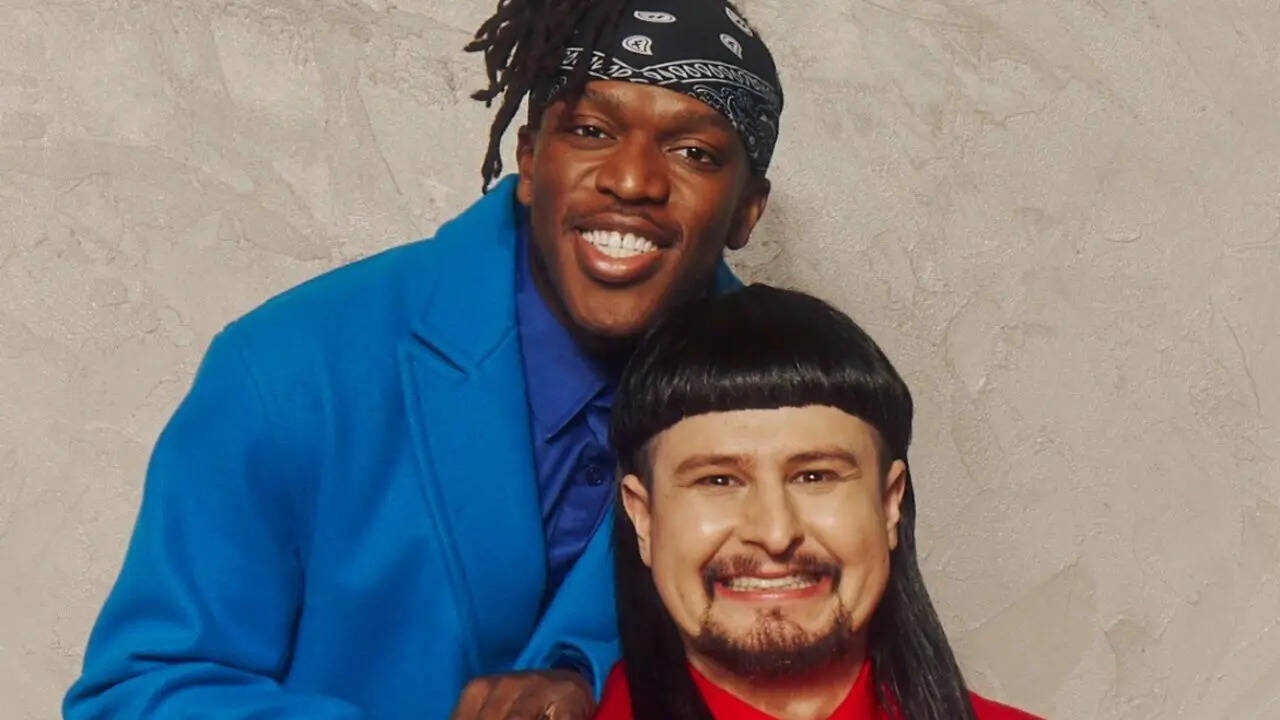
You’ve heard it. Maybe it was in a TikTok comment section where someone tried to cook a five-star meal in a dorm room and failed miserably. Or perhaps it was shouted during a pickup basketball game after a particularly embarrassing crossover. You not built for these streets son is more than just a meme; it’s a cultural litmus test. It’s a verbal "stop sign" used to tell someone they lack the grit, the experience, or the sheer audacity required for the situation they’ve stumbled into.
Honestly, it’s hilarious because of how versatile it is. You can use it for something as serious as a botched business deal or as trivial as someone complaining that their oat milk latte is too hot.
But where did it actually come from? Most people think it just appeared out of thin air on Twitter circa 2020. That's not really how slang works. Language is a slow burn. This specific phrase is deeply rooted in AAVE (African American Vernacular English) and the "street" archetype of 90s and 2000s cinema. When you say someone isn't "built" for something, you’re talking about their internal architecture—their character. You’re saying they’re fragile.
The Anatomy of Being Built Different
The phrase functions on a binary. You’re either "built for this" or you’re not. There’s no middle ground. In the context of "these streets," the word "streets" is often metaphorical. It represents any high-pressure environment where the rules are unwritten and the consequences for failure are immediate.
Think about the 2002 film Paid in Full. While the exact seven-word phrase might not be the central slogan of the movie, the energy is everywhere. It’s the vibe of Mitch telling someone they don't have the heart for the game. It’s about "the life." When modern internet culture hijacked the phrase, it stripped away the literal danger of the drug trade and replaced it with the "danger" of social embarrassment.
People use it now to gatekeep. And I don’t mean that in a bad way. Gatekeeping can be a survival mechanism for a subculture. If everyone can claim they’re "from the streets," the term loses its weight. So, "you not built for these streets son" acts as a humorous corrective. It’s a way of saying, "Stick to your day job, buddy."
Why the "Son" at the End Matters
The "son" is the kicker. It’s patronizing. It’s a linguistic "pat on the head." By calling a grown adult "son," you’re instantly establishing a hierarchy. You are the elder, the experienced one, the one who has seen the pavement crack and lived to tell about it. They are the novice.
The Viral Lifecycle of "You Not Built For These Streets Son"
It’s hard to pinpoint one single "patient zero" for the meme’s explosion, but the 2020-2021 era of social media was the perfect breeding ground. During the lockdowns, people were bored. They were looking for ways to express that others were "doing too much."
Then came the voiceovers.
On platforms like TikTok and Instagram Reels, creators began using various "tough guy" audio clips to narrate mundane failures. A golden retriever failing to catch a ball? You not built for these streets son. A tech bro trying to explain why crypto is the future while his portfolio is down 90%? You not built for these streets son. It became a shorthand for "stop kidding yourself."
The Real-World Application (And Why It’s Not Just a Joke)
In sports, this phrase is a weapon. Look at someone like Patrick Beverley or Draymond Green. Their entire careers are built on the premise that the person they are guarding—no matter how talented—is fundamentally "not built" for the physical and mental grind of a high-stakes playoff game. They are trying to prove that the opponent will fold under pressure.
There is a psychological element here called Resilience Theory. In academic circles, researchers like Dr. Ann Masten study what makes people "buoyant" in the face of adversity. While she probably wouldn't use the phrase "built for the streets" in a peer-reviewed journal, the concept is the same. Some people have developed "regulatory capacities"—the ability to stay calm when things go south. If you lack those, well, you know the line.
What Most People Get Wrong About the Phrase
A lot of people think the phrase is about being "tough" in a physical sense. It’s not. It’s about discretion and awareness.
Someone who is "built for the streets" knows when to talk and when to listen. They know how to read a room. They understand that every action has a reaction. The person who gets told they aren't built for it is usually the one being loud, flashy, and oblivious to the risks around them.
- Misconception 1: It’s about where you were born. (False. It’s about how you handle pressure.)
- Misconception 2: It’s only for "street" culture. (False. It’s used in gaming, corporate offices, and kitchens.)
- Misconception 3: It’s an insult you can’t recover from. (False. It’s often a wake-up call.)
The Cultural Weight of AAVE in Digital Spaces
We have to acknowledge the elephant in the room: the "Columbusing" of slang. When a phrase like "you not built for these streets son" goes viral, it often loses its original cultural texture. It gets flattened into a generic "meme."
Sociolinguists have long noted that African American Vernacular English is the primary driver of global internet slang. From "on god" to "no cap" to "it’s giving," the pipeline from Black Twitter to the rest of the world is lightning-fast. When a suburban teenager uses "you not built for these streets" to describe a difficult Level 4 in Super Mario, it’s a form of linguistic appropriation, but it’s also a testament to the phrase's sheer expressive power. It communicates a very specific feeling of inadequacy that standard English just doesn't capture.
How to Know if YOU Are Actually Built For These Streets (Metaphorically)
Let’s be real. Most of us aren't. And that’s okay.
If you find yourself in a situation where the stakes are high—maybe you're launching a startup, or you're entering a high-intensity competitive field—you need to do an honest self-assessment.
- Can you handle the "smoke"? When people criticize your work or your character, do you crumble, or do you use it as fuel?
- Do you have "situational awareness"? Can you sense when a deal is going bad before the paperwork is even signed?
- Are you "solid"? Do you stay true to your word when it’s no longer convenient for you?
If the answer to these is "no," you might want to reconsider your path. There is no shame in realizing you’re better suited for a different environment. Not everyone needs to be a "street" warrior. Some of us are built for the library, the laboratory, or the quiet garden.
The Evolution of the Meme in 2026
By now, the phrase has entered the "legacy" phase of internet slang. It’s no longer "new," but it’s become a permanent part of the lexicon. It’s like "cool" or "dope." It survived the initial flash-in-the-pan moment because it taps into a fundamental human truth: some people have "it," and some people don't.
We see it popping up in AI-generated parodies, in political commentary, and even in high-fashion marketing. It’s a way to signal "authenticity" in a world that feels increasingly fake.
Moving Forward: Actionable Insights for the "Unbuilt"
If someone has recently told you—either jokingly or with a sting of truth—that you aren't built for these streets, don't just delete your accounts and go into hiding. Use it as a moment of pivot.
Audit your environment. Are you trying to thrive in a space that doesn't align with your natural strengths? If you're a sensitive soul trying to survive in a cutthroat sales environment, the "streets" are going to chew you up. That doesn't mean you're weak; it means you're in the wrong "zip code."
Build your "armor." Resilience is a muscle. If you want to be "built for it," you have to put yourself in low-stakes uncomfortable situations first. Take a public speaking class. Try a new sport where you’ll definitely be the worst person in the room. Get comfortable with the feeling of being "not built" for something until, eventually, you are.
Learn the history. Before you use the phrase, understand where it comes from. Respect the culture that created it. Slang is a gift, but it’s one that comes with a history of struggle and survival.
The reality is that "these streets" are always changing. What worked ten years ago won't work today. But the core requirement—having the internal fortitude to stand your ground—remains the same.
If you're going to step into the arena, make sure your foundation is solid. Otherwise, someone is going to be there to remind you exactly who you are. And they’ll do it with a smile and a "son" at the end.
Next Steps for Mastering Your Domain
- Research the Origins: Watch films like Paid in Full or Shottas to understand the cinematic roots of "street" resilience.
- Evaluate Your "Niche": List your top three stressors. If your current path involves all three daily, determine if you are building the necessary "callouses" to handle them.
- Practice Linguistic Respect: Be mindful of the context when using AAVE-derived phrases. Using them correctly is about more than just the words; it's about understanding the "weight" behind them.
The goal isn't necessarily to be "built for these streets." The goal is to be built for your streets—whatever those may be.