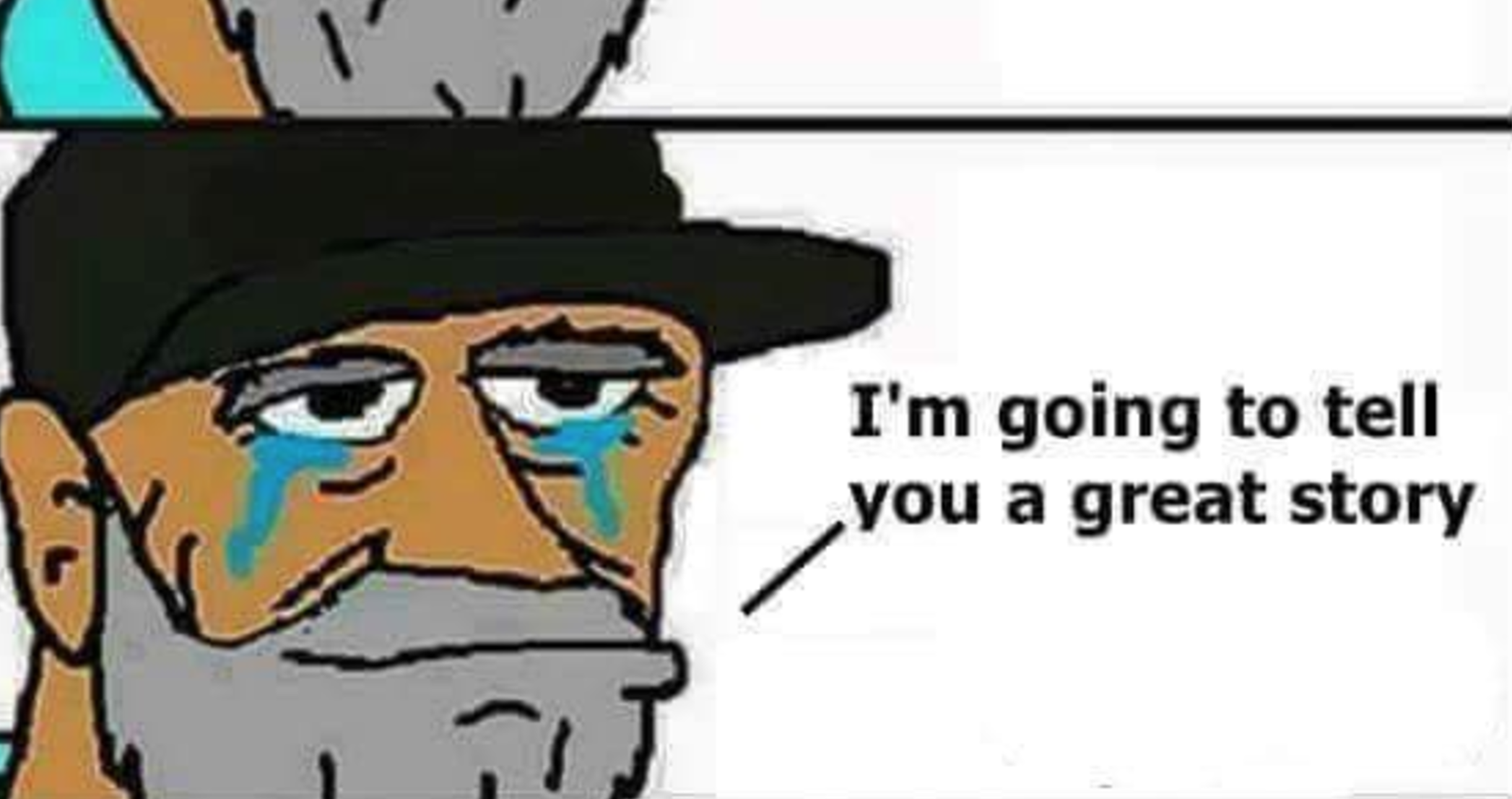
You’ve seen him. A skeptical, chubby-cheeked kid from a rural village, arms crossed, squinting at a Western woman like she just told him the moon is made of blue cheese. It’s the you mean to tell me meme, and honestly, it’s one of the few relics of the early 2010s that hasn't aged into total cringe. It’s perfect. It captures that exact moment someone says something so privileged or logically flawed that your only possible response is a side-eye that could melt steel.
Memes usually die fast. They burn bright for a week and then end up in a corporate "how do you do, fellow kids" tweet. But this one? It stuck. It’s because it taps into a universal truth about the absurdity of first-world problems.
Where Did This Kid Actually Come From?
Most people think memes just spawn out of the digital ether, but this one has a specific origin story. It’s not a staged photo. It wasn't a movie set. The image was captured in 2012 by a medical student named Heini Maksimainen who was visiting Gulu, Uganda.
She wasn't trying to make a viral hit.
Maksimainen was working with a non-profit, and she happened to snap a photo of a local boy reacting to whatever she was saying. The woman in the frame isn't some random tourist; she was a student. The boy’s expression—that incredible, high-tier skepticism—was completely organic. In 2012, someone posted it to Reddit, and the internet did what the internet does. Within days, it was everywhere. It was originally dubbed "Skeptical African Child," but the "you mean to tell me" caption is what gave it legs.
The genius of the image is the contrast. You have a kid who looks like he’s lived a lifetime of reality, staring down a visitor who is likely explaining some bizarre Western concept. It’s the ultimate "check your privilege" visual without being a lecture.
The Anatomy of the You Mean To Tell Me Meme
What makes this work? It’s the structure. Usually, it starts with a setup of a common Western luxury or habit, followed by the boy’s incredulous reaction.
"You mean to tell me... you guys have enough food that you have to invent ways to lose weight?"
That’s the classic vibe. It works because it forces the viewer to look at their own life through a lens of extreme absurdity. We spend thousands of dollars on gym memberships to burn off calories we spent hundreds of dollars to consume. When you put it in the mouth of a kid from a developing nation, the irony hits like a freight train. It’s funny, but it’s also kinda uncomfortable. That's the secret sauce.
The meme evolved, though. It didn't just stay about global inequality. It became a template for any situation where someone is being dense or naive.
- Corporate nonsense: "You mean to tell me you want me to work overtime but there’s no budget for a raise?"
- Relationships: "You mean to tell me you're mad at me for something you dreamed I did?"
- Gaming: "You mean to tell me I spent eighty hours on this quest for a cosmetic hat?"
It’s versatile. That’s why it’s still in your camera roll.
Why Sarcasm is the Internet's Default Language
We live in an age of "main character syndrome." Everyone is the hero of their own story, and we all tend to think our problems are the most pressing things on the planet. The you mean to tell me meme is the needle that pops that bubble.
Psychologically, we use these images to distance ourselves from the things we find ridiculous. By sharing the meme, you’re saying, "I’m not the one being silly; I’m the one calling out the silliness." It’s a badge of self-awareness.
Interestingly, the meme has faced its share of criticism over the years. Some argue it leans into "poverty porn" or stereotypes about the African continent. It’s a valid point. There’s a fine line between using a photo to highlight irony and using a child’s life as a punchline for a joke about Starbucks. However, the meme has largely survived these critiques because the boy is the "smart" one in the image. He’s the one with the power. He’s the one judging us. We are the ones being mocked.
The Viral Lifecycle and 2026 Relevance
You might think a meme from 2012 would be buried next to the Harlem Shake and Rage Comics. But look at TikTok. Look at X (formerly Twitter). The "you mean to tell me" energy is everywhere. Even if people aren't using the literal photo every time, the phrasing has entered the lexicon.
It’s a "reaction image" staple. These are the building blocks of modern communication. We don't always use words anymore. We use a face. And this face—squinted eyes, furrowed brow, slightly tilted head—is the gold standard for "are you kidding me?"
How to Use This Energy in Content Today
If you’re a creator or just someone trying to win a group chat argument, you have to understand the nuances of the you mean to tell me meme. You can't just slap any text on it. It needs to be a specific kind of revelation.
- Find the Inconsistency: The best uses of this meme point out a flaw in logic. Like how we buy bottled water when the tap is free, or how we pay for streaming services that still show us ads.
- Keep the Voice: The "voice" of the meme is inquisitive but mocking. It’s not angry. It’s disappointed.
- Context Matters: Don't use it for things that are actually tragic. The meme lives in the realm of the "absurdly annoying."
Practical Next Steps for Meme Enthusiasts and Marketers
- Audit your reaction folders: If you're still using "Success Kid" or "Bad Luck Brian," you're dating yourself. But the "Skeptical Kid" remains evergreen. Keep it in your high-rotation folder for when a client or friend says something objectively wild.
- Understand the source: Always be aware of the origins of your media. Knowing this was a real kid in Uganda, not a stock photo, changes how you respect the image.
- Adapt the phrasing: Use the "You mean to tell me..." lead-in for hooks in your own writing. It’s a proven way to grab attention because it signals that a "truth bomb" is about to be dropped.
- Check for "Meme Decay": If you see a brand using this meme to sell insurance, the meme might be nearing its end. Watch for when the "cool" factor disappears and the "corporate" factor takes over.
Ultimately, this meme is about the human capacity for nonsense. As long as people keep doing weird, illogical things—which, let's be honest, is forever—the you mean to tell me meme will have a place at the digital table. It’s a mirror. A very funny, very skeptical mirror.



