If you close your eyes and think of the early '90s R&B boom, a few specific sounds probably flood your brain. You’ve got those crisp New Jack Swing snares, some heavy synth bass, and then—there’s the voice. The "First Lady of LaFace." When Toni Braxton released her self-titled debut in 1993, she didn't just join the charts; she owned them. But while everyone loves to talk about the heartbreak of "Breathe Again" or the sheer drama of her later hits, there is something incredibly special about the fourth single. You Mean the World to Me is, quite honestly, the gold standard for the mid-tempo R&B ballad. It’s the song that proved Toni wasn’t just a "sad song" specialist.
She was a superstar.
The Secret Sauce of the LaFace Dream Team
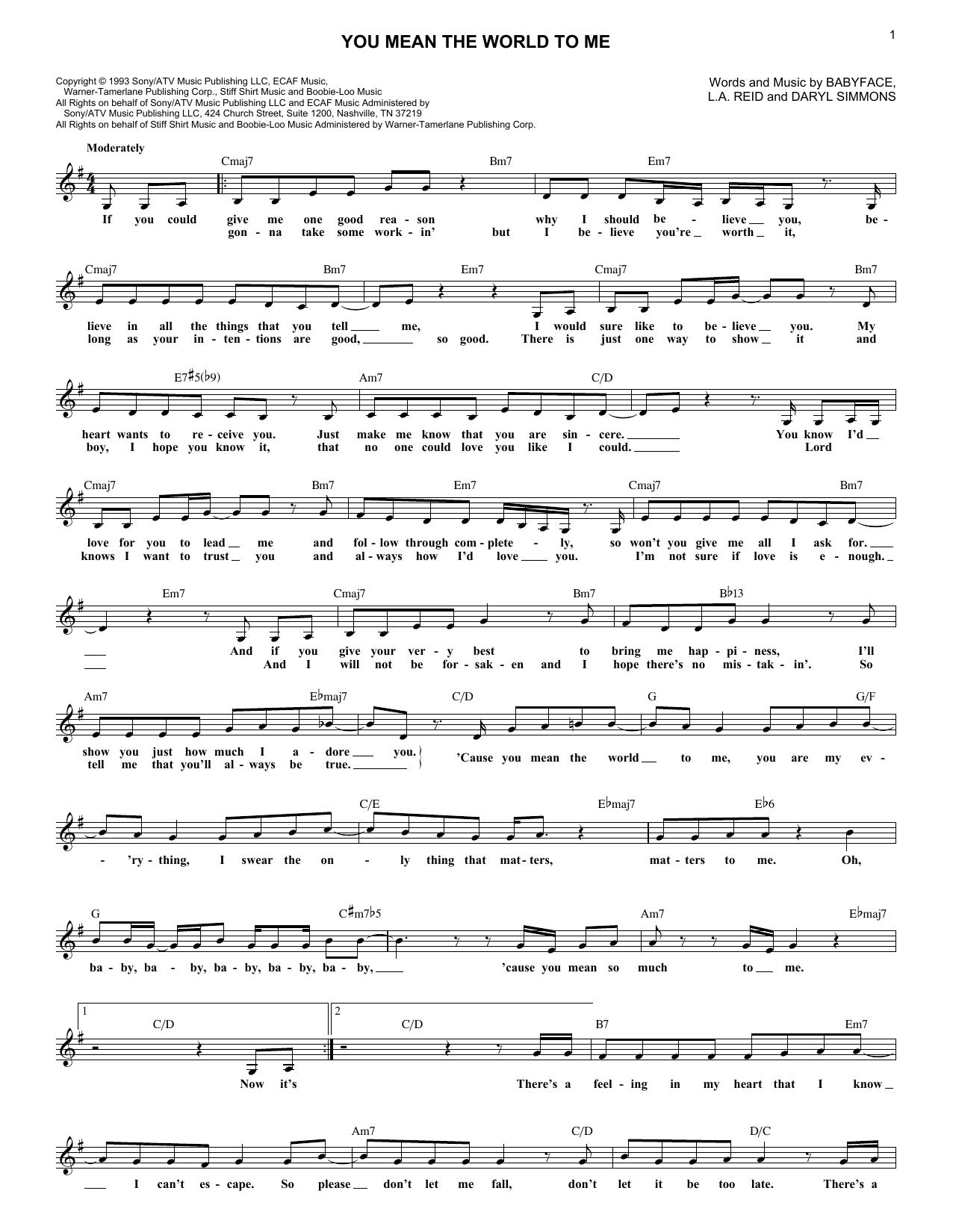
You can't talk about this track without mentioning the heavy hitters behind the glass. We’re talking about the holy trinity of '90s production: Antonio "L.A." Reid, Kenneth "Babyface" Edmonds, and Daryl Simmons. By the time 1994 rolled around, these guys were basically the Midas of the music industry. They had this uncanny ability to craft songs that felt expensive.
You Mean the World to Me wasn't just a random album filler; it was custom-built for Toni’s "soulful scale-sliding," as critics at the time liked to put it. Babyface handled the keyboards, L.A. Reid was on the drums, and Kayo held down the bass. It was a tight, internal family affair at Studio LaCoCo in Atlanta. They created a "gurgling sultry swayer"—a phrase from a Record Mirror review that I think perfectly captures that bubbling, rhythmic energy the song has. It’s not a slow dance, but it’s definitely not a club banger. It lives in that sweet spot where you just want to lean back and let the vocals wash over you.
The song officially hit the shelves on CD on April 21, 1994. But here’s the kicker: it was already a monster on the radio long before that.
A Chart Run That Felt Like a Victory Lap
Most songs today flash in the pan. They debut high because of a TikTok trend and then vanish. In 1994, success was a slow burn. You Mean the World to Me debuted on the Billboard Hot 100 at number 86 on April 2, 1994. That was nearly three weeks before you could even buy the physical single.
- It jumped to 52 in its second week.
- By week five, it was sitting pretty at 17.
- On May 28, 1994, it hit its peak at number 7.
It didn't just pop in and out, either. This thing lived on the charts for 31 weeks. Think about that. Over half a year spent in the rotation of the general public's consciousness. It also hit number three on the Billboard Hot R&B Singles chart and cracked the top ten in Canada. It was the fourth single from an album that had already sold millions, yet people still couldn't get enough.
That Piano, That Mansion, and That Music Video
If you grew up watching Video Soul on BET or caught the morning countdowns on MTV, the music video is likely burned into your retina. Directed by Lionel C. Martin, the video is a masterclass in '90s elegance. You’ve got Toni playing the piano in a massive mansion—the universal symbol for "I have arrived"—intercut with scenes of her and her love interest.
The guy in the video? That was Michael Calvin Bacon. Fun fact: he later went on to star as J.B. Reese in VR Troopers. It was a huge look for him at the time, and the chemistry on screen felt genuine. It wasn't over-the-top or raunchy; it was sophisticated. That was the whole Toni Braxton brand. She was the woman who was "sophisticated enough for adults but sultry enough for younger listeners."
The video stayed in heavy rotation throughout the spring and summer of '94, acting as the perfect visual companion to the song's breezy, romantic vibe.
Why "You Mean the World to Me" Mattered for the Debut Album
Toni’s debut album eventually went 8x Platinum in the US and sold over 10 million copies worldwide. That’s "Diamond" territory in many people's books. But a debut album needs legs. By the time a label gets to the fourth single, they’re usually just trying to squeeze the last bit of life out of the project.
Instead, this track pushed the album into a higher orbit. It won her a ton of respect from the Adult Contemporary crowd while keeping her firmly rooted in R&B. It's one of the reasons she walked away with three Grammys during that era, including Best New Artist. You don't get that kind of across-the-board recognition without a song that proves you can handle a diverse range of sounds.
Actionable Insights for R&B Fans and Collectors
If you're looking to dive back into this era or want to appreciate the track on a deeper level, here is how you can truly experience the magic of this release:
- Hunt for the "Seven Whole Days" Live B-Side: The original CD single features a live version of "Seven Whole Days" as the B-side. It's one of the best examples of Toni’s raw vocal power outside of a polished studio environment.
- Listen for the Percussion: Put on a pair of high-quality headphones and focus on the percussion by DeRock. The layering of the "shuffling midtempo pace" is what prevents the song from feeling like a standard, boring ballad.
- Analyze the Bridge: Pay close attention to the bridge of the song. Most modern R&B skips the complex bridge, but here, the "scale-sliding" is at its peak. It’s a technical vocal masterclass that sounds effortless.
- Check Out the Remixes: While the radio edit is the version everyone knows, there are several underground house and club remixes from '94 that reimagined the track for the dance floor, showing just how versatile the melody really was.
You Mean the World to Me remains a staple because it captures a moment in time when R&B was transitioning from the hard-hitting New Jack era into the smoother, more cinematic "LaFace sound" that defined the rest of the decade. It wasn't just a hit; it was a statement.