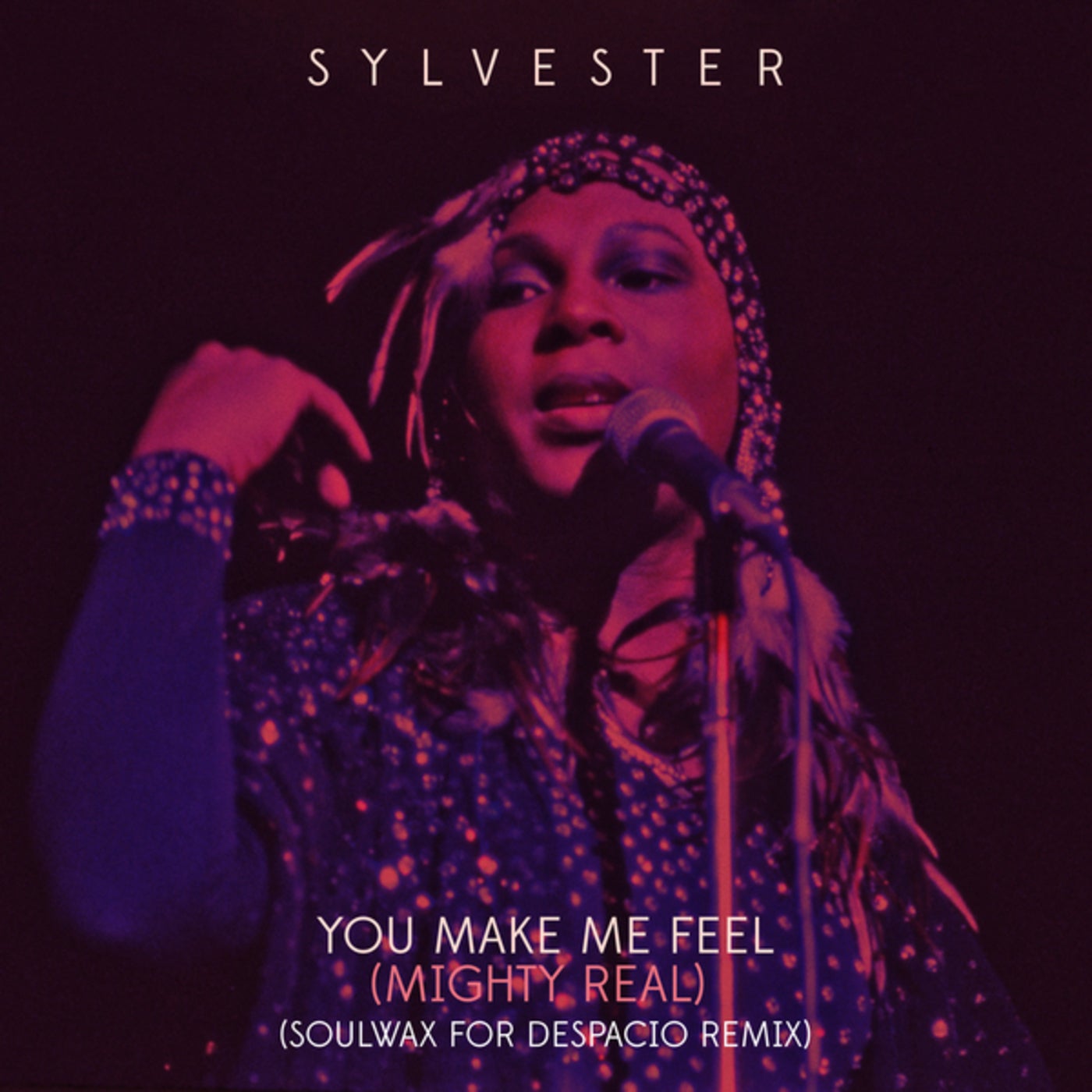
The year was 1978. Disco was peaking, but most of it felt corporate, polished, and—honestly—a little bit sterile. Then came a high-energy kick drum and a soaring falsetto that changed everything. When Sylvester released You Make Me Feel (Mighty Real), he wasn't just dropping another club track. He was basically handing a microphone to every person who had ever felt like an outsider and telling them it was okay to be loud. It’s a song that vibrates with a very specific kind of sweat-soaked, strobe-lit honesty.
It hits different. Even now, nearly five decades later, when those opening synthesizers start bubbling up, the room shifts.
The Sound of San Francisco Grit
Most people don't realize that You Make Me Feel (Mighty Real) almost sounded like a gospel mid-tempo shuffle. Seriously. The original demo was way slower, leaning heavily into Sylvester’s roots in the church and his time with The Cockettes, that wild, gender-bending psychedelic theater troupe in San Francisco. It was Patrick Cowley, a true pioneer of electronic music, who stepped in and realized the track needed to move. He brought in those sequencers that give the song its "space-age" propulsion.
Cowley’s influence can't be overstated. He used a modular synthesizer to create that driving, relentless "thump-thump-thump" that came to define High-NRG music. It was mechanical but felt alive. It was the sound of the future crashing into the present.
Sylvester’s vocals were the final ingredient. He didn't just sing the notes; he lived them. Backed by Two Tons o' Fun—Martha Wash and Izora Armstead, who later became The Weather Girls—the vocal layers are massive. They’re thick. They’re soulful. When Sylvester screams "I feel real!" it isn't a metaphor. He's talking about the liberation of the queer night-life scene in the Castro and beyond. It was a declaration of existence during a time when much of the world wanted those voices silenced.
Why the Lyrics Actually Matter
Usually, disco lyrics are... well, they can be a bit fluffy. You know the drill: dancing, boogieing, the night, the light. But You Make Me Feel (Mighty Real) has this weirdly grounding quality. The repetition of the word "real" is a protest. In a world of artifice, being "mighty real" was a radical act for a Black, gender-fluid man in the late 70s.
It’s about the transformative power of the dance floor. You go into the club feeling one way—maybe beat down by your job or the casual bigotries of the era—and you come out feeling validated. The song captures that specific moment of transition. It's the point where the music takes over and you stop caring about how you look or who's watching.
Technical Mastery in the Studio
Technically speaking, the production on the Step II album was lightyears ahead of its peers. Harvey Fuqua, the Motown legend who co-produced the track, knew how to balance the raw energy of live percussion with Cowley's cold, precise electronics. They used a lot of tape flanging and phasing effects to give the song that "whooshing" sensation, like you’re traveling through a tunnel.
- The Bassline: It’s a Moog synthesizer doubled with a live bass guitar to give it both punch and warmth.
- The BPM: Clocking in at around 132-135 beats per minute, it was faster than your average disco hit, which usually hovered around 120. That extra speed is why your heart starts racing when it plays.
- The Breakdown: The mid-song breakdown where the drums drop out and it’s just Sylvester and the girls chanting—that’s pure gospel. It’s a call-and-response that dates back centuries, repurposed for a strobe-lit warehouse.
The recording sessions at Fantasy Studios in Berkeley were reportedly intense. Sylvester was a perfectionist. He knew he had something special. He wasn't just trying to make a hit; he was trying to capture a feeling he’d been chasing since he was a kid singing in Pentecostal choirs in Los Angeles.
The Cultural Ripple Effect
You can't talk about this song without talking about what happened next. You Make Me Feel (Mighty Real) became the blueprint for house music. When Frankie Knuckles and Ron Hardy were starting the house scene in Chicago at The Warehouse and the Music Box, this was the record they were spinning. They loved the "four-on-the-floor" beat and the electronic textures.
It also broke barriers on the charts. It hit number one on the Billboard Dance chart and even broke into the Top 40, which was a huge deal for an artist as openly flamboyant as Sylvester. He didn't tone it down for the mainstream. He didn't "straighten up" his image. He wore the sequins, he kept the makeup, and he sang in that glass-shattering falsetto.
Then the 80s hit. The AIDS crisis devastated the community that built the song’s success. Sylvester himself passed away from complications of the virus in 1988. But before he died, he made sure his royalties would continue to support local HIV/AIDS charities in San Francisco. The song became a memorial, a celebration, and a fundraiser all at once.
The Jimmy Somerville Cover
In 1989, Jimmy Somerville (formerly of Bronski Beat and The Communards) released a cover that brought the song to a whole new generation. It was a massive hit in the UK and Europe. While some purists prefer the original, Somerville’s version kept the spirit alive during one of the darkest decades for the LGBTQ+ community. It proved the song’s DNA was indestructible. Whether it’s 1978 or 2026, the message of self-actualization through music remains the same.
Misconceptions and Forgotten Details
Sometimes people lump Sylvester in with "One-Hit Wonders." That’s just factually wrong. He had a string of hits like "Dance (Disco Heat)" and "Do Ya Wanna Funk." He was a superstar in the club world.
Another common mistake? Thinking the song is just about sex. While there's definitely an erotic undertone—it is a disco song, after all—Sylvester often talked about how "realness" was about spiritual clarity. It was about stripping away the masks we wear in daily life.
Also, let’s talk about the fashion. In the promotional videos and live performances for You Make Me Feel (Mighty Real), Sylvester’s wardrobe was legendary. We’re talking about custom pieces that blurred every gender line imaginable. He was doing what David Bowie and Lou Reed were doing, but with a Black, queer, soulful perspective that was entirely his own.
How to Experience the Song Today
If you really want to understand the power of this track, you have to hear it on a proper sound system. Listening on laptop speakers doesn't count. You need the sub-bass. You need to feel that kick drum in your chest.
- Find the 12-inch Extended Mix: The radio edit cuts out the best parts of the build-up. The long version is where the magic is.
- Watch the 1978 Live Performance: There’s footage of Sylvester performing at the San Francisco War Memorial Opera House. It’s transcendent. He’s backed by a full orchestra and Two Tons o' Fun. It’s peak performance art.
- Listen for the Cowley Remixes: Patrick Cowley did several dub versions and remixes that lean even harder into the dark, electronic "synth-disco" sound.
The legacy of this song is everywhere. You hear it in the production of Dua Lipa’s Future Nostalgia. You hear it in the "Renaissance" era of Beyoncé. You hear it every time a producer uses a pulsing synthesizer to create a sense of urgency.
Sylvester didn't just make a song. He made a home for people who didn't have one. He took the "mighty real" experience of the marginalized and put it at the center of the world. It’s loud, it’s proud, and it’s never going away.
Actionable Insights for Music Lovers
To truly appreciate the depth of this era and the impact of You Make Me Feel (Mighty Real), there are a few concrete things you can do to broaden your perspective. First, look into the history of the "High-NRG" genre. It’s the direct link between disco and modern EDM, and Sylvester was its undisputed king. Understanding the technical shift from live drumming to sequenced synthesizers helps you see how modern pop music was built.
Next, support the organizations that Sylvester cared about. His estate still benefits the San Francisco AIDS Foundation and Project Open Hand. Engaging with the history of the artists you love means acknowledging the struggles they faced. Finally, explore the discography of Patrick Cowley. His solo work, like "Megatron Man," is a masterclass in early electronic composition and provides the necessary context for why the production on Sylvester's hits was so revolutionary for the time.