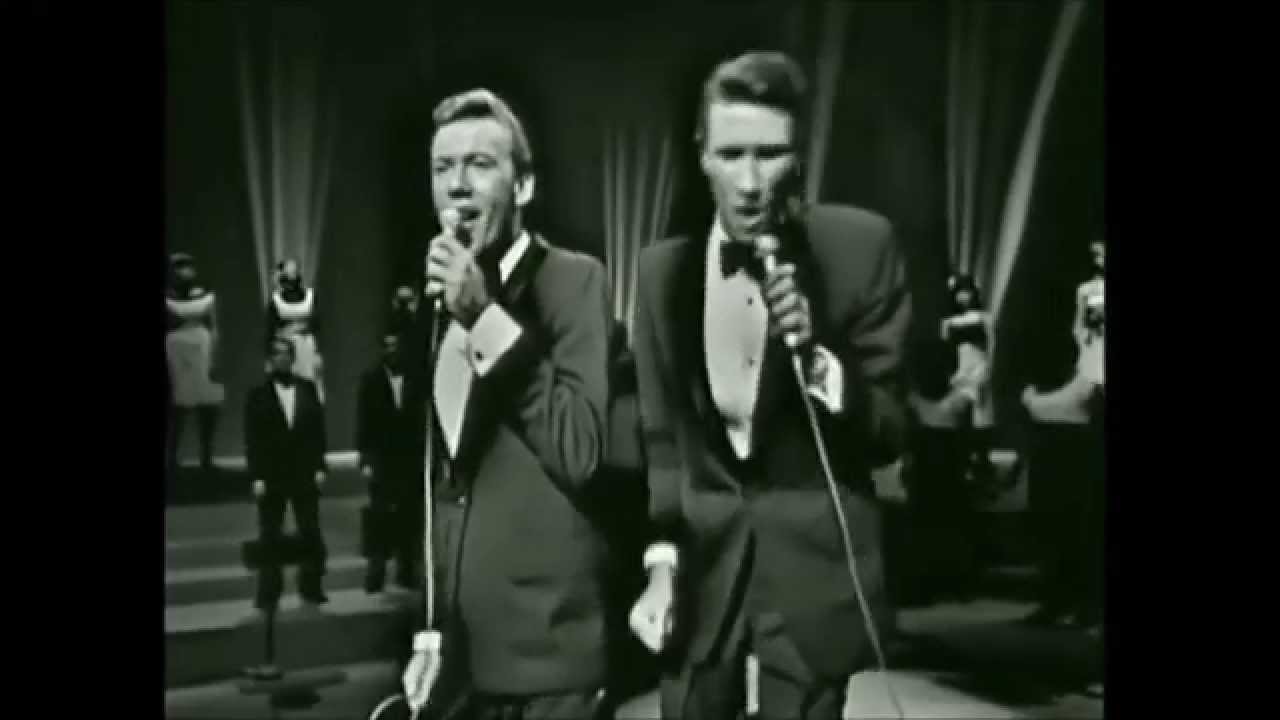
It’s the most played song in radio history. Think about that for a second. More than "Yesterday." More than "Stand By Me." When the Righteous Brothers stepped into Gold Star Studios in 1964, they weren't trying to make history; they were just trying to survive Phil Spector’s obsessive-compulsive production style. But the words to You Lost That Loving Feeling tapped into something so universal, so painfully relatable, that it changed the landscape of pop music forever.
You’ve heard it at weddings. You’ve definitely heard it in Top Gun while Tom Cruise serenaded Kelly McGillis in a dive bar. But the lyrics are actually pretty dark. It’s a desperate, last-ditch plea to save a dying relationship. It’s not a celebration; it's a eulogy.
Why the lyrics hit so hard
Honestly, the brilliance of the song lies in how it describes the slow death of intimacy. It starts with the eyes. "You never close your eyes anymore when I kiss your lips." That’s a heavy opener. It suggests a lack of presence, a wandering mind, and the terrifying realization that the person physically there with you has emotionally checked out.
The songwriters—Barry Mann, Cynthia Weil, and Spector himself—weren't looking for complex metaphors. They wanted "blue-collar" poetry. They captured the "little things" that signal the end. It's the "lack of tenderness" in the fingertips. It's the way the person doesn't look at you the same way. These aren't grand betrayals like cheating or lying; it's the erosion of the "loving feeling" that once felt like a permanent fixture.
Bill Medley’s bass-baritone starts the song so low that radio programmers originally thought the record was being played at the wrong speed. That vocal depth mirrors the gravity of the lyrics. When Bobby Hatfield joins in with that soaring tenor, it’s like the emotional stakes just skyrocketed. It’s a conversation between two parts of the same broken heart.
The controversy over the length and the "Wall of Sound"
Spector was worried. The song was nearly four minutes long, which in 1964 was basically an eternity for a pop single. Radio stations didn't want anything over three minutes. So, what did he do? He lied. He had the label print "3:05" on the vinyl record even though the song was actually 3:45. He literally tricked the industry into playing his masterpiece.
The "Wall of Sound" production is legendary, but for the words to You Lost That Loving Feeling to breathe, the music had to be massive. Spector crammed dozens of musicians into a tiny room. We’re talking three pianos, multiple guitars, and a literal army of percussionists. If you listen closely, the arrangement builds a sense of claustrophobia and tension that mirrors the panic in the lyrics. The protagonist is drowning, and the music feels like the rising tide.
- The song was recorded at Gold Star Studios in Los Angeles.
- Cissy Houston (Whitney’s mom) was one of the backup singers.
- Cher was also reportedly in the booth for some of the background tracks.
- It was the first song to reach #1 in the UK twice by the same artist (thanks to a 1990 re-release).
What most people get wrong about the bridge
There’s a part of the song that everyone knows—the "Baby, baby, I get down on my knees for you" section. It's the climax. But if you look at the raw mechanics of the writing, that bridge almost didn't happen. The Righteous Brothers, particularly Bobby Hatfield, were frustrated during the recording process. Hatfield famously asked Spector what he was supposed to do while Medley sang the low opening. Spector’s response? "You can go to the bank."
The "loving feeling" isn't just a mood; it's a tangible asset in the relationship that has been spent. The lyrics "it's gone, gone, gone" are repeated with a finality that feels like a door slamming. Most people think of it as a romantic song, but if you actually listen to the words, it’s a song about the fear of loneliness. It’s a man begging his partner to "bring back" something that might be permanently broken.
The BMI record and cultural impact
In 1999, BMI (Broadcast Music, Inc.) announced that "You've Lost That Lovin' Feelin'" was the most-played song on American radio and television in the 20th century. It had racked up over 8 million airplays. To put that in perspective, if you played the song back-to-back 8 million times, it would take about 45 years.
Why? Because the words to You Lost That Loving Feeling don't age. The technology of romance changes—we go from letters to landlines to DMs—but the sensation of a partner growing cold is a prehistoric human experience. It’s a foundational text of the "Blue-Eyed Soul" genre. It proved that white singers from Orange County could channel the raw, gospel-infused emotion of R&B if they had the right material and enough reverb.
Actionable insights for your playlist and your heart
If you're dissecting these lyrics because you're actually feeling that "loving feeling" slip away in your own life, there's a certain catharsis in the music. But music isn't therapy.
- Acknowledge the "Eyes" phase. If you notice the lack of presence described in the first verse, address it immediately. Boredom is often just a mask for unexpressed needs.
- Listen to the Hall & Oates version. If the Righteous Brothers feel too operatic, Daryl Hall and John Oates did a stripped-down, soulful cover in 1980 that highlights the desperation in a different way. It’s less "wall of sound" and more "empty room."
- Check the "Top Gun" effect. Don't try to use this song to woo someone in a bar unless you are 1986-era Tom Cruise. The lyrics are about a breakup, not a hookup. It only works in the movie because it's ironic.
- Value the vulnerability. The song is a masterclass in male vulnerability. In an era where "toughness" was the standard, hearing two men scream about being "on their knees" was revolutionary. It’s a reminder that asking for what you need is the only way to save what you have.
The song doesn't end with a resolution. It ends with a plea. It leaves you hanging in that middle space between a breakup and a breakthrough. That’s probably why we keep playing it. We’re all just waiting to see if she ever brings back that loving feeling.
Next Steps for Music Lovers:
- Search for the "Mick Brown Phil Spector interview" to hear the disturbing and fascinating details of how these sessions were run.
- Compare the 1964 original to the 1990 "Ghost" era resurgence to see how context changes the way we hear lyrics.
- Audit your own "loving feeling" by checking for the three markers mentioned in the song: eye contact, tenderness in touch, and the "something beautiful" that used to exist in the silence.