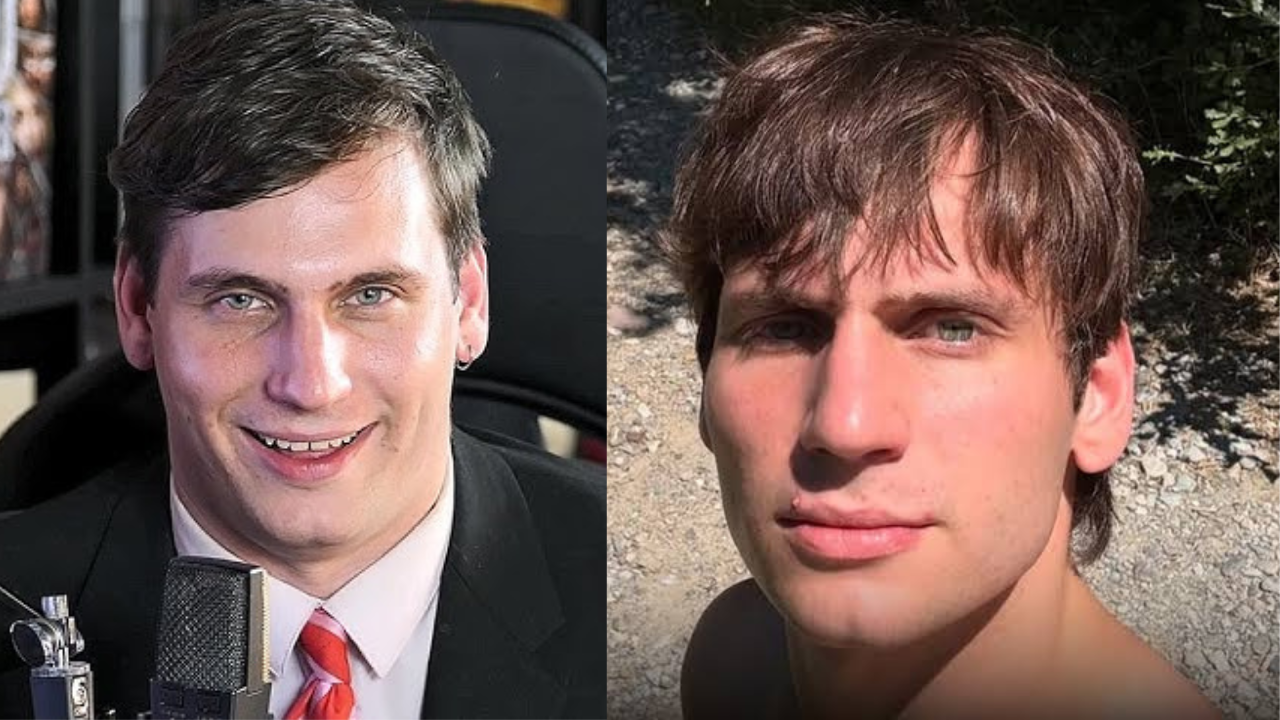
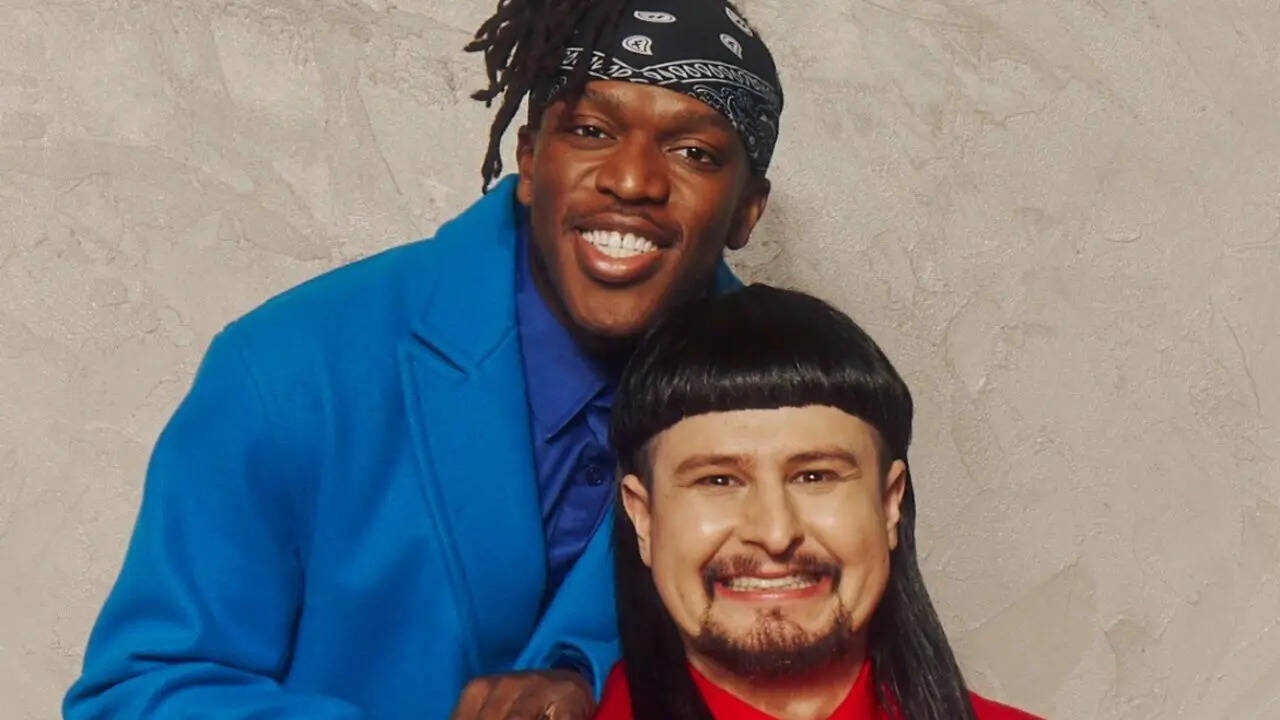
Roasting is an art form. It's basically a verbal high-wire act where you have to balance being genuinely funny with not actually destroying someone’s soul. At the dead center of this cultural phenomenon sits a specific, hyper-viral format: the "you look like" joke. You’ve seen them. You’ve probably been the victim of one at a dive bar or in a heated group chat. These aren't your standard "your mom" jokes or structured "knock-knock" setups. They are observational, often cruel, and weirdly poetic.
Think about it.
When someone tells a comedian like Jeff Ross or a creator on the r/RoastMe subreddit that they look like a "thumb with a goatee," everyone immediately sees it. That’s the magic. It’s a shorthand for shared perception. These jokes rely on a specific type of facial recognition and pattern matching that humans are biologically wired to perform. We spend our lives looking for familiar shapes in clouds; it was only a matter of time before we started seeing a melted wax statue of George Washington in the face of a guy waiting for the bus.
The Anatomy of a Perfect Roast
A "you look like" joke works because of specificity. If you tell someone they look "ugly," that's just a lazy insult. It’s boring. It has no teeth. But if you tell them they look like a "divorced gym teacher who exclusively buys snacks at CVS," you’ve created a cinematic universe in ten words. You aren't just insulting their face; you’re attacking their entire imagined lifestyle.
Comedy writer and legendary roaster Tony Hinchcliffe, the mind behind Kill Tony, often leans into these hyper-specific physical comparisons. He doesn't just look for a flaw; he looks for a vibe. This is why "you look like jokes" have become the backbone of modern insult comedy. They require the audience to do a split-second mental overlay. You see the person, you hear the comparison, and your brain clicks the two images together. If the click happens, the laugh is involuntary.
Honestly, the best ones are often the most nonsensical. How can someone look like "a wet piece of bread"? They can't, literally. Yet, when you see a particularly pale, dejected-looking person in a rainstorm, the joke lands with the weight of a thousand truths. It's about capturing an energy.
From Def Jam to Reddit: The Evolution of the Burn
While the format feels modern, its roots are deep in Black American culture, specifically "The Dozens." This was a game of spoken combat where participants traded increasingly creative insults. It was a test of emotional resilience and linguistic agility. If you could stay cool while someone compared your hairline to a receding tide, you won.
By the time the 90s hit, shows like Def Comedy Jam brought this style of "lookin' like" humor to the masses. Comedians would scan the front row and pick out targets. "Why you look like a bootleg version of Sinbad?" It was fast, it was mean, and it was addictive. It transformed the audience from passive observers into potential participants.
Then came the internet.
The subreddit r/RoastMe changed the game by making the "you look like" joke a consensual transaction. People hold up a sign, literally asking to be torn apart. It’s a fascinating psychological study. Why do we want this? Maybe it’s a way to reclaim our insecurities. If I let 5,000 strangers tell me I look like a "generic brand Shaggy from Scooby-Doo," their power to hurt me with that observation in the real world evaporates.
The Science of Face-Matching (Sorta)
There is actually a bit of cognitive science happening here, even if it’s buried under layers of sarcasm. Humans have a specialized area of the brain called the Fusiform Face Area (FFA). Its job is to recognize faces. But it’s also prone to pareidolia—the tendency to see faces in inanimate objects. "You look like" jokes just flip the script. Instead of seeing a face in a toaster, we see the toaster in the face.
When a roast hits, it’s often because it identifies a "micro-feature." Maybe it’s the way someone’s glasses sit too low on their nose, making them look like a "librarian who just saw a ghost." Or perhaps it’s a specific hairstyle that resembles a "can of Diet Coke left in the freezer too long."
Critics often argue that these jokes are low-hanging fruit. Sure, they can be. But the high-level versions—the ones used by writers on Comedy Central Roasts—are incredibly dense. They use a technique called "the triple threat":
- The Physical Anchor: A real feature the person has.
- The Cultural Reference: A character, object, or person everyone knows.
- The Emotional Truth: A vibe that feels accurate to the person's personality.
Without all three, the joke falls flat. If you tell a fit guy he looks like a "deflated balloon," it makes no sense. The logic has to be sound, or the audience won't go on the journey with you.
Why Social Media Loves the Visual Burn
Instagram, TikTok, and Twitter (X) are visual-first platforms. This is why you look like jokes are essentially the currency of the comment section. In the era of the "main character," a well-placed physical comparison is the ultimate equalizer. It’s the digital version of a heckler putting a performer in their place.
Take the "Average [X] Fan vs. Average [Y] Enjoyer" meme. It’s basically a visual "you look like" joke codified into a template. We use these images to categorize people instantly. We’ve moved past words and into a space where a single photo of a guy with a specific beard shape tells a story about his entire political stance, his coffee preferences, and his likely opinion on crypto.
But there’s a dark side. Obviously.
Bullying is real, and the line between a "roast" and "harassment" is often paper-thin. The difference usually lies in intent and setting. On a stage or a dedicated forum, it’s a sport. In a random person’s DMs, it’s just being a jerk. Context is everything. As the comedian Patrice O'Neal used to suggest, the best roasts come from a place of "cruel love"—you have to observe someone closely enough to see their flaws, which is, in a weird way, a form of intimacy.
How to Handle Being the Butt of the Joke
If you find yourself on the receiving end of a "you look like" zinger, your reaction dictates whether you win or lose.
Defensiveness is the death of cool. If someone says you look like "a background character from a movie about a haunted Victorian dollhouse," and you get mad, they’ve won. If you laugh and lean into it, the joke loses its sting. This is the "B-Rabbit" strategy from 8 Mile. Own the comparison before they can use it against you.
In professional comedy circles, being "un-roastable" is actually a bad thing. It means you don't have enough distinguishable features or a strong enough personality to be parodied. To be the subject of a "you look like" joke is to be noticed. It means you have a "look." Even if that look is "homeless wizard."
Actionable Takeaways for Navigating Roast Culture
Understanding the mechanics of these jokes can actually make you a better communicator, believe it or not. It sharpens your observational skills and teaches you how to make points concisely.
- Study the "Vibe": If you're trying to be funny, don't look for what's wrong with someone's face. Look for what their face reminds you of. Is it a specific era? A specific type of store? A specific emotion?
- Specificity is King: "You look like a dog" is an insult. "You look like a Golden Retriever that just found out its owner is a cat person" is a joke.
- Read the Room: If the person isn't a friend or in a space meant for roasting, keep the "you look like" thoughts in your head. The quickest way to kill a vibe is an uninvited personal attack.
- Self-Roast First: The most effective way to use this humor is on yourself. It builds immediate rapport. Acknowledging that you look like "a thumb in a suit" makes you instantly more likeable than the guy trying to look perfect.
Ultimately, these jokes are about the absurdity of being a biological creature in a material world. We are all just weird-looking piles of cells trying to dress ourselves up and pretend we don't look like "a baked potato with anxiety." Embracing the joke is just embracing the truth.
To get better at this, start watching professional roast battles. Pay attention to how they bridge the gap between a physical trait and a hilarious mental image. It’s about more than just being mean; it’s about being right. When the audience gasps "Oh my god, he does," that’s when you’ve mastered the form. Stop looking for insults and start looking for connections.