You know the feeling. You’re at a bar, or maybe just arguing with your cousin over pizza, and someone drops a line from a classic movie. They say it with such confidence. "Luke, I am your father," they declare, leaning in for dramatic effect.
Except, they're wrong.
That’s not the line. It never was.
You keep using that word—or in this case, that phrase—and it’s a perfect example of how our collective brains decide to rewrite history because the "fake" version just sounds better. This phenomenon, often lumped under the "Mandela Effect" umbrella, shows how dialogue evolves once it leaves the theater and enters the wild world of pop culture. We don't remember what was actually said; we remember what we think should have been said.
The Princess Bride and the Birth of a Meme
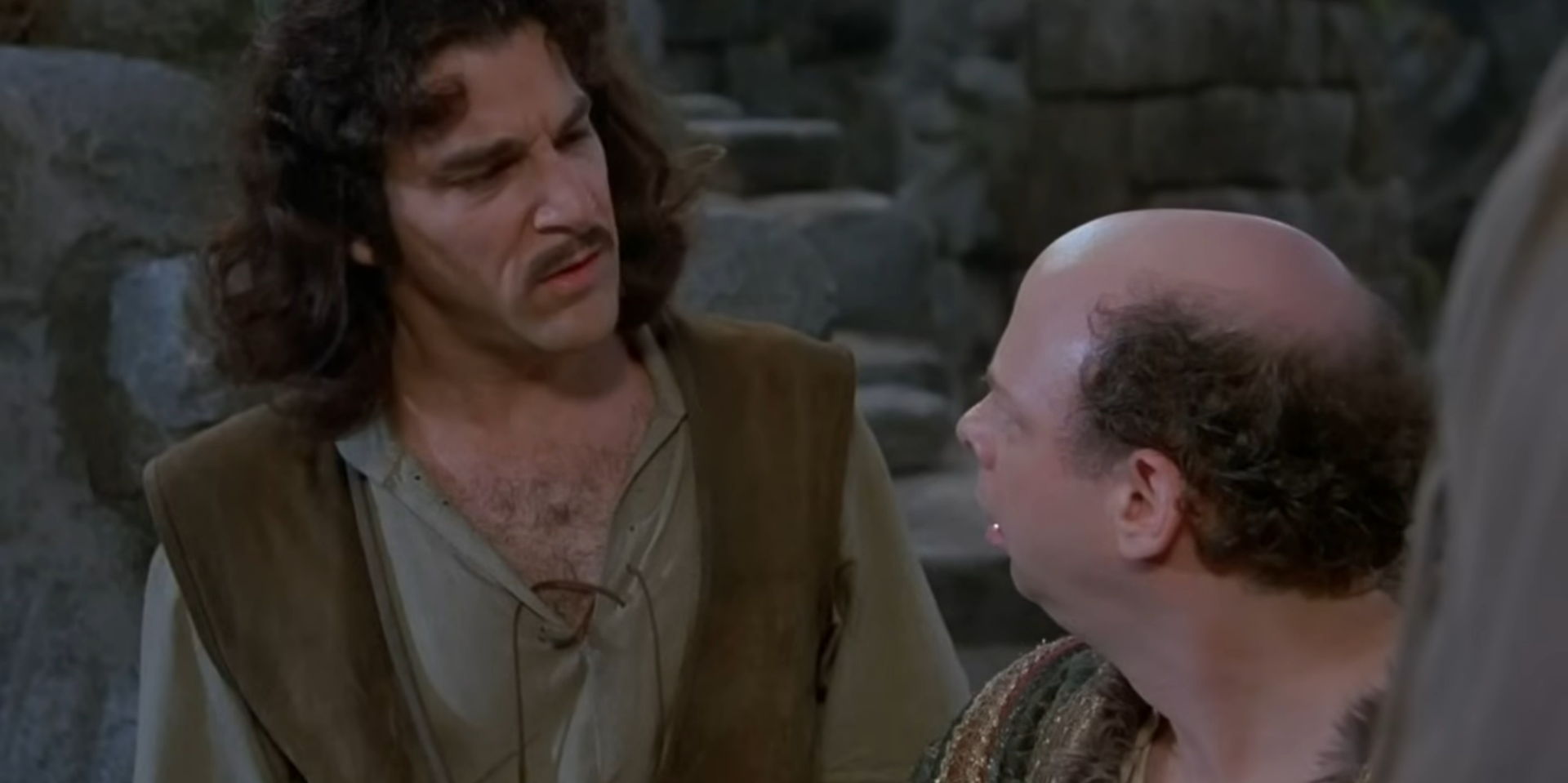
We have to talk about Inigo Montoya. If you haven't seen The Princess Bride (1987), stop reading this and go fix your life. Mandy Patinkin plays a Spanish swordsman obsessed with avenging his father. He spends years practicing a specific greeting for the six-fingered man who killed his dad.
But the phrase "you keep using that word" comes from a different character entirely: Vizzini, played by the incomparable Wallace Shawn. Vizzini repeatedly describes every setback as "Inconceivable!" Finally, Inigo looks at him and says, "You keep using that word. I do not think it means what you think it means."
It’s a linguistic burn.
It’s also become the internet’s favorite way to tell someone they’re being an idiot without actually calling them a name. When people misuse "literally" or "ironic," out comes the Inigo Montoya GIF. It’s a meta-joke now. We use a quote about misusing words to correct people who are misusing words.
Why Our Brains Edit Masterpieces
Why do we do this? Why is "Play it again, Sam" the most famous line from Casablanca when Rick Blaine actually says, "You played it for her, you can play it for me. If she can stand it, I can. Play it!"?
It's about economy.
Human memory is a messy, low-resolution storage system. We strip away the context and the "umms" and "ahhs" to get to the core of the emotion. "Luke, I am your father" provides the necessary context (who is speaking to whom) that the actual line, "No, I am your father," lacks when taken out of the movie.
Basically, we're all self-appointed editors.
According to cognitive psychologists like Elizabeth Loftus, who has spent decades studying the "misinformation effect," our memories are highly suggestive. If you hear a dozen people misquote a movie, your brain will eventually overwrite your own memory of the actual scene to match the social consensus. You're not lying; you're just being a social animal.
The Hall of Fame for Misheard Cinema
Let's look at some of the heavy hitters. These are the ones that cause the most "you keep using that word" moments in real life.
The Silence of the Lambs People love to hiss, "Hello, Clarice." It’s creepy. It’s iconic. It’s also fake. Hannibal Lecter actually says "Good morning" when he first meets her. Later, he says "Good evening, Clarice." The "Hello, Clarice" version likely became the standard because it’s a more punchy way to imitate Anthony Hopkins' chilling delivery in a vacuum.
Snow White and the Seven Dwarfs "Mirror, mirror on the wall." Nope. Go back and watch the 1937 Disney classic. The Evil Queen clearly says, "Magic mirror on the wall." Somewhere along the line, the alliteration of "Mirror, mirror" won the battle for our cultural memory.
Star Trek "Beam me up, Scotty." Captain Kirk never actually said this exact sequence of words in the original series. He said things like, "Scotty, beam us up" or "Beam me up." The catchy four-word version was popularized by bumper stickers and fan culture, eventually becoming so ubiquitous that even William Shatner probably thinks he said it.
When Misquotes Become Reality
Sometimes, a misquote is so powerful that it actually changes the real world.
Take the 1970 film Love Story. The tagline was: "Love means never having to say you're sorry." It’s a beautiful sentiment, even if it’s objectively terrible relationship advice. Ryan O’Neal’s character says it. Ali MacGraw says it.
Decades later, people still use it. It’s baked into the language of romance. If you tell someone that love actually requires a lot of apologizing, they’ll look at you like you’re ruining the vibe. The misinterpretation of the sentiment is more "real" to people than the reality of human interaction.
How to Win Your Next Argument (Expertly)
If you want to stop being the person someone says "you keep using that word" to, you need to verify.
- Check the Script, Not the Meme: Use sites like IMSDb (Internet Movie Script Database). Memes are edited for brevity. Scripts are the source of truth.
- Listen for the Lead-in: Most famous quotes are actually the second half of a sentence. We tend to chop off the setup.
- Acknowledge the Evolution: Understand that a quote can have two lives—one in the movie, and one in the culture. Both are "real" in their own way, but only one is factually accurate.
Honestly, being a pedant about movie quotes is a quick way to lose friends at a party. But there’s a certain satisfaction in knowing the truth. When you hear someone say, "Houston, we have a problem," you can quietly know that Jim Lovell actually said, "Houston, we've had a problem."
It’s a small distinction.
But it matters.
The next time you're about to drop a legendary line, take a second. Think about Vizzini. Think about Inigo Montoya. If you're not 100% sure, maybe just stick to your own words.
Otherwise, someone might just look at you and tell you that you keep using that word, and you won't even realize they're right.
Actionable Next Steps
- Audit Your Anecdotes: Pick three "famous" movie quotes you use regularly and look up the original clips on YouTube. You'll be surprised how many are slightly off.
- Study the Mandela Effect: If you find this fascinating, look into the work of Fiona Broome, who coined the term, but approach it with a skeptical, scientific eye toward how collective memory fails.
- Watch the Source Material: Use the "misquote" as an excuse to re-watch classics. Seeing the actual context of Inigo Montoya's speech makes the meme much funnier.



