It starts with that piano. Not just any piano, but a warm, slightly dusty Rhodes that feels like it was recorded in a basement in Harlem while the rain was hitting the window. By the time the drums kick in—that crisp, boom-bap knock—you aren't just listening to a song. You’re in a movie. You Don't Know My Name isn't just a highlight of Alicia Keys’ second album; it’s basically a masterclass in how to flip a sample without losing the soul of the original.
It’s been over two decades since The Diary of Alicia Keys dropped. Most R&B tracks from 2003 sound like time capsules. They have that specific "early 2000s" sheen that feels dated the second you hear it. But this track? It’s timeless. It’s got this weird, magical quality where it feels like it could have come out in 1974, 2003, or last Tuesday.
Honestly, the way it came together is kind of a miracle of production. You had Alicia, a classically trained prodigy, teaming up with a young, hungry Kanye West before he was Kanye West. At the time, Kanye was the "soul sample guy," and he brought a loop from The Main Ingredient’s "Let Me Prove My Love to You" that changed everything.
The Kanye West Connection and the Soul of the Sample
People forget that back in the early 2000s, Alicia Keys was under a ton of pressure. Her debut, Songs in A Minor, was a massive, Grammy-sweeping juggernaut. The "sophomore slump" is a real thing in the industry. Everyone was watching. She needed something that stayed true to her neo-soul roots but felt bigger, more cinematic.
Enter Kanye.
He didn't just give her a beat. He gave her a canvas. The Main Ingredient sample is the heartbeat of You Don't Know My Name, but the way Alicia layered her vocals on top is what makes it work. It’s dense. There are harmonies hidden in the mix that you don't even catch until the tenth listen.
The song is actually quite long for a radio hit. It clocks in at over six minutes if you play the full album version. In a world of three-minute TikTok snippets, that feels like an eternity. But it needs every second. If you cut the bridge or the spoken-word section, you kill the vibe. You kill the story.
Why the Spoken Word Segment Actually Works
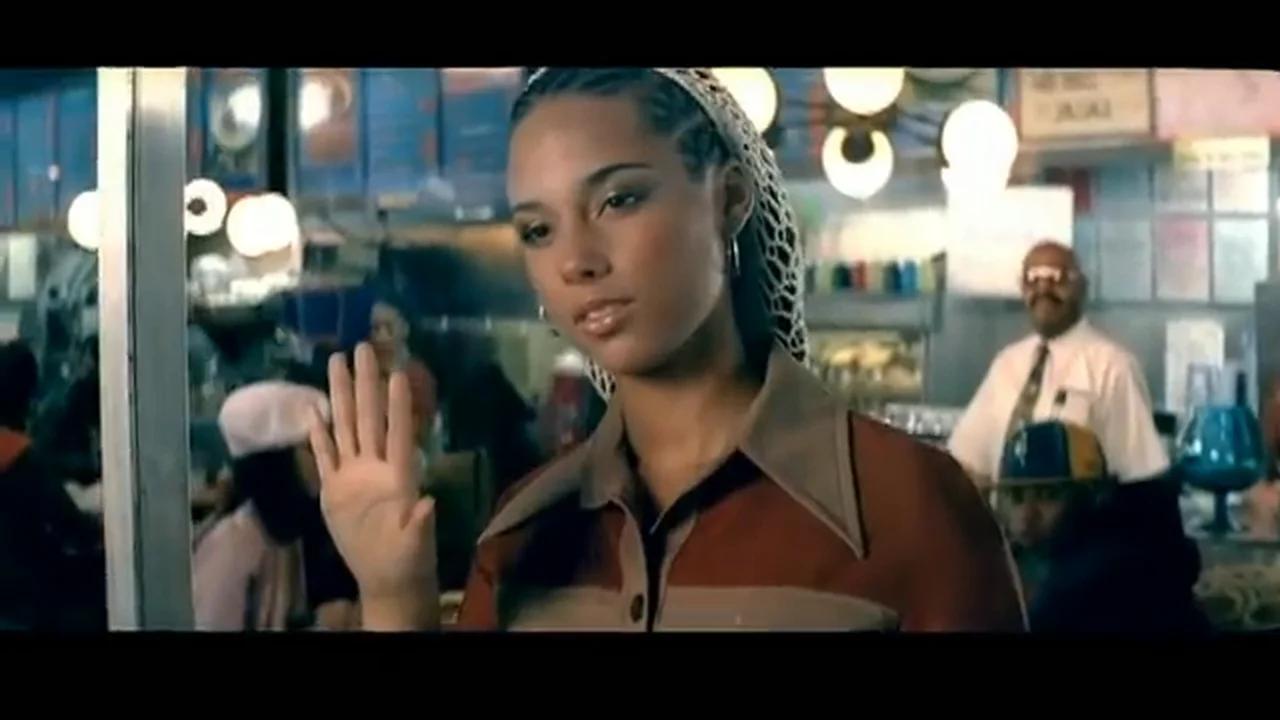
Let’s talk about the phone call. Usually, when artists do a "skit" in the middle of a song, it’s cringe. It’s something you skip after the first time. But Alicia’s monologue to "Michael" at the diner? It’s iconic.
"I'm the one who always orders the special... with the hot chocolate."
It feels real because it is real. It’s vulnerable. She’s playing a waitress who is nervous about asking out a regular. It grounds the superstar Alicia Keys and makes her feel like someone you’d actually grab coffee with. It’s a bold move to stop a hit record for two minutes just to have a one-sided conversation, but it worked because the rhythm of her voice matched the rhythm of the track. It’s musical even when she’s just talking.
Cultural Impact and the 70s Aesthetic
The music video, directed by Chris Robinson, was a whole event. Setting it in a diner with Mos Def (now Yasiin Bey) was a stroke of genius. It captured a specific Black New York aesthetic that felt grounded and aspirational all at once. It wasn’t about flashy cars or jewelry. It was about a crush.
It was about the "not knowing."
There’s a tension in You Don't Know My Name that most love songs lack. Most songs are about being in love or being heartbroken. This song is about the middle. The part where you're terrified to say something.
- The Production: Kanye West and Alicia Keys co-produced it, blending 70s soul with modern hip-hop sensibilities.
- The Vocal: Keys stays in her mid-range for most of it, which adds to the "late-night conversation" feel.
- The Sample: "Let Me Prove My Love to You" by The Main Ingredient (1975).
- The Accolades: It won a Grammy for Best R&B Song in 2005.
The song reached number three on the Billboard Hot 100. But more than the numbers, it cemented Alicia Keys as someone who wasn't just a "piano girl." She was an architect of sound. She knew how to bridge the gap between her mother's record collection and the hip-hop her peers were blasting in the streets.
Why It Still Matters in 2026
R&B has changed a lot. We’ve gone through the PBR&B era, the trap-soul era, and now we’re in this weird, eclectic space where everything is a remix of a remix. Yet, when You Don't Know My Name comes on at a party or in a lounge, the room changes.
Maybe it’s the authenticity.
There's no Auto-Tune. No aggressive digital compression. You can hear the "air" in the room. In an era where AI can generate a pretty convincing R&B track in thirty seconds, the "human-ness" of Alicia’s performance is a reminder of what we lose when we automate art. You can't fake that slight crack in her voice when she’s trying to be brave on the phone.
The song also serves as a reminder of Kanye West’s peak as a producer of "warm" music. Before the industrial sounds of Yeezus or the gospel pivots, he was the king of the "chipmunk soul" sound—speeding up samples to create a high-pitched, emotional resonance. On this track, though, he kept it relatively grounded, allowing the soul to breathe.
Technical Brilliance Often Overlooked
Musically, the song is a bit of a trick. It stays in a comfortable groove, but the chord progressions are more sophisticated than your average pop song. Alicia’s piano fills are tasteful. They don't scream "look at how fast I can play." They serve the melody.
The background vocals are also doing a lot of heavy lifting. They create this "wall of sound" effect that feels like a warm blanket. It’s a very "analog" feeling record in a digital world.
Common Misconceptions About the Track
Some people think this was a solo Kanye production. It wasn't. Alicia is credited as a producer for a reason. She arranged the vocals and directed the musicality of the live instruments. It was a true collaboration.
Others think the "Michael" in the song is a specific celebrity. It’s not. He represents the "everyman" crush. The diner setting was chosen specifically because it’s a universal space. Everyone has been "the person in the diner" at some point.
Then there's the idea that it’s just a "slow jam." It’s actually got a pretty high BPM for a ballad. You can head-bob to it. That’s why it worked so well on urban radio alongside much harder hip-hop tracks. It had enough "thump" to survive the speakers of a 2003 Chevy Impala, but enough class to be played at a wedding.
Actionable Takeaways for Music Lovers and Creators
If you’re a songwriter or producer, there is so much to learn from You Don't Know My Name. It’s a blueprint for longevity.
- Don’t fear the silence. The gaps in the music, especially during the spoken word part, create intimacy. You don't need to fill every millisecond with sound.
- Respect the source material. If you’re using a sample, don’t just loop it. Talk to it. Layer over it. Make it yours while honoring where it came from.
- Character matters. Alicia isn't just "singing" here; she’s acting. She’s playing a role. Give your songs a setting and a character to make them more relatable.
- Length isn't an enemy. If the vibe is right, people will stay for six minutes. Don't let "radio edits" dictate your creative vision.
To truly appreciate the depth of the track, listen to it on a high-quality pair of headphones or a decent vinyl setup. You’ll hear the subtle string arrangements in the background that usually get lost on phone speakers. Notice how the bassline follows the kick drum with surgical precision.
Go back and watch the music video too. Look at the color grading. It’s got that sepia, nostalgic tint that perfectly matches the audio. It’s a cohesive piece of art that reminds us why Alicia Keys became a legend. She didn't just follow trends; she built a world that we’re still happy to live in twenty years later.
If you haven't heard the "Original Uncut" version of the album lately, do yourself a favor and put it on. It’s a reminder that soul music isn't about perfection. It’s about the feeling you get when you’re finally ready to tell someone your name.
Next Steps for the Deep Listener:
- Listen to the original sample: "Let Me Prove My Love to You" by The Main Ingredient to see how Kanye and Alicia chopped it.
- Compare the studio version with Alicia’s "VH1 Storytellers" live performance to see how she breathes new life into the piano solos.
- Explore the rest of The Diary of Alicia Keys to understand the context of this song within her transition from a "new artist" to an R&B icon.