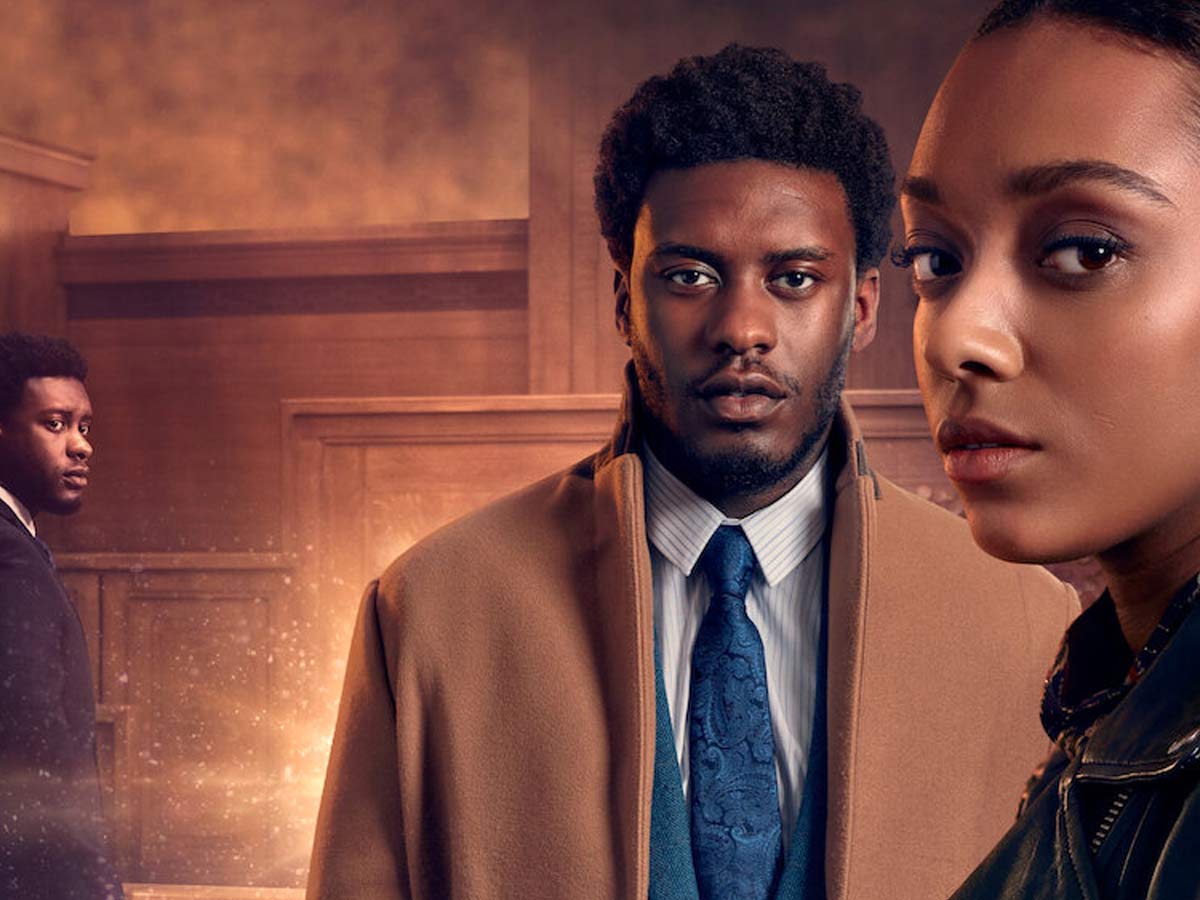
You’ve probably seen the title pop up on your Netflix dashboard or heard a friend rave about a book with the same name. "You Don't Know Me" isn't just a catchy phrase; it has become a massive brand in the world of gritty, psychological storytelling. Specifically, if we're talking about the 2021 BBC miniseries based on Imran Mahmood’s 2017 novel, we are looking at one of the most clever subversions of the courtroom drama genre in recent memory. It’s a story that asks a very simple, terrifying question: can we ever truly know the people we love?
Honestly, most legal thrillers are predictable. You have the stoic lawyer, the shady witness, and the dramatic "objection!" shouted every five minutes. But this story is different. It starts with a young man, Hero, who is standing in the dock accused of murder. Instead of letting his barrister speak, he decides to tell his own story. He basically fires his legal team and tells the jury, "You don't know me, so let me tell you who I actually am." For a more detailed analysis into similar topics, we suggest: this related article.
The Gritty Reality of the "You Don't Know Me" Narrative
The brilliance of Mahmood’s writing—and the subsequent TV adaptation—lies in its perspective. We are used to seeing the justice system from the top down. We see judges and detectives. Here, we see it from the ground up. Hero, played with incredible vulnerability by Samuel Adewunmi, isn't some mastermind. He’s a guy who sold cars, looked after his family, and fell in love with a woman named Kyra.
Kyra is the catalyst. To get more details on this development, extensive reporting can also be found at Deadline.
She disappears, and Hero’s descent into the London underworld to find her is what leads to the murder charge. But here is the kicker: as the audience, we are the jury. We are forced to decide if he’s telling the truth or if he’s the world's most charming liar. Most people get this wrong. They think the show is about "who did it." It isn't. It’s about how the legal system strips away a person's humanity until all that's left is a "defendant" who doesn't look like the person their mother knows.
Why the British Adaptation Hit Different
When the series landed on Netflix for international audiences, it blew up. Why? Because it felt real. It didn't have that shiny, polished Hollywood glow. The streets looked like real London streets. The dialogue felt like how people actually talk—full of slang, pauses, and the kind of "kinda-sorta" hedging we do when we're nervous.
Director Sarmad Masud did something risky. He spent long stretches of time just on Hero’s face. It’s claustrophobic. You’re trapped in the courtroom with him, listening to this long, winding story about a girl, a gang, and a gun.
It works because of the nuance.
Usually, in these shows, the protagonist is either 100% innocent or 100% a villain. Life isn't like that. Hero makes terrible choices. He lies to the police. He puts people in danger. Yet, you still want him to be innocent because you feel like you do know him by the end. Or do you? That’s the psychological trap the title sets for you.
Breaking Down the "You Don't Know Me" Legal Strategy
In the actual trial depicted in the story, the prosecution’s case is "watertight." They have the DNA. They have the CCTV. They have the motive. From a legal standpoint, the "You Don't Know Me" defense is a hail mary. It’s an appeal to emotion and "reasonable doubt" in its purest form.
Imran Mahmood is a real-life criminal defense barrister. This is why the technical details feel so heavy. He knows that in a real courtroom, the truth is often less important than the narrative. The prosecution tells a story of a violent criminal. Hero tells a story of a desperate lover. Both stories use the same evidence.
It’s a fascinating look at the subjectivity of truth.
Consider the gun. The prosecution says he bought it to kill. Hero says he bought it for protection. Same object, two different stories. This reflects a growing trend in crime fiction where the "unreliable narrator" isn't just a plot twist—it’s the whole point of the exercise.
Comparing the Book to the Screen
If you’ve only watched the show, you’re missing some of the internal monologue that makes the book so gut-wrenching. In the novel, Hero’s voice is even more intimate. You get the sense that he is pleading for his life, not just for his freedom.
- The Ending: No spoilers, but the ending of the series sparked a massive debate online. Some people hated the ambiguity.
- The Pacing: The show moves faster, obviously, but it loses some of the quiet moments between Hero and his sister.
- The Tone: Both versions maintain a sense of impending doom that is hard to shake off.
What This Story Teaches Us About Perception
We live in an age of instant judgment. We see a headline or a 10-second clip and we think we know the whole story. The "You Don't Know Me" phenomenon taps into that cultural anxiety. It reminds us that everyone has a "backstage" life that the public never sees.
In sociology, this is often called Goffman's Theory of Self-Presentation. We all have a "front stage" persona we show to the world. Hero’s front stage is the defendant in a suit. His "backstage" is the man who would do anything for the woman he loves. The tension between these two versions of himself is where the drama lives.
It’s also about class and race in the UK. The show doesn't shout about it, but it’s there. A young Black man in a London courtroom is already fighting an uphill battle against the "narrative" the system has written for him before he even opens his mouth.
Beyond the Screen: Other "You Don't Know Me" Moments in Pop Culture
While the BBC/Netflix series is the most prominent, the phrase "You Don't Know Me" has been a staple in music and film for decades.
Ray Charles sang about it in 1962. His version was about unrequited love—the pain of being close to someone who has no idea how you truly feel. Then you have the Jax Jones house track that took over the charts a few years ago. It’s a versatile phrase because it's a universal feeling. Everyone, at some point, has felt misunderstood or misrepresented.
But in the context of crime drama, it’s become shorthand for the "twist." It warns the viewer: don't get comfortable. Whatever you think is happening, you’re probably wrong.
Why We Are Obsessed With Unreliable Narrators
There is a certain thrill in being lied to by a character. When we realize a narrator hasn't been giving us the full picture, it forces us to re-evaluate everything we’ve seen. It turns the viewer into a detective.
Think about Gone Girl or The Usual Suspects.
These stories work because they exploit our natural tendency to trust the person telling the story. "You Don't Know Me" takes this a step further by making the "jury" part of the narrative. You aren't just watching a trial; you are participating in it.
Actionable Takeaways for Fans of the Genre
If you finished "You Don't Know Me" and are looking for what to do next, don't just mindlessly scroll. Engage with the themes.
Read the Source Material Imran Mahmood’s book is a masterclass in voice. If you want to understand how to write a compelling first-person narrative, start there. He uses a technique called "direct address" that makes you feel like the protagonist is sitting right across from you.
Explore "Social Realism" in Crime Fiction If you liked the gritty, realistic feel of the show, look for other examples of British social realism. Shows like Top Boy or movies like Blue Story offer a similar look at the complexities of life in urban environments where the legal system and the "street" system often clash.
Question the Narrative Next time you read a true crime story or watch a documentary, ask yourself: whose story is being told? Who is the "Hero" here, and what are they not telling me? The biggest lesson from "You Don't Know Me" is that the truth is rarely a straight line. It’s a messy, tangled web of perspectives.
Analyze the Legal Framework For those interested in the law, look up "Closing Speeches" in UK criminal law. The entire series is essentially one long closing speech. It’s a great way to see how legal professionals use rhetoric to sway a jury’s perception of the facts.
The series leaves us in a state of discomfort. That’s the point. It doesn't want to give you a clean, happy ending because life doesn't always provide one. You’re left with the evidence, the story, and your own biases.
And honestly? That’s why it’s so good.
It stays with you. You’ll find yourself thinking about Hero days later, wondering if you would have voted guilty or not guilty. You’ll wonder if Kyra was worth it. You’ll wonder if anyone truly knows anyone else.
If you're looking for your next binge-watch or a book that will keep you up until 3:00 AM, this is it. Just remember: don't trust everything you hear. Even from the person you think you know best.
Next Steps for Enthusiasts:
- Compare the Evidence: Rewatch the first and last episodes. Look at the physical evidence presented by the prosecution and see if Hero’s story actually accounts for every single piece of it.
- Read "I Know What I Saw": This is Imran Mahmood's follow-up novel. It deals with similar themes of memory, witness reliability, and the fallibility of the human mind.
- Research the "Right to Silence": Understand how Hero's choice to speak directly to the jury differs from the standard legal protections in both the UK and the US systems.