You’ve heard it a thousand times. Maybe you’ve even shouted it at a friend struggling to parallel park or a coworker staring down a deadline. "You can do it!"
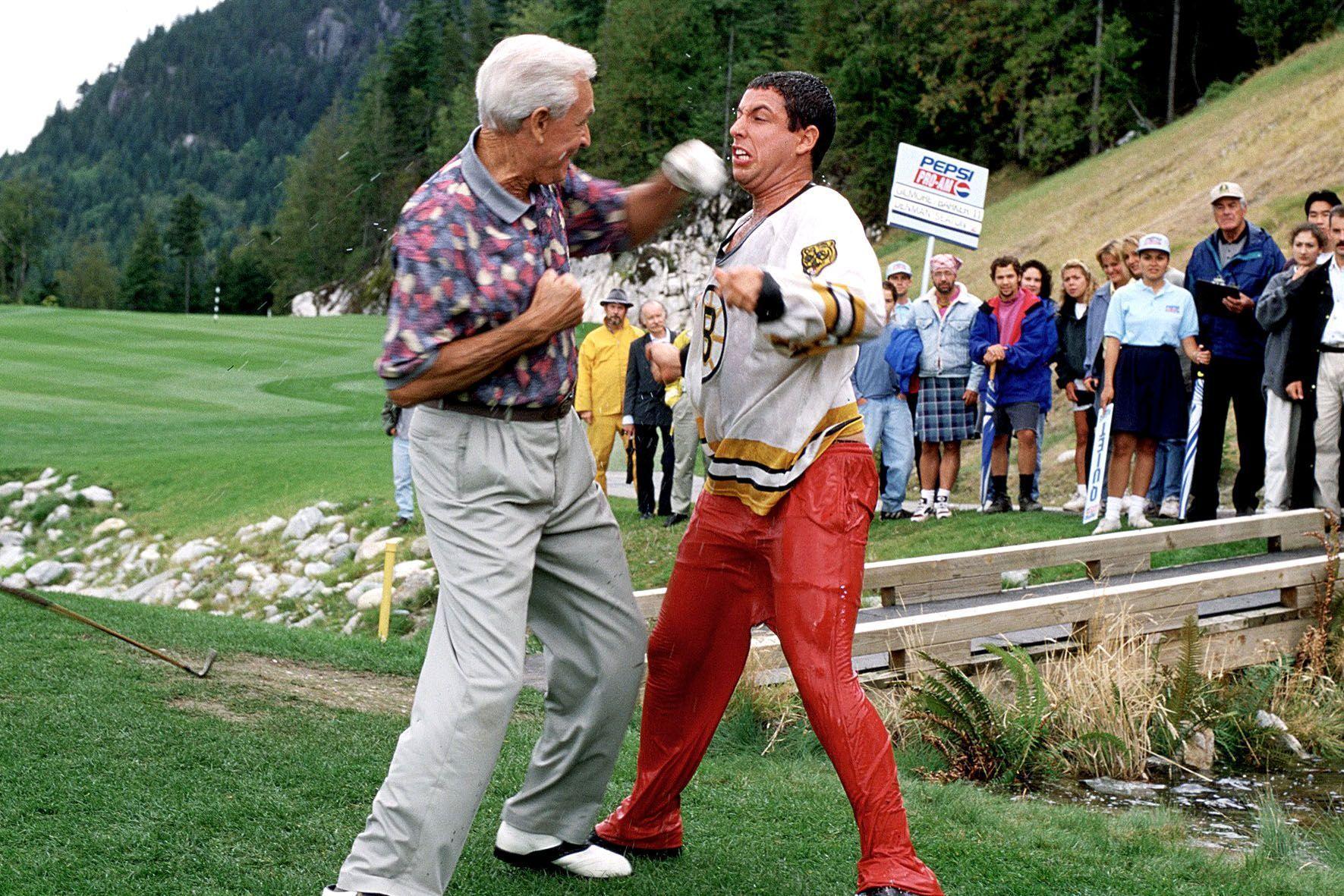
It’s the ultimate low-effort, high-energy encouragement. Most people associate the line immediately with the 1996 classic Happy Gilmore. There’s just one tiny, weird problem with that. Rob Schneider doesn't actually say "You can do it" in the original Happy Gilmore. For a different look, read: this related article.
Seriously. Go back and watch it. You won't find the "Townie" character anywhere near that 18th green in 1996.
The Mandela Effect of 90s Comedy
It’s kinda wild how our brains mash things together. Because Adam Sandler and Rob Schneider are basically joined at the hip professionally, we tend to blend their 90s filmography into one giant, blurred memory of hockey jerseys and bad haircuts. Related insight on the subject has been provided by Deadline.
The famous "You can do it!" guy actually made his debut in the 1998 film The Waterboy. Schneider played a "Townie" in the crowd, cheering on Bobby Boucher with a bizarre, high-pitched enthusiasm that somehow became a piece of cinematic history.
So why do we all think it’s in Happy Gilmore?
Basically, it's because the phrase became a recurring gag that Sandler and Schneider used to bridge their entire cinematic universe. It’s like the "Stan Lee cameo" of goofy comedies. After The Waterboy, the line popped up in:
- Little Nicky (where the character is actually credited as "The Townie")
- 50 First Dates
- The Longest Yard
- Bedtime Stories
Sandler even flipped the script and did a cameo in Schneider’s movie The Animal just to yell the line back at him. It became a meta-joke about their own friendship.
Happy Gilmore 2 Changed Everything
For nearly thirty years, saying "You can do it" was technically a "Waterboy" reference. But then 2025 rolled around. With the release of Happy Gilmore 2 on Netflix, the "Mandela Effect" finally became reality.
In the sequel, Schneider actually does show up to deliver the line. He appears in one of Happy’s visions—dressed as a cowboy on a tricycle, because why not?—and shouts the iconic phrase. It was a massive "Easter Egg" for fans who had been misquoting the first movie for decades.
It was a smart move by the writers. They knew the audience expected it. By putting the "You can do it Happy Gilmore" moment into the sequel, they effectively "fixed" the timeline. It’s no longer a mistake to link the phrase to Happy; it’s just thirty years late.
Why the Phrase Stuck
Honestly, the line works because it’s so versatile. It’s not just a movie quote; it’s a vibe. In the original Waterboy scene, it was about an underdog finding his power. By the time it hit the Happy Gilmore sequel, it was pure nostalgia.
It’s also surprisingly hard to say without the accent. Try it. You can’t just say it normally. You have to do that weird, raspy, over-excited Schneider trill.
What Most People Get Wrong
If you’re arguing with friends at a bar about this, here are the cold, hard facts to keep you from looking like a casual:
- The Original Film: Rob Schneider is not in the 1996 Happy Gilmore. He was busy with Down Periscope and Men Behaving Badly at the time.
- The Origin: The line first appeared in The Waterboy (1998).
- The Lyrics: The phrase was so popular it even ended up in the song "Original Prankster" by The Offspring.
- The Sick Factor: Rob Schneider has gone on record saying that while he appreciates the fans, hearing people yell "You can do it!" at him in public is like a "cup of coffee you’ve had too much of." It’s good, but sometimes it makes you want to throw up.
How to Use "You Can Do It" Like a Pro
If you’re going to quote it, you gotta do it right. Here’s the actionable breakdown for your next social interaction.
First, wait for the peak of the struggle. Don't say it when someone is just starting. Wait until they’re about to give up. That’s when the Townie energy is most needed.
Second, the "All Night Long" add-on is optional but encouraged. This comes from the ending of The Waterboy and adds that extra layer of "I know my Sandler lore" credibility.
Finally, keep it weird. The whole point of the "You can do it" guy is that he’s an outsider—a random person in the crowd who believes more than anyone else.
The next time you’re watching Happy Gilmore 2 and see that tricycle-riding cowboy, remember: you aren’t just watching a cameo. You’re watching the closing of a thirty-year-old loop in pop culture history.
If you want to really test your knowledge, go back and watch the "Townie" scenes in Little Nicky and see if you can spot the difference in the accent. It's subtler than you'd think.