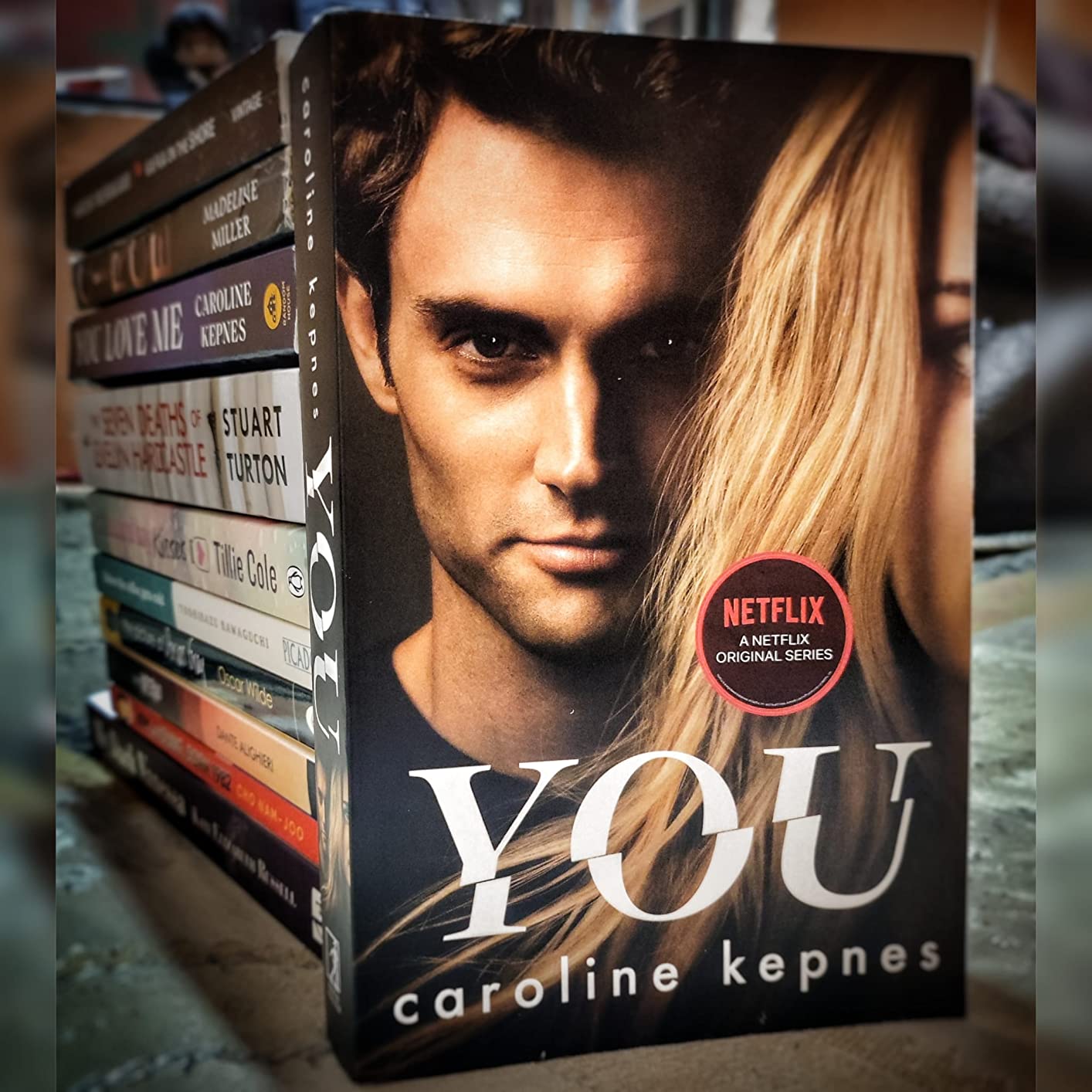
If you’ve only seen the Netflix show, you don’t actually know Joe Goldberg. Not really.
The television version of Joe, played by Penn Badgley, is a curated monster. He's got these puppy-dog eyes and a habit of saving neighborhood kids like Paco or Ellie—characters who, by the way, don't even exist in the original book. In the source material, You by Caroline Kepnes, Joe Goldberg is a much darker, much more visceral animal. He isn't a misunderstood romantic with a savior complex. He’s a predator who thinks he’s a poet.
Honestly, reading the novel is a completely different experience than binge-watching the series. It’s claustrophobic. It’s mean. It's written in a relentless second-person perspective ("you") that forces you into the passenger seat of a car driven by a psychopath. You aren't watching Joe; you are with Joe. And Joe is terrifying.
The Joe Goldberg You Haven't Met Yet
In the 2014 debut novel, Joe is a bookstore manager at Mooney’s in the East Village. When Guinevere Beck walks in, he doesn't just fall in love; he begins a tactical acquisition.
The book leans heavily into the "incel" energy that the show tends to polish away. Book-Joe is deeply misogynistic. His internal monologue is littered with graphic, often repulsive descriptions of women that would never make it past a network standards-and-practices department. He doesn't just stalk Beck's social media; he deconstructs her entire existence through the lens of his own narcissism.
One of the biggest shocks for show fans is how Joe treats other people when the cameras aren't "on." In the novel, he has zero redeeming qualities. There is no tragic backstory about being locked in a cage by Mr. Mooney to make us feel bad for him. He’s just a man who decided he wanted something and felt entitled to take it.
Why the Second-Person Narrative Matters
Caroline Kepnes made a brilliant, albeit nauseating, choice to write the book using "you."
- It creates a false sense of intimacy.
- The reader is constantly addressed as the victim (Beck).
- It highlights Joe’s delusion that he and Beck are already a "we."
- The prose feels like a 400-page suicide note or a confession.
Because of this style, the humor is pitch-black. Joe’s critiques of New York hipsters, MFA students, and the "digital posturing" of the mid-2010s are actually pretty funny, which is the most dangerous part. You find yourself nodding along to his rant about a pretentious customer, only to remember two sentences later that he’s currently masturbating outside someone's window.
What Really Happened With Guinevere Beck
The relationship in You by Caroline Kepnes is a "romantic tangle with an ever-tightening knot," as Booklist once put it. Beck is far more complex and, frankly, less "likable" in the book. She’s messy, self-absorbed, and often treats Joe like an accessory.
In the show, Beck is a victim we’re meant to mourn. In the book, Kepnes presents a world where everyone is kind of the worst. This doesn't justify Joe's actions, obviously, but it makes the psychological warfare feel more grounded. Beck isn't a saint; she's a person with flaws who happens to have a serial killer for a boyfriend.
The ending of the first novel is also significantly more brutal than the Season 1 finale. While the show gives Beck a moment of near-escape that feels like a classic slasher movie, the book ending is a slow, inevitable march toward a basement. There is a specific detail involving a "single mug of piss" that Joe leaves behind—a mistake that haunts him throughout the sequels.
Key Differences Between the Novel and the Show
- The Kids: Paco (S1) and Ellie (S2) are TV inventions. Book-Joe doesn't care about mentoring children; he only cares about himself.
- Candace: In the book, Candace is dead. Very dead. She doesn't come back to haunt him in California. Joe's move to LA in the sequel Hidden Bodies is triggered by a completely different woman named Amy Adam.
- The Tone: The show is a "stalker-thriller." The book is a "literary horror-satire."
- The Cage: The physical cage exists in both, but the psychological cage of Joe's mind is much tighter in the prose.
The Evolution of the Joe Goldberg Universe
Kepnes didn't stop with New York. The series has expanded into a multi-book saga that follows Joe as he tries—and fails—to find "the one."
- Hidden Bodies: Joe moves to Los Angeles, hates the culture, and meets Love Quinn. This is where the show and books diverge almost entirely.
- You Love Me: Joe moves to the Pacific Northwest to start over. No spoilers, but his "reformation" goes about as well as you’d expect.
- For You and Only You: Joe heads to Harvard. Yes, Harvard. He gets into a writing fellowship, and the satire of the literary world is razor-sharp.
Each book reinforces the same uncomfortable truth: Joe Goldberg cannot change because he doesn't think he’s doing anything wrong. He views himself as the hero of a classic romance novel, even when he's digging a grave.
Is It Worth Reading?
Kinda. If you have a strong stomach.
If you’re looking for a cozy mystery or a "bad boy" romance, stay far away. This is a story about a predator. But if you want to understand how the "nice guy" trope can be weaponized into something lethal, Kepnes is a master. She exposes the vulnerability of our hyper-connected lives. We tweet our locations, post our coffee orders, and leave our digital doors unlocked.
Joe Goldberg is just the guy who noticed.
The novel serves as a warning about the performance of social media. Beck performs "the struggling artist," Peach Salinger performs "the loyal best friend," and Joe performs "the perfect boyfriend." Underneath the performance, everyone is just hungry for something they can’t have.
Actionable Insights for Readers and Writers
If you're planning to dive into the Joe Goldberg series, start with the first novel and pay close attention to the unreliable narrator. Notice how Joe justifies his crimes by framing them as "acts of love." It’s a masterclass in character voice.
For those who have already finished the books, your next step is to explore the literary references Joe mentions. He has a deep, almost religious obsession with Salinger, Portnoy’s Complaint, and classic noir. Reading the books Joe loves actually makes his descent into madness feel much more calculated. You might also want to look into the audiobook versions, narrated by Santino Fontana. His performance captures the specific "creepy-charming" cadence that makes the prose so effective.
Finally, if you’re a fan of this specific brand of dark, social-media-focused satire, check out Providence by the same author. It’s a different vibe—a bit more supernatural—but it carries that same "Kepnes" DNA of obsession and modern loneliness.