Honestly, it’s a Tuesday night. You're probably not in your room with the windows open, holding up a legal pad to talk to the boy next door. But if "You Belong With Me" starts playing, you're singing. Every. Single. Word.
It has been nearly two decades since Taylor Swift dropped this anthem of unrequited high school pining, and somehow, it hasn’t aged a day. It is the quintessential "girl-next-door" manifesto. It’s the song that turned Taylor from a country darling into a global pop juggernaut. But if you look past the catchy "she wears short skirts" hook, there is a lot of history—and some weirdly specific drama—packed into those three minutes and fifty-one seconds.
The Overheard Phone Call That Started It All
Songs don't just appear out of thin air, though Taylor makes it look like they do. The origin story of You Belong With Me is actually pretty mundane. Taylor was hanging out when she overheard a male friend of hers on the phone with his girlfriend. He was being defensive. He was apologizing for things he didn’t do.
Basically, he was being treated like a doormat.
Taylor felt for him. She went into a songwriting session with her long-time collaborator Liz Rose and pitched the concept of a girl who sees right through the "popular girl" façade. They knocked out the lyrics in a single afternoon. Taylor has often said that the line "She wears short skirts, I wear T-shirts" was her favorite part to write because it perfectly distilled that feeling of being the "underdog" in the high school social hierarchy.
It’s relatable because we’ve all been there. Even if you were the cheerleader, you probably felt like the band geek at some point. That’s the magic of the song—it makes the most famous woman in the world feel like she’s the one sitting on the bleachers while you’re the one in the spotlight.
The Music Video and the Lucas Till Factor
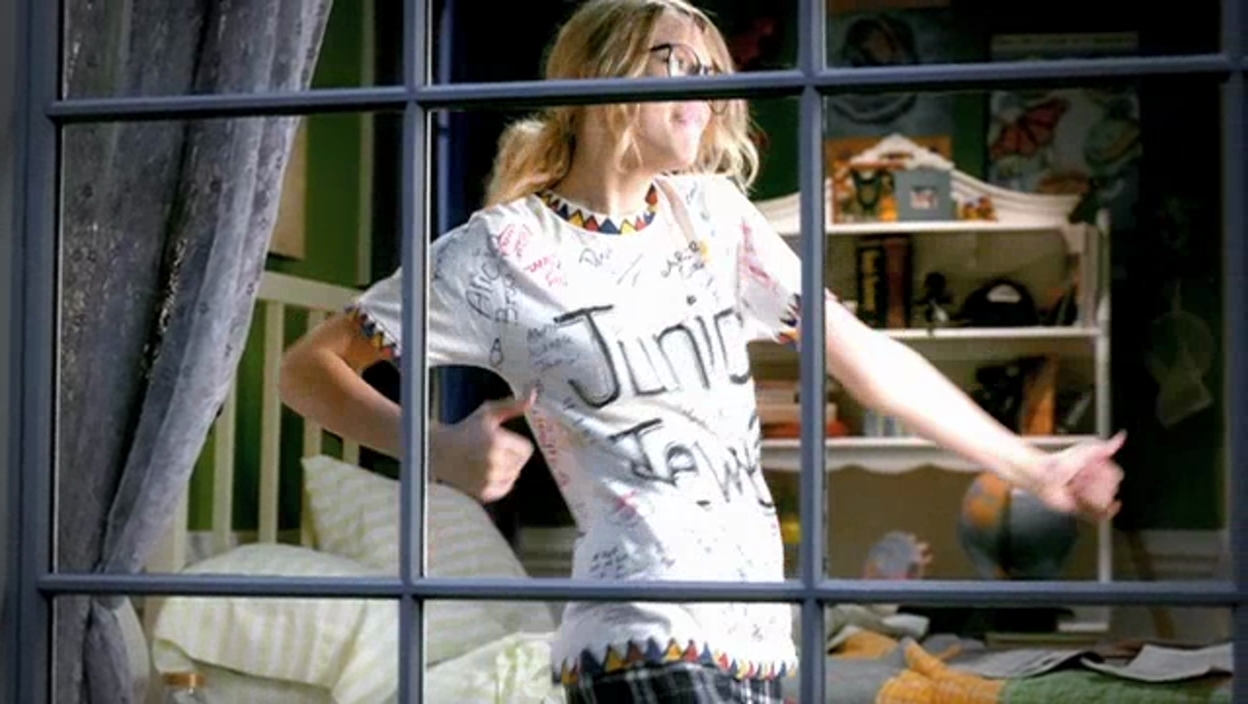
If you close your eyes and think of this song, you’re definitely seeing the video. You’re seeing Taylor in those dorky glasses and the "Junior Jewels" T-shirt. You’re also seeing her as the villain, "rebel" Taylor in the red convertible and the dark wig.
Did you know she played both parts herself?
Director Roman White actually had to use a body double for the scenes where both characters are on screen together. It was shot over two days in Gallatin and Hendersonville, Tennessee. The "dreamy guy" next door was played by Lucas Till, who Taylor met on the set of Hannah Montana: The Movie.
Fun fact: Till actually struggled with the football scenes. He apparently missed a few catches, which made the shoot go way longer than expected. But the chemistry worked. That final prom scene, where they finally reveal their "I Love You" signs? It’s peak 2000s cinema. It won Best Female Video at the 2009 VMAs, which brings us to the most awkward moment in music history.
The Kanye West Incident (The 2009 VMAs)
We have to talk about it. You can't mention by Taylor Swift You Belong With Me without mentioning the night of September 13, 2009.
Taylor was nineteen. She was wearing a sparkly red dress and had just won her first-ever VMA. She was literally mid-sentence when Kanye West hopped on stage, grabbed the mic, and told the world that Beyoncé had "one of the best videos of all time."
Taylor stood there in total shock.
The crowd started booing. In her documentary Miss Americana, Taylor admitted she thought they were booing her. She had to go backstage, cry, and then go perform the song live on a moving subway train just five minutes later. Talk about professional. Beyoncé eventually brought her back out at the end of the night to finish her speech, but the damage was done. That 30-second interruption sparked a feud that would last for over fifteen years.
Taylor’s Version: What Actually Changed?
When Taylor started re-recording her albums to regain ownership of her masters, Fearless (Taylor's Version) was one of the first projects. Fans were terrified that the "new" version of You Belong With Me wouldn't have the same soul.
It did. But there are tiny, "Easter egg" style changes if you listen closely:
- The "The" vs. "My" debate: In the original, the lyric is "I'm in the room, it's a typical Tuesday night." In the 2021 Taylor’s Version, she clearly sings "I'm in my room."
- Vocal Maturity: Her voice is deeper and richer now. She doesn't have the "country twang" that was so forced in 2008, but she still manages to capture the teenage angst.
- Clarity: The production is sharper. You can hear the individual guitar strums and the backing vocals much more clearly than on the original Big Machine recording.
The reason she did this wasn't just for fun; it was business. After Scooter Braun bought her old masters, she wanted to make sure the version people streamed was the one she actually owned. It worked. "Taylor's Version" is now the go-to for most radio stations and sync deals.
The Chart Stats That Broke Records
This song wasn't just a "fan favorite"—it was a statistical monster.
- It peaked at number two on the Billboard Hot 100.
- It was the first country song to ever hit number one on the all-genre Radio Songs chart.
- It has been certified 7x Platinum by the RIAA.
Before this, country music was largely "stuck" on country radio. Taylor used this track to kick the door down and march straight into the pop world. It proved that a girl with an acoustic guitar and a story about a boy could dominate the same charts as Lady Gaga and The Black Eyed Peas.
Why We Still Care in 2026
It’s been over fifteen years. Why is this song still everywhere?
Maybe because the "underdog" story is universal. We all feel like we’re "on the bleachers" sometimes. The song captures a very specific type of hope—the idea that if you just stay true to yourself, the person you love will finally "see" you.
It’s also just a masterclass in songwriting. The structure is perfect. The bridge builds tension. The chorus is an earworm that stays in your head for three days. It’s the sonic equivalent of a warm hug and a high school yearbook.
Actionable Insights for Fans and Creators
If you’re looking to dive deeper into the Taylor Swift lore or just appreciate the song more, here is what you can do:
- Watch the "Journey to Fearless" Documentary: It gives a raw look at Taylor’s life while she was writing and touring this song. You’ll see just how much of a "nerd" she actually was back then.
- Compare the Stems: Listen to the 2008 version and the 2021 version back-to-back with high-quality headphones. Try to spot the subtle differences in the banjo and the drum hits.
- Learn the Bridge: If you’re a songwriter, study the bridge. It’s one of the best examples of a "climax" in pop music—it raises the stakes right before the final chorus hits.
- Check Out the Vault Tracks: If you love the vibe of this song, listen to "Mr. Perfectly Fine" or "That’s When" from the Fearless (Taylor’s Version) vault. They were written in the same era and have that same "classic Taylor" DNA.