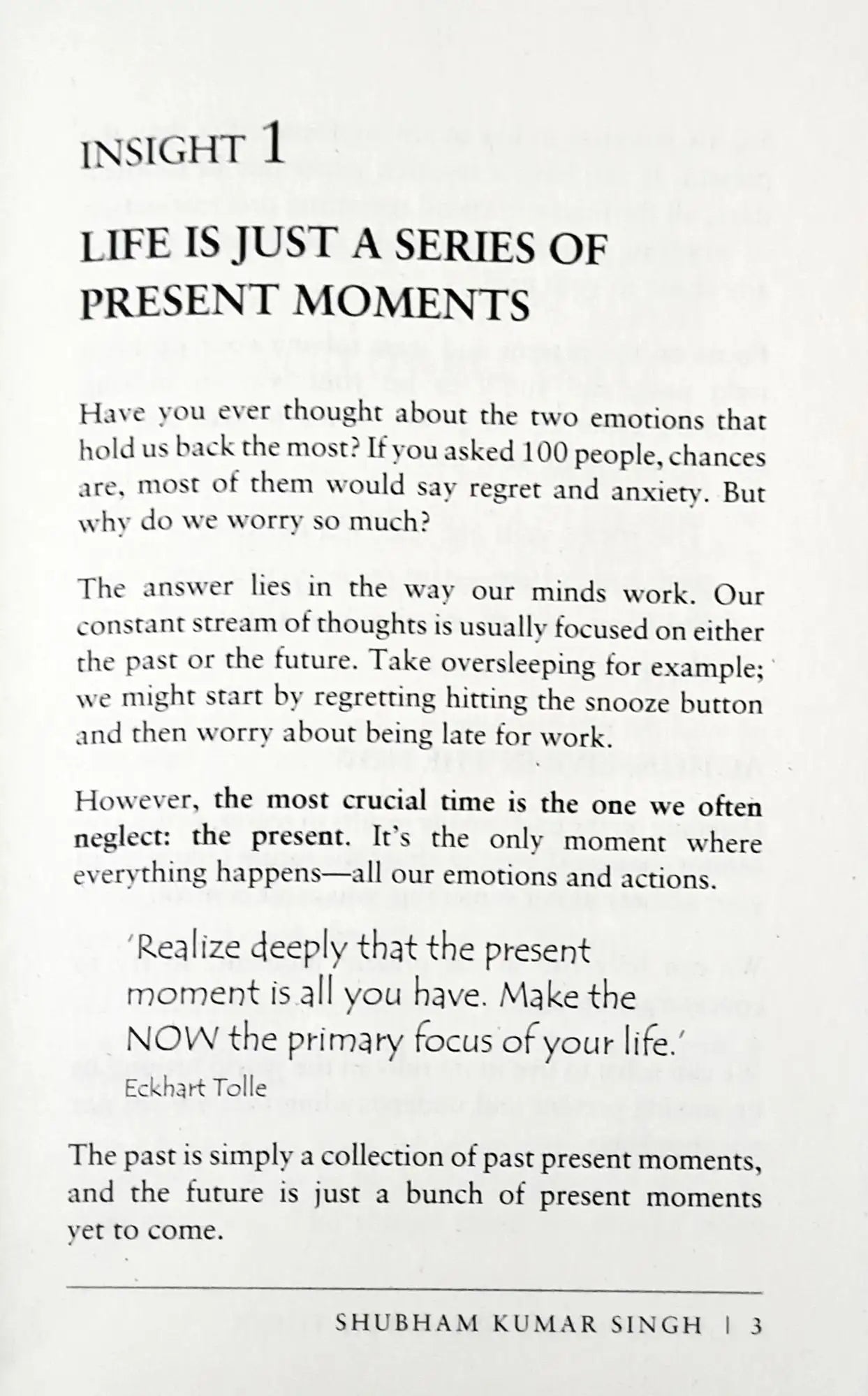
Ever feel like your brain is just a browser with sixty tabs open, and half of them are playing music you can't find? That's the baseline for most of us. But then you pick up a book like You Become What You Think, and suddenly there’s this jarring idea that your internal chaos is actually the blueprint for your entire life. It’s a heavy thought. Honestly, it’s a bit terrifying if you’re currently spiraling about a work deadline or a weird text from a friend.
The core premise isn't exactly brand new, but the way modern psychology and neuroplasticity have caught up to it changes everything. We aren't just talking about "positive vibes" or "manifesting" a Ferrari by closing your eyes really hard. We’re talking about the literal rewiring of the human brain based on repetitive cognitive patterns. If you spend your morning commute rehearsing an argument that hasn't happened yet, you’re training your nervous system for conflict. You’re literally practicing being miserable.
The Science Behind "Thinking Into Being"
Most people think this is just some "woo-woo" self-help fluff. It’s not. There is a concept called Hebbian Theory—often summarized as "neurons that fire together, wire together." When you dwell on specific thoughts, you are physically strengthening the neural pathways associated with those thoughts. If you think you’re a failure, your brain gets really, really good at finding evidence to support that. It becomes efficient at it.
The Reticular Activating System (RAS) acts as the gatekeeper of your brain. It filters out the millions of bits of data hitting your senses every second and only lets in what it thinks is important. If you’ve ever bought a specific car and suddenly started seeing that car everywhere, that’s your RAS at work. In the context of the You Become What You Think book philosophy, if your internal narrative is focused on scarcity or rejection, your RAS will highlight every slight, every "no," and every missed opportunity while ignoring the "yes" staring you in the face.
Dr. Joe Dispenza and other researchers have spent years mapping how these thought patterns affect our biology. It’s not just in your head; it’s in your blood. Chronic negative thinking triggers the adrenal glands to pump out cortisol. Over time, this keeps you in a state of high-beta brain waves—basically a permanent "survival mode." You can't be creative or empathetic when your body thinks a tiger is chasing you.
Breaking the Cycle of "Automatic Negative Thoughts"
Psychiatrist Daniel Amen coined the term ANTs (Automatic Negative Thoughts). These are the little parasites that crawl into your brain and tell you that you’re not good enough or that something bad is about to happen. The book emphasizes that you aren't your thoughts; you’re the observer of them. That's a massive distinction.
Most of us identify with the voice in our head. We think, "I am an anxious person." But the truth is more like, "I am experiencing an anxious thought." It sounds like semantics, but that gap is where your freedom lives. If you can watch a thought pass by like a car on the street, you don’t have to get in the car. You can just let it drive away.
Why Positive Thinking Usually Fails
Let's be real: "Think positive" is often terrible advice. If you’re drowning in debt or dealing with grief, telling yourself "everything is awesome" feels like a lie because, at that moment, it is a lie. Your brain has a very effective "bullshit detector" called the Amygdala. When you try to force a positive thought that you don't actually believe, it creates cognitive dissonance. The stress actually increases.
The You Become What You Think book approach is more about "neutral thinking" or "incremental shifts." You don't go from "I’m a loser" to "I’m a god." You go from "I’m a loser" to "I’m a human who made a mistake today." That’s a believable jump. It’s about directional accuracy, not perfection.
The Role of Habituation
We think about 60,000 to 70,000 thoughts a day. Roughly 90% of those are the exact same thoughts we had yesterday. We are literally living in a loop of our own making. To change who you are, you have to break the loop. This requires more than just reading a book—it requires a conscious interruption of the "default mode network" in your brain.
- Step 1: Catch the thought.
- Step 2: Label it (e.g., "That's a scarcity thought").
- Step 3: Choose a slightly better-feeling alternative.
It’s tedious. It’s slow. But it’s the only way to actually change the physical structure of your gray matter.
Real World Examples: From Theory to Reality
Look at elite athletes. They use "imagery" or "mental rehearsal" religiously. When a golfer visualizes the ball going into the hole, their muscles actually fire in a micro-sequence that mimics the real swing. Their brain doesn't distinguish much between a vividly imagined event and a real one.
This is where the "becoming" part happens. If you mentally rehearse being confident in a meeting, you are pre-paving the neural pathways for confidence. When the meeting actually happens, your brain goes, "Oh, I’ve been here before. I know what to do." You aren't reacting; you're executing a script you wrote earlier.
On the flip side, we see this in "learned helplessness." In the 1960s, psychologist Martin Seligman found that when animals (and humans) feel they have no control over negative outcomes, they eventually stop trying—even when the situation changes and they could escape. They become what they think: powerless.
The Pitfalls of Modern "Mindset" Culture
We have to talk about the toxic side of this. Sometimes, the idea that "you become what you think" is weaponized to make people feel guilty for being depressed or having a hard time. That’s garbage. You can’t "think" your way out of systemic poverty or a clinical chemical imbalance without help.
This philosophy is a tool, not a cure-all. It’s about maximizing your agency within the constraints of your reality. It’s about making sure that YOU aren't the one standing in your own way. Life is hard enough without your own brain rooting against you.
Actionable Steps to Audit Your Mind
If you want to actually use the principles found in the You Become What You Think book, you can't just read it and put it on a shelf. Knowledge without application is just "shelf-help."
- The Morning Download: For five minutes every morning, write down every "junk" thought in your head. Get the poison out on paper so it isn't swirling in your skull.
- The "Is It True?" Filter: When a negative thought hits, ask, "Is this 100% factually true, or is this an interpretation?" Most of the time, it's an interpretation.
- Micro-Shifts: Instead of broad affirmations, use "What if?" statements. "What if I actually handle this meeting well?" It bypasses the brain's BS detector because you’re just asking a question, not making a claim.
- Environmental Cues: Your environment triggers your thoughts. If your desk is a mess, your thoughts will likely be cluttered. Clean the space to clear the mind. Sorta simple, but it works.
The shift from being a victim of your thoughts to being the architect of them is the single most important transition a person can make. It’s not about being "happy" all the time. That’s impossible. It’s about being intentional. It’s about realizing that while you can't control every circumstance, you can absolutely control the narrative you build around those circumstances. And eventually, that narrative becomes your life.
Stop letting your brain run on autopilot. Take the wheel. Even if you only turn it a few degrees today, a year from now, you’ll be in a completely different destination.
Immediate Practice: Spend the next hour observing your thoughts without judging them. Count how many times you criticize yourself versus how many times you encourage yourself. That ratio is the most accurate predictor of where your life is headed. If the ratio is off, don't panic. Just notice it. Awareness is the first step toward actual change.



