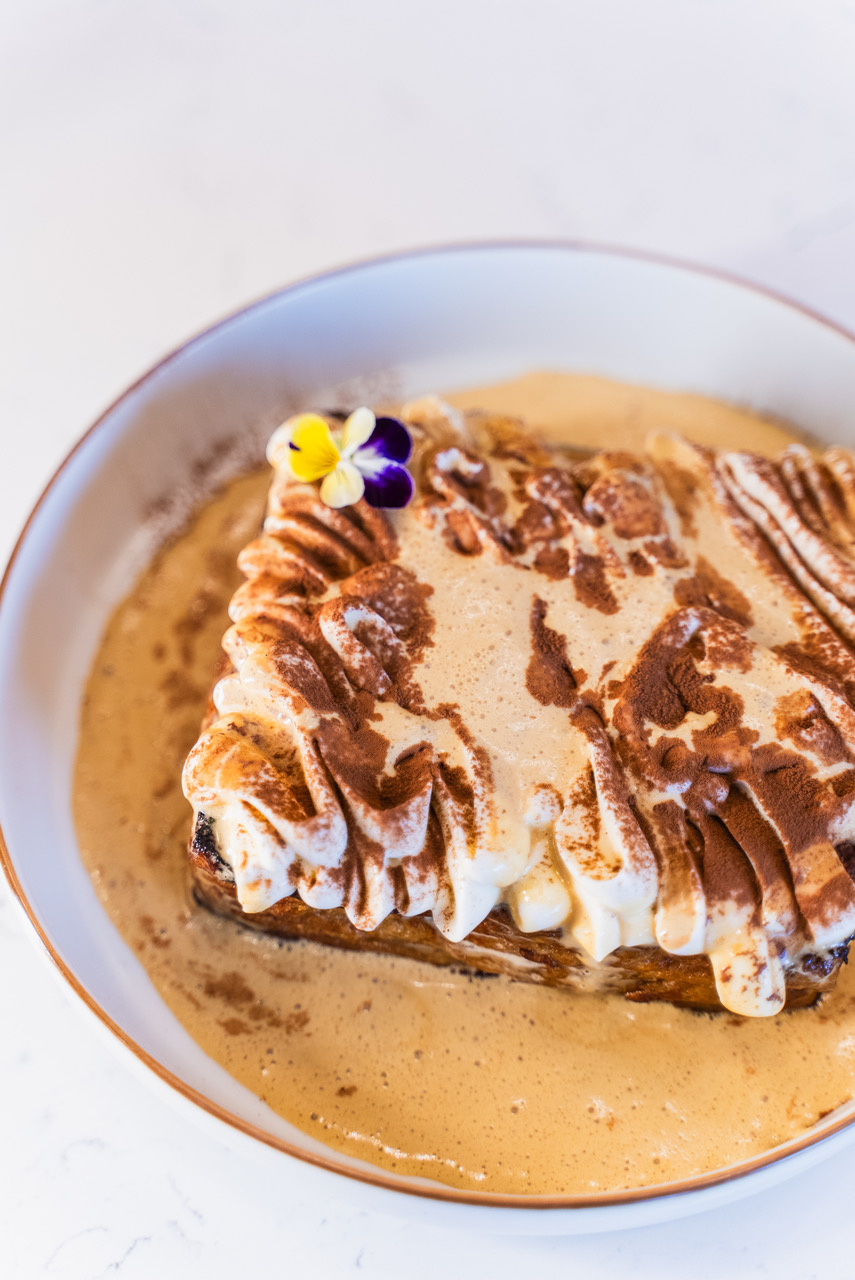
The modern brunch menu is a graveyard of culinary ambition. Most restaurants have realized they can charge twenty dollars for two slices of bread soaked in a generic custard, topped with a dusting of cocoa powder, and call it "Tiramisu French Toast." It is a lie. Real Tiramisu French Toast isn't just a breakfast dish with an identity crisis; it is a complex structural engineering project that balances the acidity of espresso against the high-fat content of mascarpone and the delicate crumb of brioche. To understand why most versions fail, you have to look at the chemistry of the soak and the inevitable collapse of poorly chosen bread.
The core premise of this dish relies on a marriage of two distinct European traditions: the French pain perdu (lost bread) and the Italian tirami sù (pick me up). When done correctly, it provides a caffeinated jolt wrapped in a velvety, cream-heavy exterior. When done poorly, it is a soggy, overly sweet mess that leaves you reaching for an antacid by noon. The secret to a superior version lies in three specific areas: the moisture-barrier of the bread, the stabilization of the cheese, and the temperature of the espresso.
The Structural Failure of Sliced Bread
The first mistake most home cooks and professionals make is using the wrong foundation. Challah and Brioche are often touted as the gold standards, but they are not created equal. A standard grocery store brioche is too airy; it possesses a high-yeast, low-density structure that disintegrates the moment it hits an egg wash. You need a dense, day-old loaf that has lost enough internal moisture to act like a sponge without losing its shape.
If the bread is too fresh, the water molecules in the crumb occupy the spaces where your custard should go. By using "stale" bread—or oven-drying slices at 300°F for ten minutes—you create a vacuum. This vacuum allows the espresso-infused custard to penetrate to the very center of the slice. Without this step, you are simply eating a dry piece of toast with a wet surface.
The Chemistry of the Custard
A standard French toast custard is just milk, eggs, and sugar. A Tiramisu variant requires a shift in the fat-to-protein ratio. You cannot simply pour a shot of espresso into a bowl of eggs and expect magic. The acidity in the coffee can actually cause the proteins in the egg whites to tighten prematurely, leading to a "scrambled egg" texture on the surface of your toast.
To fix this, the espresso must be whisked into the heavy cream first. This buffers the acidity. Furthermore, the inclusion of a dark rum or Marsala wine isn't just for flavor; alcohol acts as a solvent, carrying the aromatics of the coffee deeper into the bread fibers than water-based liquids can reach.
The Mascarpone Problem
Mascarpone is a fickle beast. It is essentially thickened cream with a fat content upwards of 40 percent. If you overwork it, it turns into butter. If you under-whisk it, it runs off the hot toast like water. The key to a definitive Tiramisu French Toast is a stabilized mascarpone dollop.
Instead of just plopping the cheese on top, you must fold it into a semi-stiff whipped cream. This introduces air bubbles that provide a structural "lift." This allows the topping to sit atop the hot bread for several minutes without melting into a greasy puddle. This is the difference between a dish that looks good on a plate and one that survives the first three bites.
The Method of Execution
Heat management is where the investigative cook separates themselves from the amateur. Most people cook French toast on a high-heat griddle. This sears the outside while leaving the middle raw and soggy. Because this specific recipe involves sugars from the chocolate and the coffee, the risk of scorching is doubled.
- The Cold Soak: Submerge your dried brioche for exactly 40 seconds per side. Any longer and the structural integrity is compromised.
- The Two-Stage Cook: Sear the bread in salted butter over medium-low heat for three minutes per side. This develops a Maillard reaction—that golden-brown crust—without burning the coffee solids.
- The Oven Finish: Transfer the pan to a 350°F oven for four minutes. This ensures the custard inside the bread reaches the necessary 160°F to set perfectly, resulting in a texture similar to bread pudding.
Why Cocoa Powder is Your Worst Enemy
The final flourish of any Tiramisu-inspired dish is the dusting of cocoa. However, most people do this too early. Cocoa powder is hygroscopic, meaning it sucks up moisture. If you dust it onto the cream immediately, it turns into a dark, sludge-like syrup within sixty seconds.
The professional move is to wait until the very last second, using a fine-mesh sieve. You should also be using Dutch-processed cocoa. It has been treated with an alkalizing agent to reduce acidity, which complements the bitterness of the espresso rather than competing with it. If you want to get truly aggressive with the flavor profile, mix a pinch of finely ground sea salt into the cocoa. The salt suppresses the bitterness of the coffee and makes the chocolate notes pop.
The Real Cost of Quality
There is a reason you don't see "authentic" Tiramisu French Toast often. It is expensive to produce. Real mascarpone, high-grade espresso, and artisan brioche drive food costs up significantly compared to a standard pancake breakfast. When a menu offers this for a low price, they are cutting corners—likely using imitation maple syrup and cheap oily "whipped topping."
Understanding these variables transforms a simple recipe into an exercise in culinary precision. It is no longer just breakfast; it is a study in texture and thermal dynamics. The next time you see this dish on a menu, look at the bread. If it isn't at least an inch thick and holding its shape under the weight of the cream, send it back. You are being sold a soggy lie.
Find a bakery that sells unsliced, high-density brioche. Buy a bottle of real Marsala. Dry your bread until it feels like a soft brick. Only then will you understand why this dish earned its reputation in the first place.