Honestly, if you close your eyes and think about a "picnic basket," there’s a 90% chance you hear a very specific, nasal voice saying "pic-a-nic." That is the power of Yogi Bear and Boo Boo. They aren't just old cartoons gathering dust in the Warner Bros. vault. They are cultural archetypes.
It started in 1958. Yogi wasn’t even the star of his own show back then; he was just a supporting act on The Huckleberry Hound Show. But audiences are fickle and wonderful, and they gravitated toward the bear in the green hat. Within three years, Yogi and his diminutive sidekick, Boo Boo, had their own series, a theme song that everyone still knows, and a legacy that outlasted almost every other Hanna-Barbera creation from that era.
The Secret Sauce of Yogi Bear and Boo Boo
What most people get wrong about these two is that they’re just "funny animals." They aren't. They represent a classic comedic trope: the "smartest guy in the room" who is actually constantly failing, paired with the "voice of reason" who is ignored.
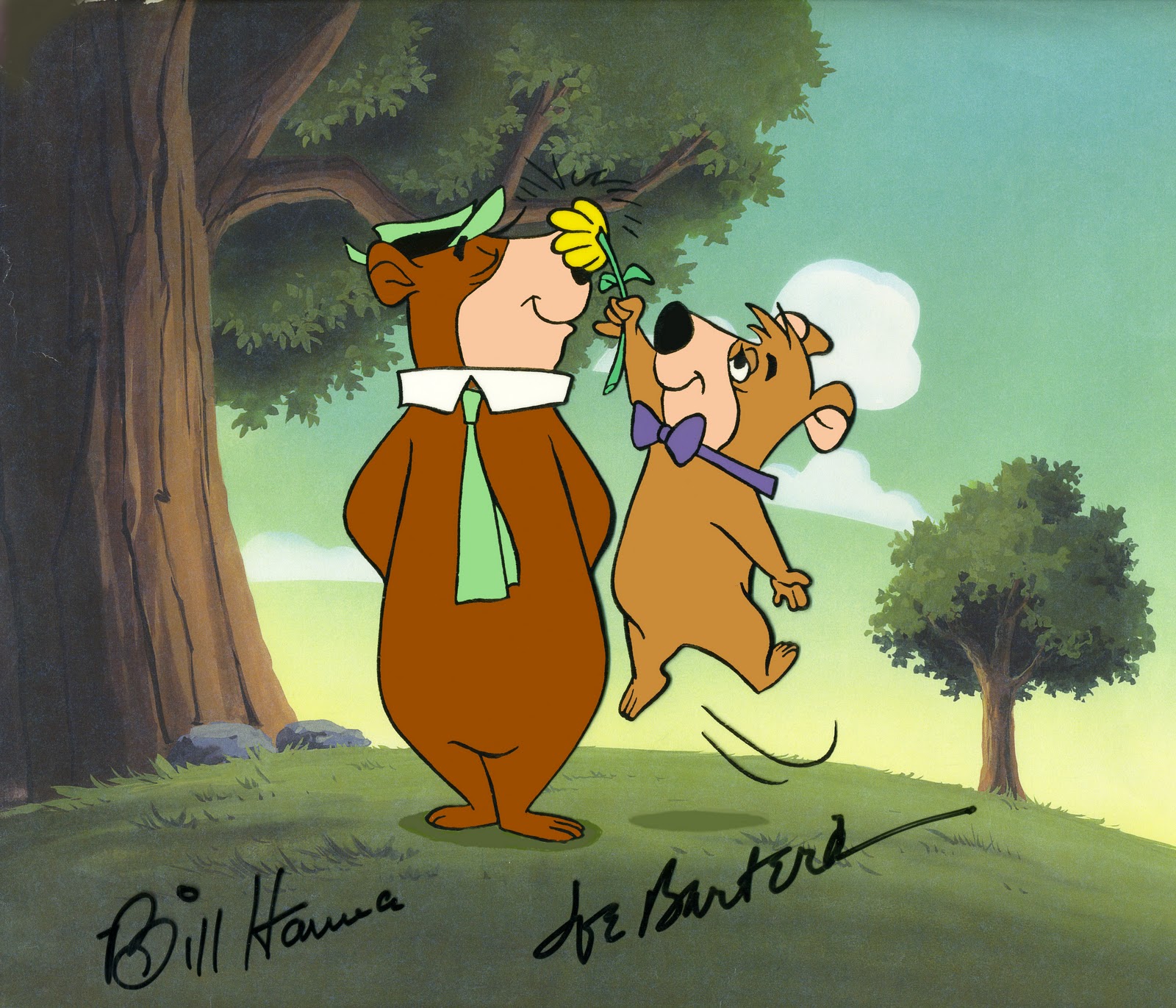
Yogi is basically a con artist with a heart of gold. He’s obsessed with the "pic-a-nic" baskets of Jellystone Park. He thinks he’s "smarter than the average bear," which is his catchphrase, but his ego is his undoing. Then you have Boo Boo.
Boo Boo is the moral compass. He’s the one wearing the blue bowtie, constantly warning Yogi that Ranger Smith isn’t going to like whatever scheme is currently in motion. "But Yogi, the Ranger isn't gonna like that," is the mantra of the sensible person stuck in a chaotic friendship. We all have a Boo Boo in our lives. Or, if we’re honest, we are the Boo Boo trying to keep our reckless friends out of trouble.
Daws Butler and the Art of the Voice
You can’t talk about Yogi Bear and Boo Boo without talking about Daws Butler. He was the voice acting genius who gave Yogi that distinct Ed Norton-esque (from The Honeymooners) warble. Don Messick provided the contrast with Boo Boo’s soft, timid, yet loyal tone.
The chemistry between these two voices defined the show. Animation in the late 50s and early 60s was "limited animation." This was a cost-cutting measure by Hanna-Barbera where only the parts of the character that needed to move (like the mouth or an arm) actually moved. Because the visuals were static, the voice work had to carry the entire emotional weight. It worked. It worked so well that the characters felt more "real" than modern CGI creations with million-dollar budgets.
Why Jellystone Park Was a Stroke of Genius
Jellystone is obviously a riff on Yellowstone National Park. By setting the show there, Hanna-Barbera tapped into the burgeoning American obsession with the great outdoors and the "Great American Road Trip" of the 1960s.
Ranger Smith is the third pillar of this dynamic. He isn't a villain. That’s a common misconception. Smith is a middle-manager. He’s a guy trying to do his job, follow the rules, and keep the park running. Yogi is the "natural force" that disrupts the bureaucracy. This conflict—the rule-follower versus the rule-breaker—is universal. It’s why the show translates so well across different generations.
The Evolution from 2D to 3D
We have to address the 2010 live-action/CGI hybrid movie. Dan Aykroyd voiced Yogi, and Justin Timberlake voiced Boo Boo. Some purists hated it. But it proved something important: the characters are durable. Even when wrapped in 3D textures that looked a little uncanny-valley, the relationship between the two bears remained the hook.
The newer Jellystone! series on Max (formerly HBO Max) takes a totally different route. It’s manic, weird, and breaks the fourth wall. It reimagines Yogi Bear and Boo Boo as part of a larger community of Hanna-Barbera characters. It’s a departure, but it keeps the "smarter than the average bear" spirit alive for kids who wouldn't know a 1958 Huckleberry Hound episode if it bit them.
The Cultural Impact You Probably Missed
Yogi Bear is one of the few cartoon characters to have a real-world business impact. Look at the "Yogi Bear’s Jellystone Park Camp-Resorts." There are over 75 locations across North America. People literally pay to vacation in a place branded after a bear who wants to steal their food. That is incredible branding.
Then there’s the "Yogi Bear" effect in real-life national parks. Park rangers have actually cited the cartoon when explaining why tourists shouldn't feed real bears. The "begging bear" phenomenon in places like Yellowstone was exacerbated by the cuddly image of Yogi. Real bears aren't wearing ties and hats; they’re 600-pound predators. The show inadvertently created a PR problem for the National Park Service, which is a testament to how deeply these characters permeated the public consciousness.
Lessons from the Picnic Basket
What can we actually learn from these two?
- Persistence pays off. Yogi never stops trying. Even after a thousand "no's" from Ranger Smith, he's back at it with a new catapult or a disguise.
- Loyalty is quiet. Boo Boo doesn't agree with Yogi most of the time. He thinks the plans are dumb. But he stays. He helps. That’s a ride-or-die friend.
- Know your brand. Yogi knows exactly who he is. He’s a bear who likes hats and food. He doesn't try to be a wolf or a mountain lion.
How to Experience the Best of Yogi and Boo Boo Today
If you’re looking to dive back into Jellystone, don't just watch the modern stuff. Go back to the source.
- The Yogi Bear Show (1961-1962): This is the gold standard. The writing is sharp, and the "limited animation" has a retro charm that CGI can’t touch.
- Hey There, It's Yogi Bear! (1964): The first theatrical feature. It actually has a surprisingly decent plot involving a circus and a romance with Cindy Bear.
- Yogi’s Gang (1973): This is where it gets weird. They fly around in a floating ark to fight environmental villains like "Mr. Pollution." It’s a time capsule of 70s eco-anxiety.
Yogi Bear and Boo Boo represent a specific era of American optimism, but their dynamic—the dreamer and the realist—is timeless. They survived the transition from black-and-white TV to Technicolor, from Saturday morning cartoons to streaming services, and from hand-drawn cels to pixels.
To get the most out of this legacy, start by tracking down the original 1960s shorts. Pay attention to the background art; those stylized, gouache-painted forests are masterpieces of mid-century modern design. Next, check out the Jellystone! reboot to see how the characters have been adapted for a faster-paced, more surreal audience. Finally, if you're ever in a national park, remember the real-world lesson: keep your food locked up. Real bears aren't nearly as polite as Yogi when they want your lunch.