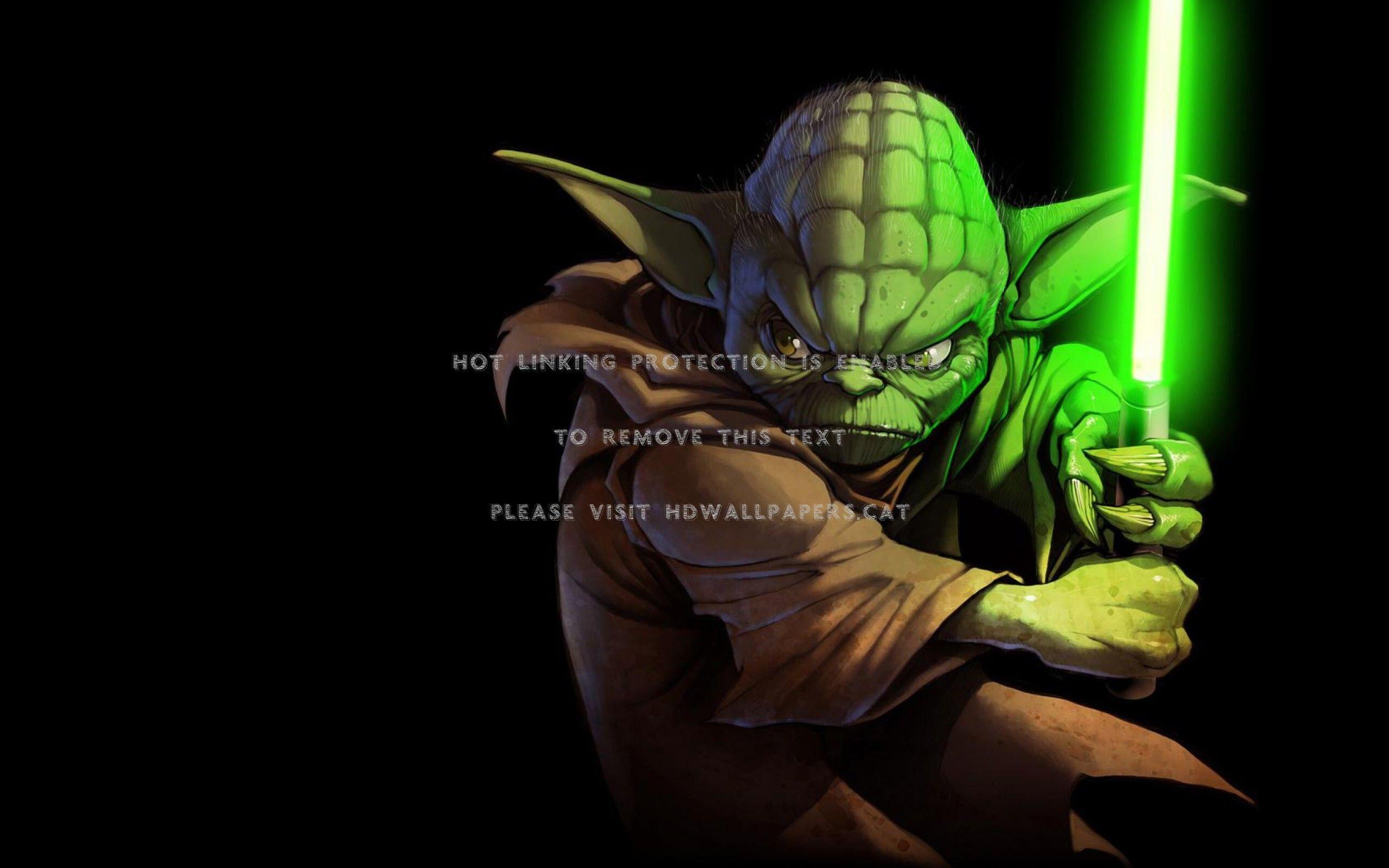
You know the one. He’s small, wrinkled, intensely powerful, and speaks in a syntax that would drive an English teacher to early retirement. For decades, if you said "that Star Wars green guy," everyone knew you meant Yoda. Then 2019 happened. Suddenly, the internet exploded with "Baby Yoda," a character who isn't actually Yoda but looks exactly like him, forcing a whole new generation of fans to realize we don't even know what these things are called.
It’s actually kinda wild. George Lucas, the man who mapped out every star system and trade route in his galaxy, intentionally left a massive hole in the lore. Yoda's species has no name. It’s officially "Unknown." This wasn't an accident. Lucas famously forbade anyone from writing a backstory for Yoda’s people because he wanted the character to remain a mystery. He’s a "Kybuck" or a "Lannik"? Nope. He's just... him.
The Original Star Wars Green Guy: Yoda’s Puppet Origins
When Frank Oz first stuck his hand into a puppet made of latex and foam on the set of The Empire Strikes Back, nobody knew if audiences would buy it. They almost didn't. Early designs for Yoda looked like a garden gnome or a weird little elf with a long nose. It was Stuart Freeborn, the legendary makeup artist, who saved the design by blending his own facial features with those of Albert Einstein. That’s why Yoda looks so "wise." Look at the eyes. They aren't alien; they’re human.
Yoda isn't just a mascot. He represents the shift in how we understand the Force. Before him, the Force was about laser swords and blowing up space stations. Then this 2-foot-tall green guy shows up in a swamp and starts lifting X-wings with his mind. He proved that "size matters not."
He’s nearly 900 years old when he dies in Return of the Jedi. Think about that timeline. He saw the Republic fall, the Jedi wiped out, and lived in a muddy hole on Dagobah for twenty years just waiting for the right person to show up. That kind of patience is basically his superpower. Honestly, his fighting style in the prequels—the spinning, the flipping, the "Ataru" form—is cool, but it’s his quiet moments that actually define the franchise.
The New Contender: Grogu and the Baby Yoda Fever
Then came The Mandalorian.
When the door of that floating pram opened, the world lost its collective mind. Grogu (the artist formerly known as Baby Yoda) changed the trajectory of the brand. He isn't a clone. He isn't Yoda's son—at least, as far as we know right now. He’s just another member of this nameless, rare species.
What’s fascinating is the biological consistency. Even at 50 years old, Grogu is a toddler. This suggests the species ages at a 1:10 ratio compared to humans, or perhaps even slower. It makes sense. If you’re going to live for nine centuries, you’re probably going to spend a good sixty or seventy years in diapers.
Why the Mystery Matters
Some fans hate the lack of a name. They want a planet. They want a culture. They want a Wikipedia page with 40,000 words on the Star Wars green guy’s home world. But keeping them mysterious is why they stay special. In a universe where every background alien with three seconds of screen time has a five-page backstory, Yoda and Grogu remain the only true enigmas.
- Yoda: The Grand Master. Philosophical. Distant but kind.
- Yaladdle: The only female of the species we’ve seen in the films (specifically The Phantom Menace). She was on the Jedi Council too.
- Grogu: The Foundling. High Force sensitivity but zero training until Luke Skywalker (and later Din Djarin) stepped in.
Yaddle is often forgotten, but she’s crucial proof that Yoda wasn't just a one-off freak of nature. There were others. They were just incredibly rare. In the "High Republic" era—set hundreds of years before the movies—we see Yoda was just as respected then as he was later. He’s the constant.
Is There a "Home World" Out There?
Every few years, a rumor pops up on Reddit or 4chan claiming Disney is about to reveal the "Yoda Planet." So far, it’s all smoke. The closest we ever got was in The Clone Wars animated series, where Yoda travels to a "Force Planet" that seems to be the origin of the Midi-chlorians. It was glowy, ethereal, and very green, but it wasn't his home.
Dave Filoni, the creative lead at Lucasfilm, has been very protective of this. He knows that once you explain a magic trick, the magic dies. If we find out the Star Wars green guy comes from a planet called "Yodaland" where everyone talks backward, the character loses his weight. He’s better as a wandering sage than a tourist representative.
The Puppet vs. CGI Debate
If you want to start a fight at a comic-con, ask which version of the green guy is better.
The original puppet was soulful. The CGI version in Attack of the Clones allowed for that insane lightsaber duel with Count Dooku. Fans hated the "Blueberry Yoda" look in the original 1999 release of The Phantom Menace, which was so bad they eventually replaced him with a digital model for the Blu-ray release.
Now, with Grogu, they’ve gone back to a mix. He’s a puppet that costs roughly $5 million to build. That’s why he feels real. He has weight. When he eats a blue macaron or a frog, the physical interaction with the actors—like Pedro Pascal or Rosario Dawson—is what sells the emotion. You can't fake that with pixels.
What Most People Get Wrong
The biggest misconception? That the species is naturally "light side." While we've only seen "good" versions of the Star Wars green guy, there is no reason a member of this species couldn't fall to the dark side. Imagine a 900-year-old Sith Lord with that kind of power. It would be terrifying.
Also, the "backward talk" isn't a species trait. It’s just Yoda’s quirk. In the expanded lore, other members of the species (like Vandar Tokare from the Knights of the Old Republic games) spoke perfectly normal English (Basic). Yoda chooses to speak that way, perhaps to force his students to listen more closely or to ponder the structure of their thoughts. It's a teaching tool.
Where to Look Next
If you’re trying to track the history of these characters, don't just stick to the movies. The real depth is hidden in the margins.
- Watch The Clone Wars Season 6: The "Lost Missions" arc delves deeper into Yoda's connection to the Force than any of the films. It’s trippy and essential.
- Read The High Republic comics: You get to see Yoda in his prime, long before he became the tired, swamp-dwelling hermit.
- Track the "Mandalorian" timeline: The show is slowly breadcrumbing information about Grogu’s time at the Jedi Temple during Order 66. Someone saved him. We just don't know who yet.
To really understand the Star Wars green guy, stop looking for a species name. Look at the impact. Yoda and Grogu represent the "magic" side of sci-fi. They remind us that in a world of cold machinery and Death Stars, there's still something small, organic, and inexplicably powerful.
To dig deeper into the lore, start by comparing the philosophical teachings of Yoda in The Empire Strikes Back with his more active role in the prequel trilogy. Notice the shift from "warrior" to "teacher." If you're following the modern era, pay close attention to the jewelry and icons Grogu interacts with; the creators often hide planetary symbols in the background of The Mandalorian that hint at the species' origin without explicitly stating it.