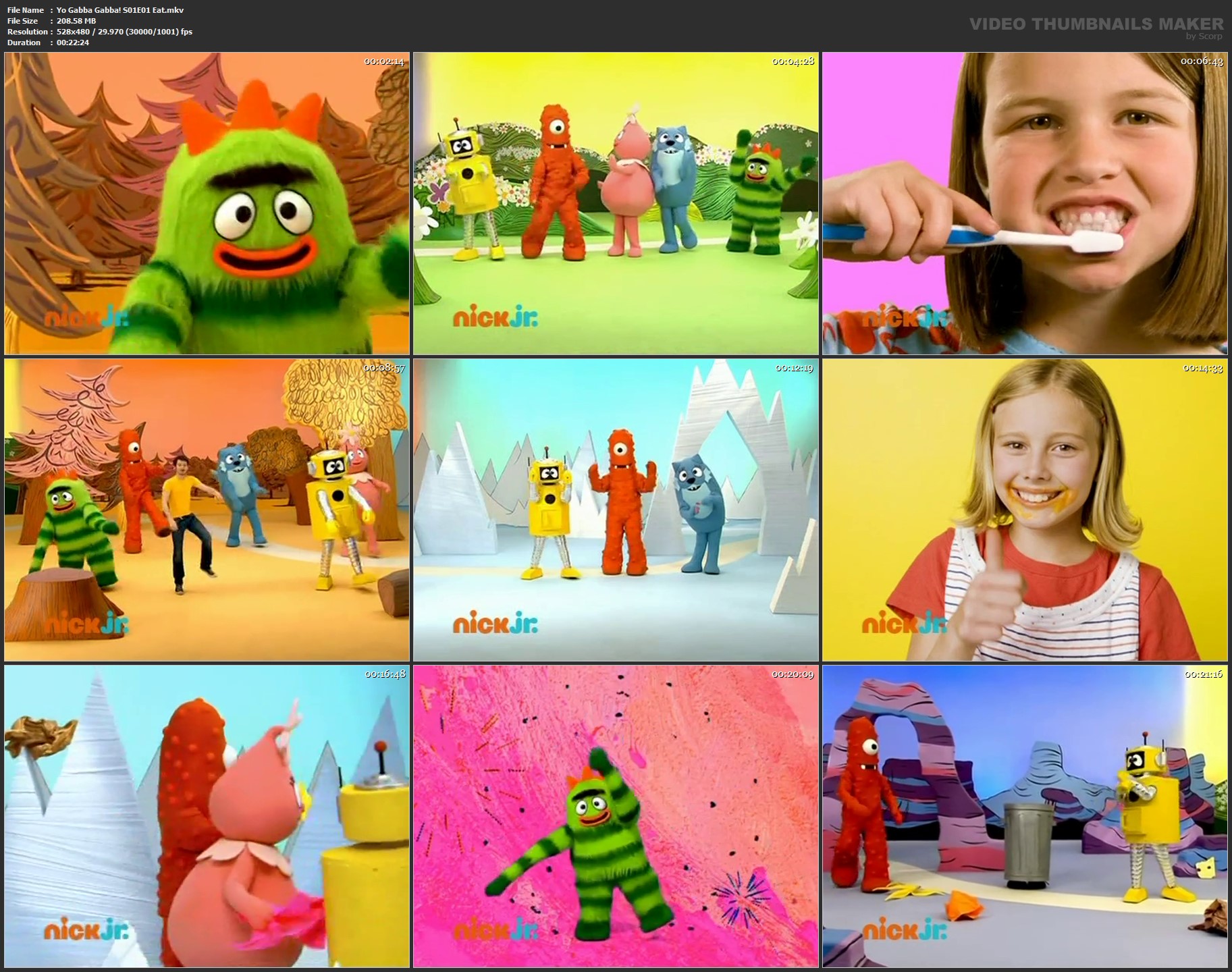
It’s been over a decade since the original felt like a fever dream we all collectively shared. You remember it. The bright orange suit. The dancing robots. The Devo cameos. For years, the original series lived in this weird, nostalgic purgatory of YouTube clips and "Best of" playlists. But then Apple TV+ dropped Yo Gabba GabbaLand! and everything changed. Honestly, reboots usually suck. They’re often soulless cash grabs that miss the point of what made the original weird and special. This one is different.
Christian Jacobs and Scott Schultz, the original creators, didn't just dust off the old costumes. They expanded the universe. It’s bigger. It’s shinier. But somehow, it still feels like that indie basement show that accidentally became a global phenomenon. If you grew up with Muno and Foofa, or if you’re now the parent trying to explain why a giant green monster named Brobee is crying about juice, the new iteration is a fascinating look at how to modernize a classic without breaking it.
The Secret Sauce of Yo Gabba GabbaLand!
The core of the show has always been the music. That hasn't changed. While the original had the "Super Music Friends Show," the new version doubles down on the indie-cred that made the show a hit with hipsters and toddlers alike. We’re talking about a lineup that includes everyone from Anderson .Paak to The Linda Lindas.
It’s rare. Usually, kids' shows have this grating, high-pitched MIDI soundtrack that makes parents want to retreat into a soundproof room. This show treats kids like they have actual taste. It’s basically Coachella for five-year-olds. The guests don't just show up for a paycheck; they seem genuinely hyped to be there.
There's a specific kind of magic in seeing Flea from Red Hot Chili Peppers or Thundercat interacting with puppets. It works because it isn't ironic. The show is completely sincere. When Kammy (played by Kamryn Smith) takes over the hosting duties, she brings a fresh energy that bridges the gap between the old school and the new generation. She’s great. She feels like a natural extension of the world DJ Lance Rock built, rather than a replacement.
Kammy and the New Host Dynamic
Replacing DJ Lance Rock was always going to be the biggest hurdle. He was the face of the brand. But Kamryn Smith’s Kammy isn't trying to be Lance. She’s her own character. She brings this wide-eyed curiosity to the Land that feels very grounded.
In the original, Lance was the conductor. In Yo Gabba GabbaLand!, Kammy feels more like a participant. She’s exploring alongside the audience. This subtle shift in power dynamics makes the lessons feel less like a lecture and more like a shared discovery. The show manages to tackle social-emotional learning without being "preachy." It’s just... nice.
Why the "Cool Factor" Still Matters in 2026
We live in an era of over-produced, 3D-animated content that feels a bit sterile. Most of what’s on YouTube Kids looks like it was generated by an algorithm designed to maximize watch time. Yo Gabba GabbaLand! is the antidote to that. It’s tactile. You can see the fuzz on the puppets. You can see the practical sets. It has a "handmade" quality that resonates in a world of AI-generated noise.
The visual aesthetic remains a mix of 8-bit video games, 1970s variety shows, and Japanese kaiju culture. It shouldn't work. On paper, it sounds like a mess. In practice, it’s a masterclass in art direction. The colors are saturated, the shapes are bold, and the pacing is intentionally steady. It doesn't overstimulate.
The Educational Component: Beyond the Beats
The show has always been quietly smart about developmental milestones. They use the "Gabba Gabba" formula—song, dance, short segment, lesson—to hammer home basic concepts.
- Emotional regulation (it’s okay to be sad!)
- Physical coordination (wiggle it out!)
- Social cues (ask before you take!)
In the new series, these themes are updated for modern anxieties. They touch on things like patience and sharing in a way that feels relevant to kids today. It’s not just about "don't bite your friends" anymore; it’s about navigating a very complex world with kindness.
The Cultural Legacy of the Gabba Universe
When you look back at the history of the show, which started on Nick Jr. back in 2007, it’s wild to see how many "cool" adults were involved. The Flaming Lips, MGMT, Biz Markie—rest in peace to the legend—and even Jack Black.
The revival continues this tradition. It’s a badge of honor for an artist to be on this show. Why? Because it’s one of the few places where an artist can be totally absurd and totally themselves. There’s no pressure to be "cool" because the show is already the coolest thing on the block.
The production value has clearly seen an upgrade with the Apple TV+ budget, but the soul is intact. They kept the "Dancey Dance" segments. They kept the "Cool Tricks." They kept the "Funny Faces." They understood that the format wasn't broken, so they didn't try to fix it. They just gave it more room to breathe.
What Most People Get Wrong About the Show
A lot of people think it’s just "weird for the sake of being weird." That’s a mistake. Every design choice is intentional. The characters represent different archetypes of childhood. Brobee is the "little one" who feels big emotions. Toodee is the energetic one. Muno is the awkward but lovable one. Foofa is the dreamer. Plex is the logic.
By having these distinct personalities, the show allows children to see themselves reflected in the Land. It’s a safe space for different temperaments. You don't have to be the loudest or the fastest to belong in the Gabba gang. You just have to be you.
Actionable Steps for New and Returning Fans
If you're diving into the new world of Yo Gabba GabbaLand!, here is how to get the most out of the experience with your family or just for your own nostalgia:
- Don't skip the music. Many of the songs from the new series are available on streaming platforms. They’re legitimately good tracks that won't make you want to throw your phone out the window during a long car ride.
- Look for the cameos. Part of the fun is seeing which of your favorite actors or musicians pop up in the background. It’s a "who’s who" of creative talent.
- Use the "Dancey Dance" segments for brain breaks. If your kids (or you) have been sitting for too long, these 2-minute segments are perfect for burning off excess energy.
- Compare the old and new. If you have access to the original episodes, watch them alongside the new ones. It’s a great way to talk to kids about how things change and grow while staying the same at heart.
- Follow the creators. Christian Jacobs (also known as the lead singer of The Aquabats) often shares behind-the-scenes glimpses of the puppet builds and set designs on social media. It's a goldmine for anyone interested in the "how" behind the "wow."
The reality is that we need more shows like this. We need shows that encourage creativity, movement, and genuine kindness without being cynical. Whether it’s the original run or the brand-new episodes on Apple TV+, the world of Gabba remains a bright spot in the landscape of children’s media. It's weird, it’s loud, and it’s exactly what we need right now.
Next Steps for Enthusiasts: Check out the official Yo Gabba GabbaLand! soundtrack on Spotify or Apple Music to find the full versions of the guest artist tracks. If you're a collector, keep an eye out for the new line of merchandise that focuses on sustainable materials—a shift the brand made to align with more modern environmental standards. Finally, if you haven't seen the "Making of" shorts, they offer a brilliant look at the puppetry techniques used to bring Muno and the gang to life in 4K.