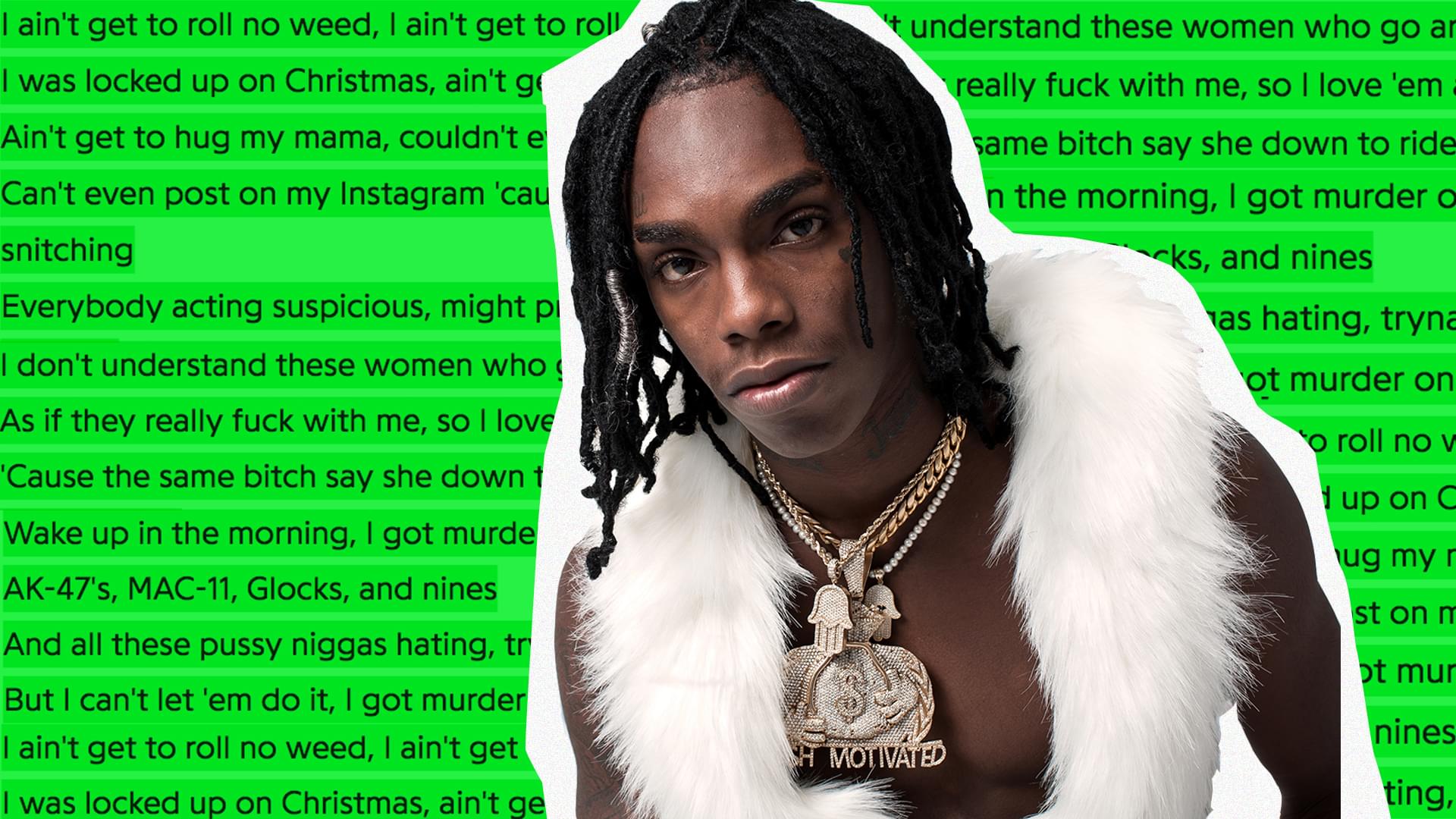
It started with a piano loop. Simple. Eerie. Then, a teenager from Gifford, Florida, named Jamell Demons—known to the world as YNW Melly—began to sing about a nightmare. When the lyrics to Murder on My Mind first hit SoundCloud in 2017, they felt like a visceral, albeit fictional, exploration of trauma and intrusive thoughts. Fast forward a few years, and those same words were being read aloud in a courtroom as evidence in a double-murder trial.
The disconnect is jarring. Usually, rap is just storytelling. We don’t arrest Keanu Reeves for the body count in John Wick, right? But with Melly, the line between the booth and the precinct didn’t just blur; it evaporated. People keep coming back to these lyrics because they want to know if they’re listening to a song or a confession. It's a heavy question. Honestly, the answer depends on whether you're looking at the song as a piece of art or a digital footprint.
What Most People Get Wrong About the Lyrics to Murder on My Mind
The biggest misconception is that the song was written after the 2018 deaths of Melly’s friends, YNW Sakchaser (Anthony Williams) and YNW Juvy (Christopher Thomas Jr.). That is factually impossible. Melly actually uploaded the song to SoundCloud in March 2017. He wrote it while he was incarcerated at age 16 for a different shooting incident.
Context matters. A lot.
When you hear Melly sing about "yellow tape around his body," he wasn't talking about his best friends in the future. He was tapping into a genre of "pain music" that defines the Florida rap scene. It’s melodic, it’s melancholic, and it’s often hyper-violent. The song is written from the perspective of someone who woke up in a cold sweat, haunted by a mistake they can't undo. It's a narrative device.
The lyrics describe a specific scenario: "I didn't even mean to shoot him, he just caught me by surprise / I reloaded my pistol, cocked it back, and shot him twice." Prosecutors in Broward County later argued that this specific imagery—shooting someone twice—mirrored the autopsy reports of Williams and Thomas. It's a chilling coincidence, or a terrifying omen, depending on who you ask. But chronologically, the song is a prequel to the tragedy, not a documentary of it.
The Viral Spike and the Morbid Curiosity Factor
Why did a song from 2017 suddenly dominate the charts in 2019?
Drama. Humans are naturally curious about the macabre. When Melly was arrested and charged with two counts of first-degree murder in February 2019, the lyrics to Murder on My Mind became the most scrutinized text in music. The song shot up to the top of the Billboard Hot 100. It was the "Munchausen by proxy" of the streaming era—people weren't just listening to the beat; they were looking for clues.
The music video, which features Melly standing in front of a grave, didn't help his case in the court of public opinion. It’s got over 600 million views. Think about that. Most of those views came from people trying to play armchair detective. They wanted to see if his eyes shifted during a certain line or if the "yellow tape" in the video matched the crime scene photos they saw on Twitter.
Can Art Be Used Against You?
This is where things get legally messy. The use of rap lyrics in court is a massive point of contention in the legal world. Organizations like the ACLU have long argued that using a creator's work against them violates the First Amendment. They say it’s prejudicial. Basically, it makes the jury think the defendant is a "bad guy" regardless of the physical evidence.
In Melly's trial, the judge allowed the lyrics to be introduced, but with caveats. The prosecution's argument was that the lyrics showed "premeditation" and a "propensity for violence."
- California's Response: In 2022, California passed the "Decriminalizing Artistic Expression Act," which restricts the use of lyrics in court.
- The Federal Level: The "RAP Act" (Restoring Artistic Protection) has been introduced in Congress to try and make this a national standard.
Despite these movements, Florida law remained more permissive. This created a situation where Melly’s creative output was treated as a psychological profile. If you write about murder, and then a murder happens, the law in many states says that’s fair game for a prosecutor’s PowerPoint. It’s a dangerous precedent for any artist who uses a "persona."
The Technical Brilliance of the Track
Setting aside the courtroom drama for a second, let’s look at why the song worked. It’s a masterclass in tension. The production by SMKEXBEATS is stripped back. It gives Melly’s voice—which is surprisingly high-pitched and soulful—room to breathe.
He doesn't bark the lyrics. He croons them.
That’s the secret sauce. The contrast between the beautiful melody and the horrific imagery creates a sense of cognitive dissonance in the listener. It’s catchy. You find yourself humming a chorus about "murder" while you’re doing the dishes, and then you catch yourself and feel a bit weird. That’s the power of the song. It taps into the duality of human nature: the capacity for beauty and the capacity for total destruction.
Analyzing the Narrative Structure
The song doesn't follow a standard pop structure. It feels like a stream of consciousness.
"His body dropped down to the floor and he had teardrops in his eyes / He grabbed me by my hands and said he was afraid to die"
This isn't "tough guy" rap. It’s vulnerable. The narrator is expressing regret and fear. This is likely why the song resonated with so many people who feel trapped by their environment. It’s about the lack of control. It’s about a world where violence is so common that it enters your dreams before it enters your reality.
The second verse shifts gears into a more traditional boastful rap style, mentioning brands like Gucci and jewelry. This shift is crucial. It represents the "YNW" (Young New Wave) lifestyle—the desire to escape the struggle through wealth, even while the trauma of the past (represented by the first verse) keeps pulling you back.
The "Mind on My Murder" Counterpart
You can't talk about these lyrics without mentioning the "sequel" or "remix" titled Mind on My Murder. In this version, the perspective is flipped. The lyrics are even more aggressive. If Murder on My Mind is the guilt-ridden nightmare, Mind on My Murder is the cold, calculated reality.
Fans have spent years cross-referencing the two. They look for "Easter eggs." It’s become a bit of a cult phenomenon. But again, we have to ask: is this just a young man exploring different facets of a character, or is it a window into a fractured psyche?
The trial ended in a mistrial in 2023 because the jury couldn't agree. They were stuck. Some likely saw a cold-blooded killer, while others saw a kid who got famous for singing about the very world that ended up swallowing him whole.
The Impact on Rap Culture
The legacy of the lyrics to Murder on My Mind is complicated. It changed how labels look at "street" artists. Now, legal departments are terrified. They see an artist with a "hot" song about crime and they see a massive legal liability.
It also forced a conversation about the "authenticity" trap in hip-hop. For decades, rappers were told they had to be "real." If they didn't live what they rapped, they were "fakes." Melly is the extreme end of what happens when that demand for authenticity meets the reality of the criminal justice system. If you're too "real," you go to jail. If you're "fake," you lose your career. It's a lose-lose.
Navigating the Lyrics Today
If you're looking at the lyrics today, you're likely doing so through the lens of the ongoing legal saga. The case has been delayed, rebooted, and dissected by every true-crime YouTuber on the planet. But the song remains on Spotify. It still gets millions of plays.
It’s a haunting artifact of a specific moment in Florida rap history. Whether Melly is ever convicted or not, the song has already served its sentence as one of the most controversial pieces of music in the 21st century.
What to Do Next
If you’re interested in the intersection of music and law, don’t just stop at the lyrics. There is a lot more to look into.
- Research the RAP Act: Look up House Bill H.R.2952. It’s the actual legislation being debated in the U.S. to protect artists from having their lyrics used as evidence. Understanding this helps you see the bigger picture beyond just one artist.
- Listen to the Production: Pay attention to the "Piano G" and "Melodic Trap" sub-genres. Melly didn't invent this sound, but he popularized the "sing-song" approach to dark subject matter that artists like Rod Wave and Polo G eventually refined.
- Check the Timeline: Use official court transcripts or reputable news outlets like the Miami Herald to verify the dates of the song's release versus the dates of the crimes. Most social media "theories" ignore the actual timeline.
- Explore Forensic Musicology: This is a real field where experts analyze songs for patterns. It’s a fascinating deep dive if you want to know how "intent" is measured in art.
The story isn't over. But the song is fixed in time—a permanent record of a young man’s mind, for better or worse.