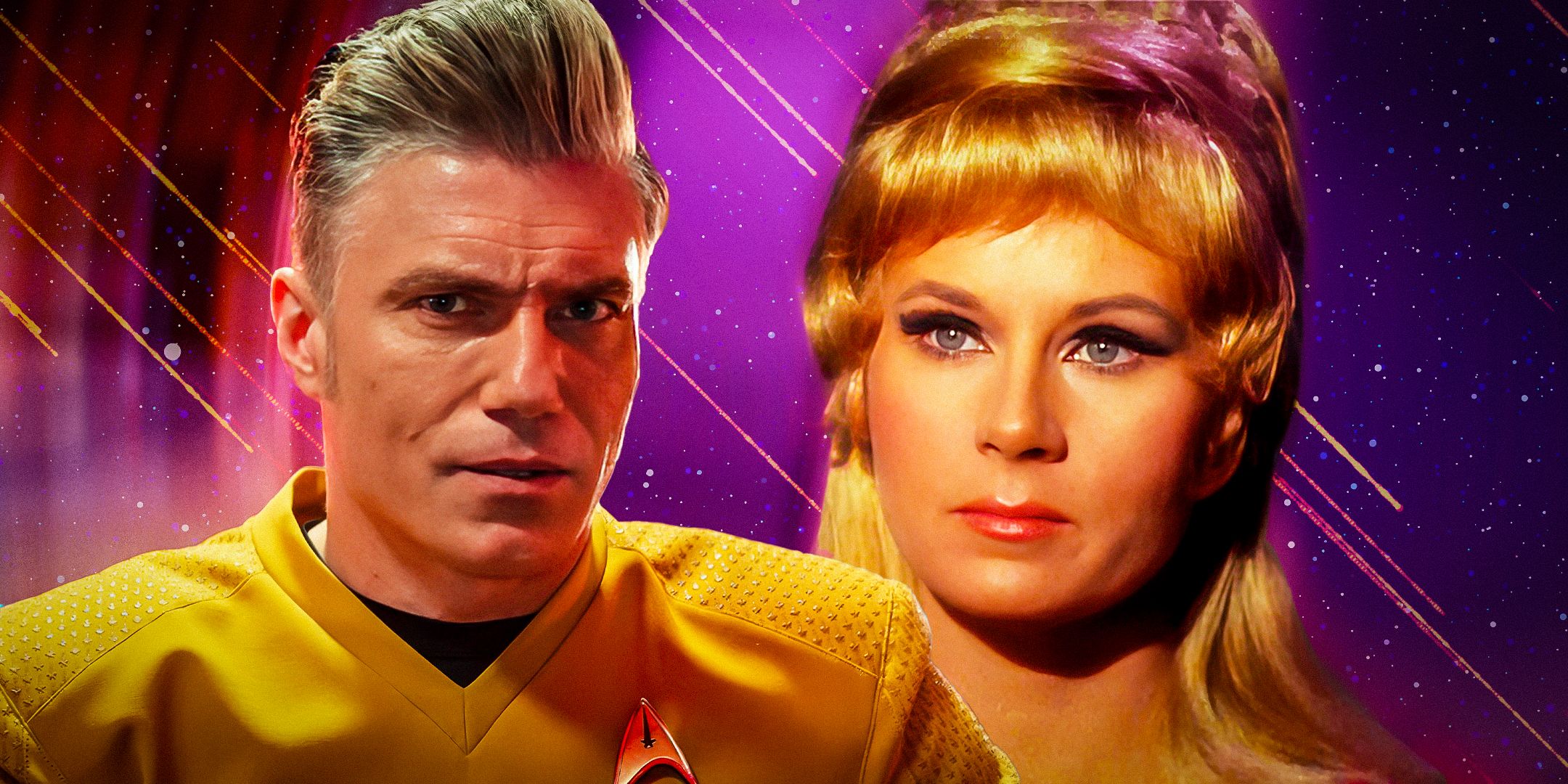
If you watch those early, saturated episodes of Star Trek: The Original Series, you can't miss her. She’s the one with the impossible blonde beehive, carrying a clipboard and trailing Captain Kirk like a shadow. Yeoman Janice Rand, played by the magnetic Grace Lee Whitney, wasn't just another extra in a mini-skirt. In the beginning, she was everywhere. She was on the promotional posters. She was fourth in the billing.
Then, suddenly, she was gone. Eight episodes in, the Enterprise just... forgot she existed.
For decades, Trekkies traded theories at conventions like they were contraband. Was it a budget thing? Did she and Shatner have a falling out? Honestly, the truth is a lot heavier than "creative differences." It’s a story of survival, a brutal industry, and a woman who eventually clawed her way back from the brink of total self-destruction.
The Mystery of the Vanishing Yeoman
In 1966, Grace Lee Whitney was positioned to be a massive star. Most people don’t realize that in the early scripts, Janice Rand was supposed to be the "female lead" of the show. She wasn't just serving coffee; she was Kirk’s confidante, his emotional anchor, and—if the producers had their way—the primary "will-they-won't-they" tension for the series.
You can see the seeds of this in episodes like "The Enemy Within" or "Miri." There's a genuine chemistry there. But by mid-season, the character was deleted. No goodbye scene. No transfer orders. Just a gaping hole in the cast.
Why was she really fired?
The "official" line from NBC was that they didn't want Kirk "tied down" to one woman. They wanted him to be a space-faring Casanova, flirting with a different green-skinned alien every Tuesday night. Having a steady love interest in the form of a Yeoman made the Captain look like he was "cheating" on his audience.
But that’s only half the story.
In her 1998 memoir, The Longest Trek: My Tour of the Galaxy, Whitney dropped a bombshell that the studio had buried for thirty years. She revealed that just days before she was fired, she had been sexually assaulted by a high-ranking executive on the Star Trek production team. She never named him publicly, referring to him only as "The Executive," but the timing wasn't a coincidence. She was traumatized, the atmosphere was toxic, and suddenly, her contract was shredded.
Life After the Enterprise: The Dark Years
Imagine being on the cusp of the biggest sci-fi phenomenon in history and getting the boot for reasons that had nothing to do with your talent. Grace Lee Whitney didn't just walk away and find another gig. She spiraled. Hard.
Basically, her life became a blur of addiction. She had already struggled with diet pills (amphetamines) that the studio pressured her to take to stay "TV thin." After the firing, that morphed into a severe battle with alcoholism. She spent years in the 1970s living on the edge, mostly forgotten by Hollywood.
There's this heartbreaking story she used to tell about standing in an unemployment line in the mid-70s. She was at her lowest point. Suddenly, she felt a tap on her shoulder. It was DeForest Kelley (Bones McCoy). He looked at her and asked, "Grace, where have you been? The fans at these conventions won't stop asking about you."
She had no idea. She didn't know "Trekkies" existed. She didn't know she was an icon.
The Redemption of Grace Lee Whitney
That encounter with Kelley changed everything. It gave her a reason to get sober. With the help of Leonard Nimoy—who remained a fiercely loyal friend—she found her way into the recovery community. She didn't just get sober; she stayed sober for 35 years until her death in 2015.
The fans effectively campaigned for her return. When Star Trek: The Motion Picture went into production in 1979, Whitney was back. But she wasn't just a Yeoman anymore.
- In The Motion Picture, she was a Chief Petty Officer.
- By Star Trek IV: The Voyage Home, she was a Commander.
- In Star Trek VI: The Undiscovered Country, she was a Communications Officer on the Excelsior.
She literally rose through the ranks alongside the fans who grew up watching her. It’s one of the few instances in Hollywood where a character's career trajectory mirrored the actress's personal growth and resilience.
That Iconic Hair (and how it worked)
You can't talk about Yeoman Rand without talking about the hair. It was a 1960s masterpiece. It wasn't actually all her hair, obviously. It was two different hairpieces woven together with her natural hair, and it was so heavy it gave her headaches.
Fun fact: Max Factor personally designed that look. During the filming of "The Enemy Within," they actually had to have a backup hairpiece because the "evil Kirk" attack scenes were so physical they kept knocking it crooked.
Beyond the Starship
Later in life, Whitney moved to Coarsegold, California. She didn't spend her time bitter about the roles she missed. Instead, she became a full-time substance abuse counselor. She’d go to Star Trek conventions and, while other actors were signing photos of phasers, she’d be in the corner talking to fans about their own struggles with addiction.
She was incredibly open about her past, including the parts that weren't "polished." She talked about her adoption, her brief stint as the original "Chicken of the Sea" mermaid model, and even the time she "dated" Buzz Aldrin (which she described with her typical blunt humor).
Actionable Insights for Fans and Historians
If you're looking to dive deeper into the history of Yeoman Janice Rand and the woman who played her, here is how to truly appreciate the legacy:
- Read "The Longest Trek": Don't just rely on Wikipedia. Her memoir is raw, messy, and deeply human. It's a textbook on how to survive a predatory industry.
- Watch the Voyager episode "Flashback": This was her final major appearance in the franchise. Seeing her back on the bridge with George Takei's Sulu is a perfect full-circle moment for the character.
- Look at the Credits: Notice how in those first few episodes, she is credited right alongside the main trio. It gives you a sense of what the show was supposed to be before the suits stepped in.
- Appreciate the "Small" Roles: In The Search for Spock, she has a tiny, uncredited cameo as a "woman in the cafeteria." She didn't care about the size of the part; she just wanted to be with her "space family."
Grace Lee Whitney died of natural causes at age 85, but she didn't leave as a victim of a 1960s casting couch. She left as a Commander. She proved that even if you're beamed off the ship early, you can still find your way back to the bridge.



