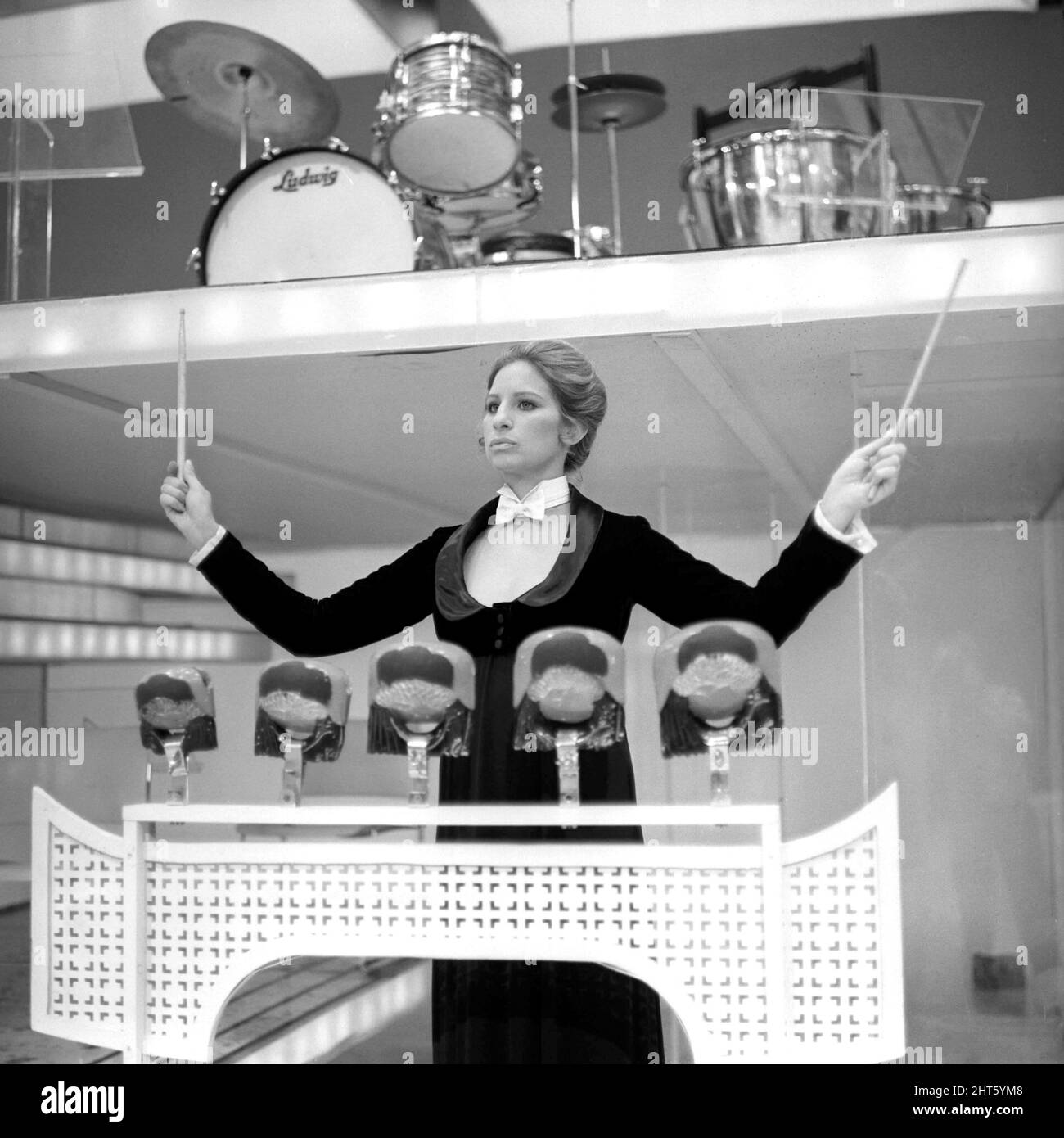
Nobody believed she could pull it off. In the early eighties, the Hollywood machine was shifting toward blockbusters and high-concept action, yet Barbra Streisand was obsessed with a short story by Isaac Bashevis Singer about a girl who disguises herself as a boy to study the Talmud. It sounds like a tough sell, right? It was. The Barbra Streisand 1983 musical known as Yentl didn't just happen; it was dragged into existence by sheer force of will.
Hollywood executives basically laughed at her. They told her she was too old to play a teenager. They said the subject matter was too "ethnic" or too niche for a global audience. But Barbra didn't just want to star in it. She wanted to direct it, produce it, and—in a move that defined the film's unique legacy—turn it into a musical where only she sang.
The Long Road to Eastern Europe
Streisand actually bought the film rights to Singer's "Yentl the Yeshiva Boy" way back in 1968. Think about that for a second. She sat on this idea for fifteen years. She originally envisioned it as a straight drama, but as the years ticked by and she aged, the "boyish" requirement became harder to sell to a studio. By 1983, she realized that music was the only way to convey the internal monologue of a woman trapped in a world that wouldn't let her speak her mind.
It’s kinda wild when you look at the production hurdles. United Artists eventually gave her a budget of about $14.5 million, which wasn't huge even then for a period piece. To save money and maintain authenticity, she moved the production to Czechoslovakia. She was the first woman to ever wear the hats of producer, director, writer, and star for a major studio film. That’s a lot of pressure. People were waiting for her to fail.
The film follows Yentl Mendel, a young woman in Poland whose father secretly teaches her the Torah. When he dies, she has no path forward in a society that forbids women from religious study. She cuts her hair, dons her father's clothes, and renames herself Anshel. What follows isn't just a "drag" comedy—it’s a deeply spiritual and romantic tangle. She falls for her study partner, Avigdor (played by a young, pre-superstar Mandy Patinkin), who is mourning his lost engagement to Hadass (Amy Irving). In a bizarre twist of fate, Anshel/Yentl ends up being pressured into marrying Hadass.
Why the Music Only Belongs to Yentl
If you watch the Barbra Streisand 1983 musical today, the first thing you notice is that nobody else sings. This wasn't an ego trip, though critics at the time certainly claimed it was. It was a stylistic choice. The songs, written by Michel Legrand with lyrics by Alan and Marilyn Bergman, function as Yentl's private thoughts.
Honestly, it’s a brilliant narrative device. In a world where Yentl has to lie every time she opens her mouth to speak, the music is the only place where she can be 100% honest. When she sings "Papa, Can You Hear Me?" or "The Way He Makes Me Feel," she isn't performing for the other characters. She’s performing for the audience and for God.
The soundtrack became an absolute monster. It went Platinum and stayed on the charts for months. Legrand’s melodies are lush, sweeping, and undeniably Jewish in their cadence, blending traditional sounds with 1980s pop production. It’s a strange mix that somehow works.
The Golden Globes vs. The Oscars: A Famous Snub
When Yentl finally hit theaters in November 1983, the response was polarized. Some critics called it a masterpiece of personal filmmaking; others, like Pauline Kael, were significantly more biting. But the real drama happened during awards season.
Barbra Streisand made history at the Golden Globes. She became the first woman to win Best Director. She also took home Best Picture (Musical or Comedy). It felt like a turning point for women in film. Then, the Oscar nominations were announced.
The Academy snubbed her for Best Director. They snubbed the film for Best Picture.
People were furious. It became a massive talking point in the industry about the "boys' club" of the Directors Branch. Even though the film received five nominations—including a Best Supporting Actress nod for Amy Irving and a win for Best Original Score Adaptation—the absence of Streisand in the directing category felt like a targeted slight. She didn't let it stop her, though. She just kept moving.
A Masterclass in Directing Detail
If you look closely at the cinematography by David Watkin, you can see how much work went into making Streisand look like a convincing young man while still maintaining her "Barbra-ness." The lighting is often soft, filtered through dust or candlelight, creating a dreamlike version of a 1904 shtetl.
- She insisted on authentic props, sourcing real antique books and religious items.
- The editing was painstakingly slow to ensure the emotional beats between Yentl and Avigdor landed perfectly.
- The use of "soliloquy songs" meant the camera had to stay tight on her face for long periods, requiring a level of acting nuance that many musical stars lack.
It's actually pretty funny to think about Mandy Patinkin in this movie. He’s a legendary Broadway singer, but in Yentl, he doesn't sing a single note. He’s just there to be the object of Yentl's affection. He later said he didn't mind because the story was so focused on her internal journey.
The Legacy of the 1983 Musical Today
Looking back, this Barbra Streisand 1983 musical was way ahead of its time regarding gender identity and the performance of gender. Yentl isn't just "playing" a man; she finds a version of herself in that identity that allows her to access her intellect. The film deals with the fluidity of attraction—Avigdor is clearly drawn to Anshel’s mind and soul, regardless of the gender he perceives.
It’s also a deeply feminist text. The final song, "A Piece of Sky," isn't a love song to a man. It’s a manifesto about wanting more from life than what is "allowed." When she sings, "The more I live, the more I learn / The more I learn, the more I realize / The less I know," she's speaking for every person who has ever been told to stay in their lane.
The movie was a box office success, grossing over $40 million in the U.S. alone. It proved that "prestige musicals" could still find an audience if they had a clear vision. It also paved the way for Streisand to direct The Prince of Tides and The Mirror Has Two Faces.
What You Should Do Next
If you haven't seen Yentl in a while—or at all—it’s worth a re-watch with a fresh set of eyes. Forget the 1980s tabloid drama about Streisand's reputation. Focus on the craft.
Watch for the "No Singing" Rule Pay attention to the scenes where Yentl is with Avigdor. Notice how the music starts only when she's alone or when the world around her fades out. It changes how you perceive her isolation.
Listen to the Lyrics The Bergmans didn't just write rhymes; they wrote poetry that explains the Talmudic mindset. "Where is it Written?" is basically a legal argument put to music. It’s fascinating.
Check Out the Making-Of Materials Streisand's 2023 memoir, My Name is Barbra, dedicates a massive chunk to the making of Yentl. She goes into detail about her journals, the filming locations, and her fights with the studio. It’s a great companion piece for anyone interested in the technical side of filmmaking.
Experience the 40th Anniversary Restoration If you can find it, the recent 4K restoration is stunning. The textures of the wool coats, the grain of the wooden tables, and the flickering candles look better than they did in the eighties. It truly honors David Watkin's cinematography.
Ultimately, the 1983 musical is a testament to the idea that if a story is burning inside you, you have to tell it, even if everyone says you're wrong. Barbra was right. The film remains a touchstone for musical theater fans and anyone who has ever felt like an outsider.
The best way to appreciate it now is to view it as a piece of experimental filmmaking disguised as a big-budget Hollywood movie. It’s weird, it’s loud, it’s Jewish, and it’s unapologetically Barbra. And honestly? That's why it's a classic.
To dive deeper into the technical side, look for interviews with Michel Legrand about how he structured the "interior monologue" songs. It’s a masterclass in film scoring that deviates from the standard Broadway-to-screen adaptation. You can also compare the film to the original Singer story to see just how much Streisand softened—or sharpened—the ending to fit her vision of female liberation.
---