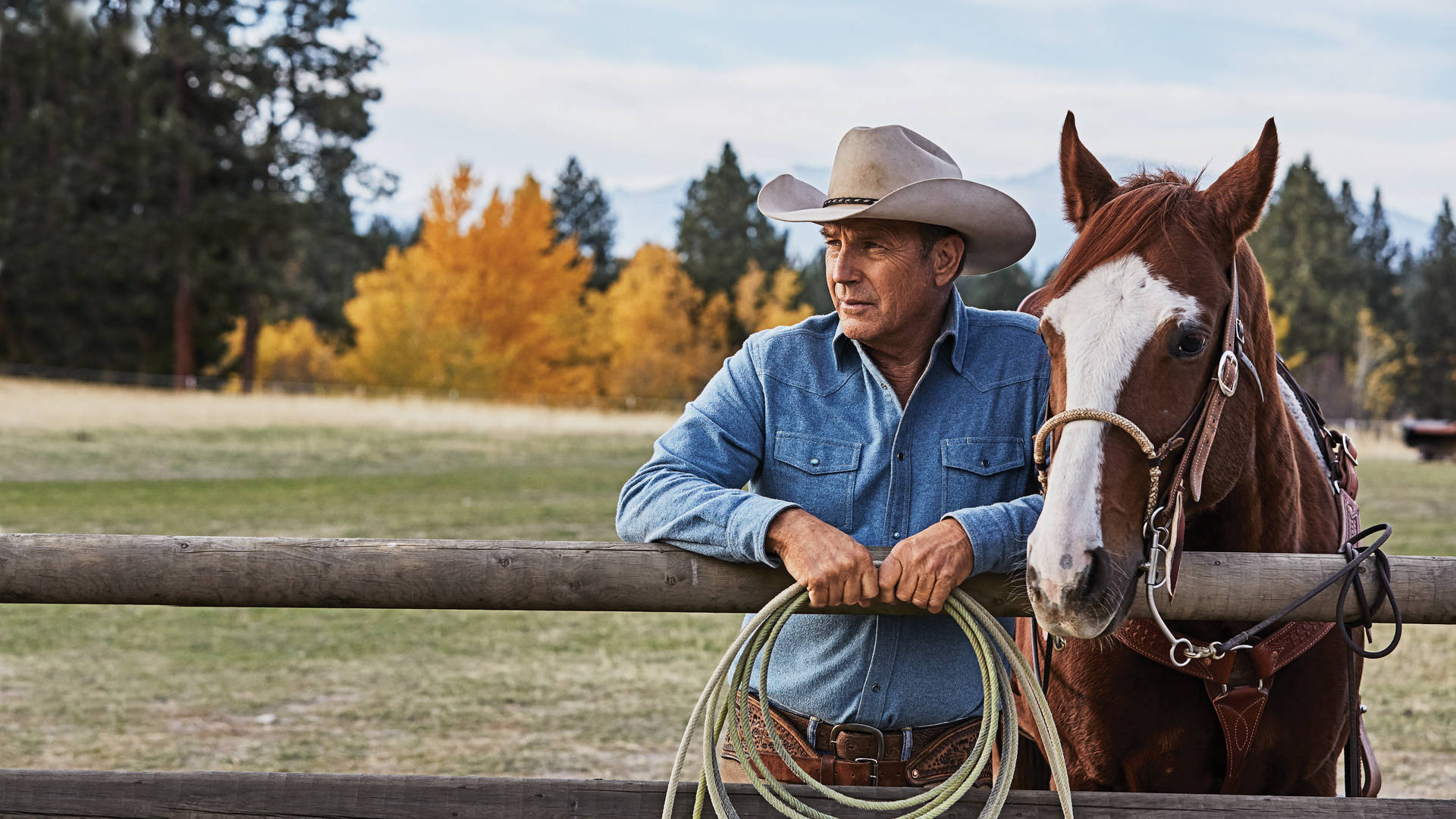
It started as a "Dad show." You know the type. Grizzled men on horses, sweeping vistas of the American West, and a whole lot of grumbling about how things used to be better in the old days. But then something happened. Yellowstone the TV show didn't just stay in that niche; it exploded. It became a cultural behemoth that somehow bridged the gap between rural flyover states and coastal urbanites who wouldn't know which end of a horse to feed.
Kevin Costner playing John Dutton was the hook. He’s the patriarch of the Dutton family, owners of the largest contiguous ranch in the United States. But if you haven't seen it, don't go in expecting Little House on the Prairie. This is more like The Godfather with cowboy hats and manure. It's brutal. It's messy. Honestly, it’s kinda Shakespearean in how much these people hate—and love—each other.
The show's creator, Taylor Sheridan, tapped into a specific kind of American anxiety. It’s about land. It’s about legacy. It’s about the crushing weight of trying to keep something alive when the rest of the world wants to pave it over and put up a Starbucks. That's the core conflict that drives every single episode.
What makes Yellowstone the TV show different from your average drama?
Most TV shows today feel like they were written by a committee trying to check off boxes for a specific demographic. Yellowstone feels like it was written by a guy who actually lives on a ranch and has a chip on his shoulder. Sheridan actually does live that life, which adds a layer of grit you can’t really fake with CGI or fancy lighting.
The pacing is weird. Sometimes it’s a slow burn where you just watch the sunrise over the mountains for three minutes. Then, suddenly, someone is getting branded or thrown into a "train station" (which is just a fancy Dutton term for a cliff where they dump bodies). It keeps you off balance. You never quite know if you’re watching a western, a political thriller, or a soap opera.
Take Beth Dutton, played by Kelly Reilly. She’s easily the most polarizing character on television. Some people find her empoweringly cutthroat; others think she’s a cartoonish villain. But you can’t look away. Her relationship with Rip Wheeler (Cole Hauser) is the dark, beating heart of the show. It’s not a "healthy" relationship by any modern standard, but it’s fiercely loyal. That loyalty—the idea that you’d die or kill for your family—is the secret sauce that makes the show work.
The landscape as a character
You can't talk about this show without talking about Montana. The cinematography is breathtaking. We’re talking about high-definition shots of the Bitterroot Valley that make you want to quit your job and move to the middle of nowhere. It’s a huge part of why the show is so popular on Google Discover and social media; the visuals are literally "scroll-stopping."
But the beauty is a trap. The show constantly reminds us that this land is under siege. Whether it’s the Broken Rock Reservation trying to reclaim what was stolen, or the corporate developers from Market Equities trying to build an airport, the Duttons are fighting a war on multiple fronts. It’s not just about greed. For John Dutton, it’s about a promise he made to his father.
The Costner drama and the "End" of an era
If you've been following the news lately, you know things got rocky behind the scenes. The production of Season 5, Part 2 became a tabloid fixture. There were rumors of scheduling conflicts, salary disputes, and a rift between Kevin Costner and Taylor Sheridan.
For a while, nobody knew if the show would even finish. Costner eventually confirmed he wasn't returning for the final episodes of the main series. It was a massive blow to the fans. How do you finish a show called Yellowstone without the guy who is the ranch?
Well, Sheridan is nothing if not prolific. He’s built an entire "Sheridan-verse" around the main show.
- 1883: A prequel starring Tim McGraw and Faith Hill that follows the first Duttons as they travel across the Oregon Trail. It’s arguably better than the original show—darker, more focused, and heartbreaking.
- 1923: Starring legends Harrison Ford and Helen Mirren. This one deals with prohibition, the Great Depression, and the range wars.
- 6666: A spin-off centered on the famous Four Sixes Ranch in Texas.
Basically, even if the flagship show ends, the brand is going nowhere. Paramount realized they have a gold mine, and they are digging every ounce of ore out of it.
Why the "Yellowstone Effect" is real for business and fashion
It's not just a TV show; it's a lifestyle brand now. Have you seen how many people are wearing Carhartt jackets and Stetson hats lately? That’s the "Yellowstone Effect." Retailers have seen a massive spike in western-wear sales. "Coastal Cowgirl" became a literal trend on TikTok because of this show.
It’s also affected tourism. Montana has seen record-breaking numbers of visitors who want to see "Dutton Country." While that’s great for the local economy in some ways, it’s also caused some friction. Real-life Montana residents are seeing property taxes skyrocket because billionaires are moving in to live out their cowboy fantasies—which is ironically exactly what John Dutton fights against in the show.
Talk about life imitating art.
Common misconceptions about the show
A lot of people dismiss Yellowstone as "Red State" television. That’s a pretty lazy take. If you actually watch it, the show is quite critical of almost everyone. It portrays the trauma of the boarding school system for Indigenous people through Monica’s storyline. It shows the environmental impact of development. It doesn't paint John Dutton as a hero; he’s often a terrible father and a borderline criminal.
It’s more of a tragedy than a celebration of the cowboy way of life. It’s about the "end of the trail."
Another misconception is that it’s all action. Honestly, there are long stretches where the characters just sit around a campfire and talk about the philosophy of life. Or they spend ten minutes showing actual cutting-horse competitions. If you aren't into the "process" of ranching, those scenes might feel like filler, but for the fans, that’s the texture that makes it feel real.
The "Train Station" and the dark side of the Duttons
The most famous piece of Yellowstone lore is the Train Station. It’s a spot just over the Wyoming border where the jurisdiction is "no man's land." If you work for the Duttons and you know too much, or if you cross them, you might get a one-way ticket there.
This is where the show leans into its "Western Mafia" vibes. It asks the audience: how far would you go to protect your home? Most of us would like to think we’re good people, but the Duttons argue that "good people" lose their land. Only the "meanest" survive.
How to actually watch Yellowstone in order
Because of the prequels, people get confused about the timeline. If you want the full experience, you have two choices. You can watch in release order, starting with the main show, or you can go chronologically.
- 1883 (Limited Series) - This is the origin story.
- 1923 (Ongoing) - The middle chapter.
- Yellowstone Seasons 1-5 - The modern-day story.
Keep in mind that the streaming rights are a mess. In the U.S., the main Yellowstone TV show airs on the Paramount Network (cable), but it streams on Peacock. However, the prequels (1883 and 1923) stream exclusively on Paramount+. It’s confusing, I know. Just one of those quirks of corporate licensing deals.
What’s next for the franchise?
Even with the main series wrapping up its current form, we’re looking at a sequel series tentatively titled The Madison. Rumors have linked big names like Michelle Pfeiffer to the project. It seems the plan is to move the story forward with some of the surviving cast members while introducing a new family or a new conflict.
There’s also the 1944 prequel and more seasons of 1923 on the horizon. Taylor Sheridan isn't slowing down. He’s essentially turned the Paramount network into the "Sheridan Network."
Steps to take if you're a new fan
If you’re just now jumping into the world of Yellowstone the TV show, don't feel like you have to rush. It’s a show meant to be savored.
- Start with Season 1 of the main show. Give it at least three episodes. The pilot is long (it’s basically a movie), and it takes a minute to get used to the rhythm of the ranch.
- Pay attention to the brands. Not the clothing brands—the literal brands on the cowboys' chests. It explains the hierarchy of the ranch and who is "owned" by the family.
- Don't expect "good guys." Everyone in this show is flawed. If you’re looking for a moral compass, you’re going to be disappointed. Just buckle up for the ride.
- Check out the soundtrack. The music is incredible. Ryan Bingham, who plays Walker on the show, is a real-life Grammy-winning musician. The show features a ton of authentic Americana and Red Dirt country music that actually fits the vibe.
Ultimately, Yellowstone matters because it’s one of the last "communal" TV experiences we have left. It’s a show that people actually talk about at the office or the gym. Whether you love the Duttons or hate them, you probably have an opinion on them. And in the world of 500 different streaming services, that’s a rare feat.
Next Steps for Fans
To get the most out of your Yellowstone experience, start by watching the pilot episode on Peacock to see if the Dutton family's brand of justice resonates with you. If you find yourself hooked on the history of the ranch, pivot to the prequel 1883 on Paramount+ for a deeper look at how the legacy began. For those interested in the real-life locations, research the "Chief Joseph Ranch" in Darby, Montana, which serves as the actual filming location for the Dutton home.