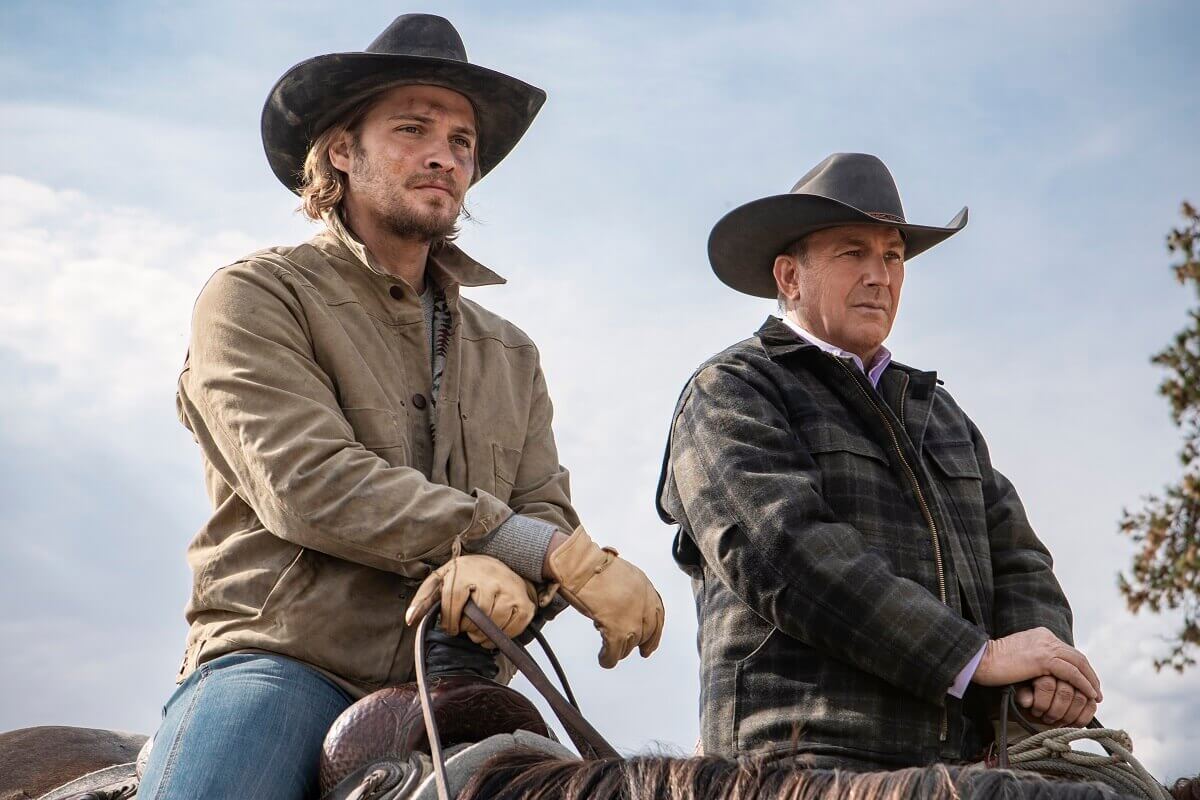
Look, if you’re a fan of the Dutton saga, you know that things usually go from zero to sixty pretty fast. But Yellowstone Season 3 Episode 2, titled "Freight Trains and Monsters," is a weirdly quiet, heavy hour of television that actually sets the stage for everything that comes later. Honestly, it’s the calm before the storm. People often skip over the middle episodes of a season, but if you do that here, you miss the foundational shifts in Beth’s psyche and the introduction of Roarke Morris, played by Josh Holloway.
The Roarke Morris Factor and the Market Equities Threat
The episode kicks off with something we haven't seen much of: a threat that doesn't use a gun. Enter Roarke Morris. He’s fly-fishing in the river—trespassing, basically—and Beth Dutton finds him. This isn't just a "get off my lawn" moment. It’s the introduction of a new kind of villain. Roarke isn’t a Beck brother. He’s not a local thug. He’s a hedge fund manager with billions of dollars behind him.
He’s the face of Market Equities.
This matters because Yellowstone Season 3 Episode 2 marks the moment the show moves from being a "Western" to being a "Corporate Thriller on Horseback." When Roarke tells Beth that his company wants to build an airport, it changes the stakes. You can’t shoot an airport. Well, you can, but it doesn't stop the paperwork. Beth realizes instantly that her father’s land isn't just under threat from greedy neighbors anymore; it’s being hunted by global capital.
Summer Camp on the Yellowstone?
While Beth is dealing with the high-finance sharks, the rest of the family is trying to play house. John Dutton decides to set up a "summer camp" for the cattle. It sounds idyllic, right? It’s basically just the guys living in tents out on the range to protect the herd.
It's nostalgic.
John is trying to hold onto a version of the West that is dying. He wants his grandson, Tate, to see what it’s like to live under the stars. But there’s a darkness underneath it. Tate is still reeling from the trauma of being kidnapped in Season 2. He’s having nightmares. John’s solution? Put him on a horse and give him a job. It’s a very "Dutton" way of handling mental health. It’s grit over therapy.
The campfire scenes are some of the most beautiful shots in the series. Director Stephen Kay uses the natural light to make the ranch feel like a sanctuary. But we know it’s not. The title, "Freight Trains and Monsters," refers to the things that keep us up at night. For Tate, it’s the literal monsters of his kidnapping. For John, it’s the "freight train" of progress coming to flatten his way of life.
Jamie’s New Role as Agent of Chaos
Let's talk about Jamie. He’s the new Interim Attorney General. In Yellowstone Season 3 Episode 2, we see him actually trying to do his job, which is a rare sight. He’s cleaning up the mess from the previous season’s shootout.
He’s good at it.
That’s the tragedy of Jamie Dutton. He’s incredibly competent at the very things that make him an outcast in his own family. He understands the law, the optics, and the politics. While Rip is out moving dirt and branding calves, Jamie is in an office making sure the family doesn't go to prison. Yet, the tension between him and Beth is still vibrating at a frequency that could shatter glass.
There’s a specific scene where Beth basically tells him he shouldn't exist. It’s brutal. Even if you hate Jamie, you sort of feel for the guy in this episode because he’s finally being useful, and it still isn't enough to earn him a seat at the table.
The Bunkhouse Dynamics: Teeter Arrives
If the episode feels a bit heavy, thank goodness for Teeter. This is the episode where Jennifer Landon makes her debut as the pink-haired, foul-mouthed ranch hand. She is a breath of fresh air.
Nobody can understand what she’s saying.
Her introduction adds a layer of much-needed levity to the bunkhouse. The interaction between her and Colby is gold. It reminds us that the Yellowstone isn't just a battlefield; it’s a workplace. People live there. They eat bad food, they tell jokes, and they try to get through the day. Teeter represents the "dirt" of the ranch—the raw, unrefined energy that keeps the place moving while the Duttons are busy fighting off billionaires.
Why "Freight Trains and Monsters" Still Matters
When you look back at the series as a whole, this episode is the pivot point. It’s where the "Beck Brothers" era ends and the "Market Equities" era begins. It’s also where we see the first real cracks in the idea that the ranch can remain isolated.
The world is getting smaller.
Beth’s realization that she has to play the stock market to save the soil is a massive character shift. She stops being just a hatchet woman for her father and starts being a strategic general. She knows that to beat Roarke, she has to speak his language.
Key Takeaways from the Episode:
- The Corporate Shift: The introduction of the airport plotline is the most significant narrative change in Season 3.
- Beth’s Vulnerability: We see her opening up to Rip in ways that feel earned, not forced.
- Tate’s Trauma: The show doesn't just hand-wave his kidnapping; it shows the lingering effects of PTSD on a child.
- The Beauty of the Land: The cinematography emphasizes why this land is worth fighting for in the first place.
If you’re rewatching the series, pay close attention to the dialogue between Roarke and Beth in the river. Every word Roarke says is a foreshadowing of the legal and financial traps that will eventually lead to the Season 3 finale’s explosive ending. It’s not just filler; it’s the blueprint for the war.
To get the most out of your Yellowstone experience, watch this episode alongside Episode 3, "An Acceptable Surrender." The two function as a two-part introduction to the new status quo. Pay attention to the background characters in the bunkhouse, as their loyalty becomes a major plot point as the season progresses. Finally, keep an eye on Jamie’s facial expressions during his meetings—he’s already starting to realize that his power as Attorney General might be his only way out from under John’s thumb.