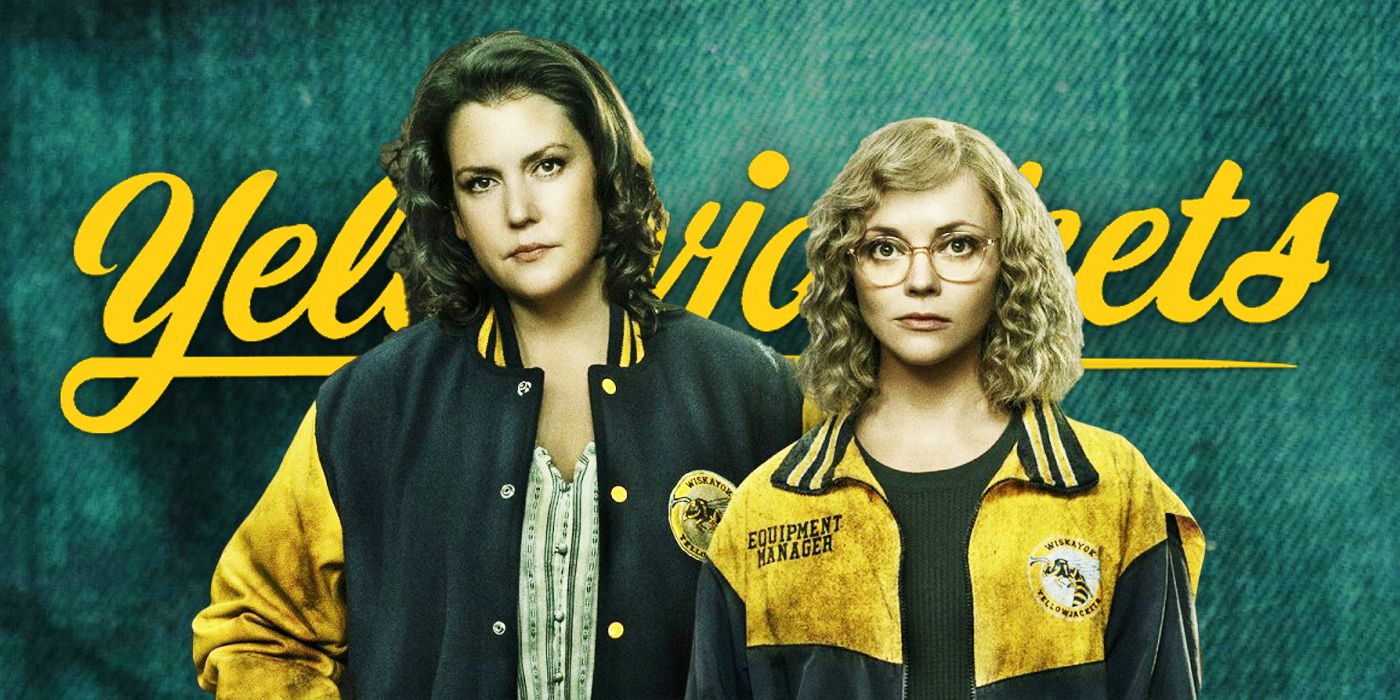
Nineteen months. That is a long time to be stuck in the wilderness eating your friends. When Yellowjackets first landed on Showtime, people kinda expected a Lord of the Flies riff with a 90s soundtrack. What we actually got was a gruesome, non-linear trauma study that refuses to blink. It is messy. It is loud. Honestly, it’s one of the few shows left that actually rewards you for paying attention to the tiny, blink-and-you’ll-miss-it background details.
The show splits its soul between 1996 and the present day. We follow a high school girls' soccer team whose plane goes down in the Ontario wilderness. Then we see them twenty-five years later, played by legends like Melanie Lynskey and Christina Ricci, trying to keep their secrets buried. But secrets have a way of digging themselves up, especially when there’s ritualistic cannibalism involved.
What Most People Get Wrong About the Antler Queen
Everyone wants to know who the Antler Queen is. It’s the central mystery, right? We see this figure in the pilot, draped in netting and deer antlers, presiding over a feast of human meat. But if you’re just looking for a name, you’re missing the point of what the Yellowjackets writers are doing.
The Antler Queen isn't just a person; she's a mantle.
Throughout Season 2, we saw the transition of power. It wasn't a violent coup, but a desperate, starving consensus. Natalie, played by Sophie Thatcher in the past and the late Juliette Lewis in the present, was crowned not because she was the "evilest," but because the wilderness seemingly chose her. She survived the white moose. She survived the thin ice. The girls needed a god to absolve them of the things they had to do to stay alive, and Nat became that figurehead.
It’s easy to label these girls as "villains" once they start the hunt. That’s a mistake. Showrunners Ashley Lyle and Bart Nickerson have been very clear in interviews that this isn't about "going bad." It is about regression. When you strip away the social contracts of New Jersey suburbia, what's left isn't necessarily a monster—it's an animal.
The Lottie Matthews Problem
Is Lottie mentally ill or is she a prophet? The show thrives in that gray space. In the 90s timeline, Lottie (Courtney Eaton) runs out of her meds, and the visions start. Some fans argue it's strictly schizophrenia. Others point to the fact that her "visions" actually come true, like the bear walking up and sacrificing itself.
The brilliance of Yellowjackets is that it never confirms the supernatural. You can view the entire show as a psychological breakdown caused by extreme starvation and PTSD. Or, you can view it as a folk-horror story where something ancient in the woods is actually hungry. Both are true at the same time. That’s the "Liminal Space" the show occupies.
The 90s Nostalgia is a Trap
Music is the heartbeat of this show. You've got Alanis Morissette, Liz Phair, and Hole blasting while girls are literally skinning animals. It feels good. It feels familiar.
But notice how the music is used.
It’s usually a juxtaposition. They use "Street Spirit (Fade Out)" by Radiohead during some of the most harrowing moments to anchor the audience in a specific emotional era. This isn't just a "best of the 90s" playlist. It’s a tool to remind us of the girls’ innocence right before it gets shredded. They were just kids who liked 4 Non Blondes. Now they’re using a deck of cards to decide who gets their throat slit.
The Reality of Cannibalism and Survival
Let’s talk about the "Snackie" incident. When the survivors finally ate Jackie in Season 2, it wasn't a frantic, mindless feast. It was stylized. They hallucinated a Greek banquet.
This draws on real-world survival psychology. Look at the 1972 Andes flight disaster (the inspiration for Alive). The survivors didn't want to eat their friends. They had to frame it as a "necessity" or even a religious ritual to keep their minds from snapping. Yellowjackets pushes this further by suggesting that the survivors didn't just eat to live—they started to enjoy the power that came with the ritual.
- The Hunger: Starvation isn't just a grumbly stomach. It's "rabbit starvation" (protein poisoning), where the body begins to consume its own muscle and brain tissue.
- The Choice: The "draw of the cards" system is a real historical trope used by sailors in "the custom of the sea."
- The Trauma: Notice how Adult Shauna (Melanie Lynskey) can’t stop slicing meat? The trauma isn't in the past. It’s in her kitchen.
Why Season 3 is the Most Anticipated Reset
The wilderness cabin is gone. It burned down at the end of Season 2, thanks to Coach Ben (who, let's be honest, is probably the only one with a moral compass left, even if he did start a fire). This changes everything for the upcoming episodes.
Without a roof, the survivors are exposed. They are moving into the deepest part of winter. This is where the "feral" aspect we saw in the pilot finally has to happen. They can’t hide in a house anymore. They are the woods now.
Also, we have the "Pit Girl" mystery still hanging over us. We know someone falls into a trap set with stakes. We know they are wearing Jackie’s heart necklace. But since that necklace gets passed around like a cursed heirloom, it could be anyone. Gen? Mari? A new character we haven't met? The tension comes from knowing the destination but being terrified of the journey.
The Present Day Chaos
With Natalie's death in the Season 2 finale, the adult timeline is in shambles. Misty (Christina Ricci) accidentally killed her "best friend," and the police are closing in on the murder of Adam Martin.
The show is fundamentally about how you can never truly leave the woods. The "It" they brought back with them isn't a ghost. It’s the capacity for violence. When Adult Lottie says, "The wilderness is hungry," she isn't talking about a place in Canada. She’s talking about the void inside them that never got filled after they were rescued.
How to Watch and Analyze Like an Expert
If you’re doing a rewatch, stop looking at the gore. Look at the background.
- Watch the symbols: The hook-and-circle symbol appears in the trees long before the girls start carving it. Is it a map? A sigil?
- Follow the items: Jackie’s necklace, the journals, the various shirts. They tell you who is "next" in the hierarchy.
- Listen to the dialogue: In Season 1, Shauna tells her daughter, "If you come at me, you'll miss." That’s not just a mom being tough. That’s a survivor who knows how to hunt.
Yellowjackets works because it doesn't treat its female characters like victims or saints. They are complicated, terrifying, and deeply broken people. It’s not just a "TV show about survival." It’s a 50-minute weekly reminder that the line between civilization and savagery is much thinner than we’d like to admit.
Actionable Insight for Fans: If you want to dive deeper into the lore, research the "Andes Flight Disaster" and the history of "The Custom of the Sea." Understanding the real-world ethics of survival cannibalism makes the choices of the characters feel much more grounded and significantly more horrifying. Also, pay close attention to the opening credits of Season 2; there are flash-frames of the "Pit Girl" sequence that have been edited slightly differently than the pilot, suggesting the "truth" of that night might be more complicated than we first thought.