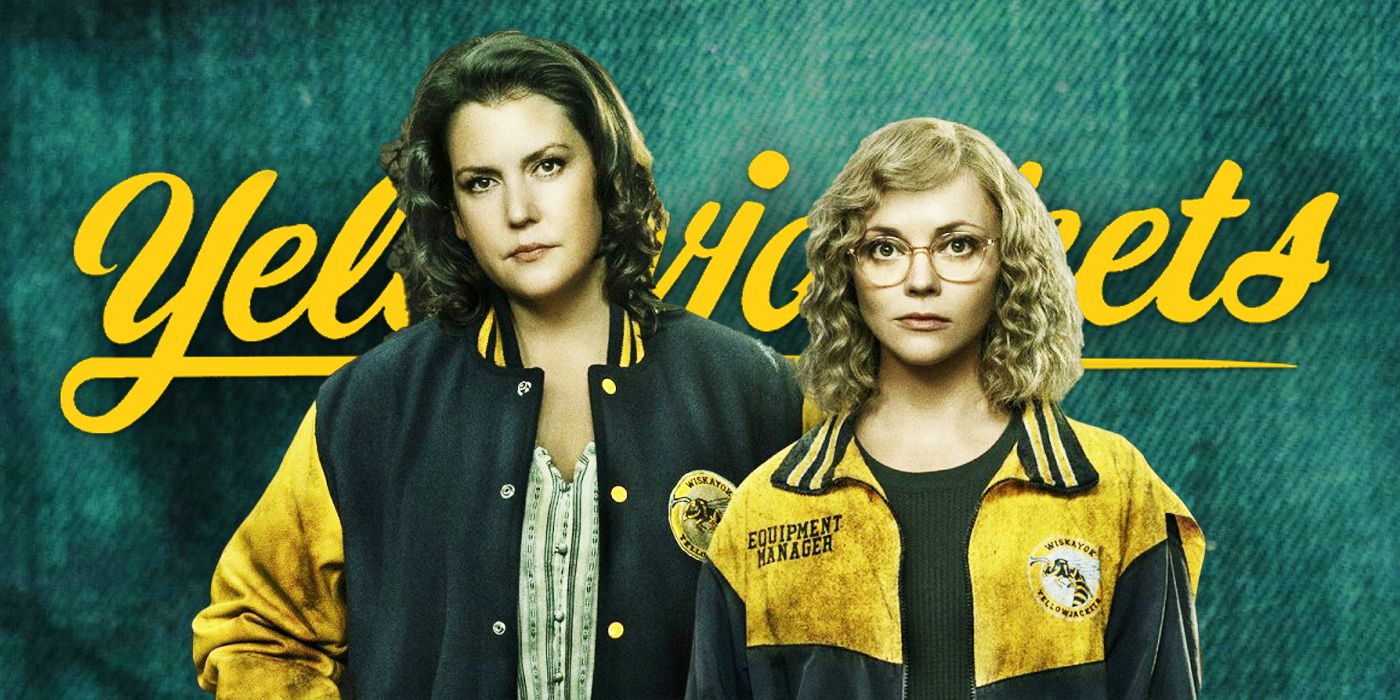
Honestly, the second season of Yellowjackets was a lot. If you went into it expecting a simple continuation of that "Lord of the Flies but with glitter and 90s alt-rock" vibe from the first season, you probably weren't ready for the sheer brutality of the wilderness timeline. It got dark. Fast. By the time we hit the mid-season point, the show stopped being about survival and started being about what happens when the human mind just... snaps under the weight of starvation and isolation.
The show has always juggled two timelines, but Yellowjackets season 2 pushed both to their absolute limits. In the past, we’re stuck in the cabin during a brutal 1996 winter. In the present, the survivors are dealing with the fallout of Jackie’s death and the arrival of a very adult, very intense Lottie Matthews. It’s a lot to process.
The Cannibalism Question and That Infamous Feast
Let’s just address the elephant in the room. Or rather, the teammate in the room.
We all knew it was coming. The pilot episode teased the "Antler Queen" ritual back in 2021, but seeing the transition from grieving friends to starving scavengers was different. When the girls (and Travis) finally succumb to their hunger and consume Jackie, it isn't portrayed as a slasher movie moment. It’s hallucinatory. It’s a Greco-Roman feast in their minds, even while the reality is a gruesome scene in the snow.
This shift is crucial. It marks the point where the group stops trying to maintain the rules of society. Showrunners Ashley Lyle and Bart Nickerson didn't just want to show gore; they wanted to show the psychological "opt-out" the brain performs during trauma. They’ve talked in interviews about how the human body, when starving, will prioritize survival over every moral code ever learned. It’s biological. It’s terrifying.
Breaking Down the Ritual
The "Doomcoming" in season one was the prelude, but season two is where the mythology really takes root. You have Lottie, played with a haunting stillness by Courtney Eaton, becoming a sort of accidental prophet. Is there actually a dark force in the woods? Or is Lottie experiencing untreated schizophrenia exacerbated by extreme physical distress? The show refuses to give us a straight answer, which is exactly why it works.
Shauna, played by Sophie Nélisse in the past, becomes the emotional (and literal) butcher of the group. Her relationship with Jackie’s remains is deeply unsettling, bordering on a psychotic break. She talks to the corpse. She dresses it. It’s a manifestation of guilt that eventually curdles into the communal act of cannibalism.
What's Happening in the Present Day?
While the 1996 timeline is a descent into madness, the adult timeline in Yellowjackets season 2 focuses on the impossibility of outrunning your past. We finally meet Adult Lottie (Simone Kessell) and Adult Van (Lauren Ambrose). Adding these two into the mix with Juliette Lewis’s Natalie and Christina Ricci’s Misty was like throwing a match into a room full of gasoline.
Lottie’s "wellness retreat" is a perfect example of how the show explores trauma. She’s built a cult—sorry, a community—based on the same symbols and rituals that kept them alive (or haunted them) in the woods. It’s her way of trying to colonize the darkness. But as the season progresses, we see that the "It" they felt in the wilderness hasn't stayed behind.
The Tragedy of Natalie Scatorccio
We have to talk about Natalie. Juliette Lewis brought such a raw, vibrating energy to this character. Natalie was always the "moral" center in a weird, twisted way—she was the hunter, the one who provided, the one who saw through the bullshit. Her arc in season two, ending in that tragic accidental death, felt like a gut punch to the fandom.
It was polarizing. Some fans felt it was a waste of a redemption arc. Others saw it as the only logical end for a character who had been carrying the heaviest burden of guilt for twenty-five years. Natalie died saving Lisa, a surrogate for the innocence she lost in 1996. It’s poetic, sure, but it hurts.
The Music and the Atmosphere
One thing Yellowjackets does better than almost any other show on TV is its needle drops. Season two gave us everything from Tori Amos to Nirvana. The soundtrack isn't just background noise; it’s a time machine. When "Cornflake Girl" plays, it’s not just because it’s a 90s hit. It’s because the lyrics mirror the shifting alliances and the "rabbit-hole" nature of the girls' descent into tribalism.
The cinematography also shifted this season. The wilderness felt smaller. The walls of the cabin felt like they were closing in. You could almost feel the cold coming off the screen. That claustrophobia is what fuels the tension between characters like Mari and Akilah, or the growing divide between those who "believe" in the wilderness and those who are just trying to get home.
Why the Wilderness "It" Matters
There is a lot of debate online—Reddit is basically a war zone over this—about whether the show is supernatural or psychological.
If you look at the clues, the "Symbol" appears in places that suggest a map or a mining claim, pointing toward a grounded, human explanation. But then you have the white moose, the birds falling from the sky, and the "Man with No Eyes." The brilliance of Yellowjackets season 2 is that it doesn't matter if the force is real. If the characters believe it’s real, they act on it. Their belief creates the reality.
When they draw cards to decide who dies so the others can live, that isn't a demon forcing their hand. That’s a group of people who have collectively decided that a "Spirit of the Woods" requires a sacrifice. It’s a way to offload the blame. If the "Wilderness" chooses, then Shauna isn't a murderer. Misty isn't a monster. They’re just followers.
Key Takeaways for Your Next Rewatch
If you’re planning to dive back into the madness before season three hits, keep these specific things in mind. They change how you view the entire narrative:
- Watch the background. In the cabin scenes, pay attention to the peripheral characters. The show is very deliberate about who is participating in the "faith" and who is staying skeptical.
- The Adult Shauna/Callie Dynamic. Melanie Lynskey is a masterclass in repressed rage. The way she brings her daughter into her "hobbies" (like disposing of bodies) is a dark mirror of the survival skills she learned in the woods.
- The Fate of the Baby. The episode "Qui" is one of the most harrowing hours of television ever produced. It reframes Shauna’s entire life. Her coldness in the present day isn't just from the cannibalism; it’s from the loss of her first child in those woods.
- Walter’s Role. Elijah Wood’s character seems like a quirky sidekick, but he’s just as manipulative and dangerous as Misty. Their "love story" is actually a terrifying meeting of two sociopaths who finally found their match.
Moving Forward
The second season ended with the cabin burning down. The survivors are now truly exposed to the elements. No more shelter. No more "home base." As we look toward the future of the series, the stakes have shifted from "how do we stay sane" to "how do we stay alive when everything has been taken away."
The adult timeline is equally chaotic. With Natalie gone and the police closing in on Adam Martin’s murder, the remaining survivors—Shauna, Tai, Van, Lottie, and Misty—are more isolated than ever. They are the only ones who know the truth, and that truth is a cage.
Actions to Take Now
If you want to stay ahead of the curve for the upcoming season, here is what you should do:
- Re-examine the "Cabin Daddy" flashbacks. There are brief glimpses and production hints about the man who lived in the cabin before the crash. His backstory is expected to be a major pivot point for the 1996 timeline.
- Track the Symbol. Map out every time the wilderness symbol appears. It’s not random. It often appears before a major shift in group dynamics or a moment of violence.
- Listen to the lyrics. Go back and listen to the full versions of the songs used in the ritual scenes. The creators often use specific verses to foreshadow character deaths or betrayals.
- Analyze the "Hunt" mechanics. The ritual of drawing cards is the foundation of their "society" in the woods. Understanding the hierarchy of the deck (who holds the Queen, who holds the Jack) is the key to predicting who might be the next to fall in the 1996 timeline.
The winter is only getting colder for the Yellowjackets, and the decisions made in season two will haunt them—and us—for the rest of the series.



