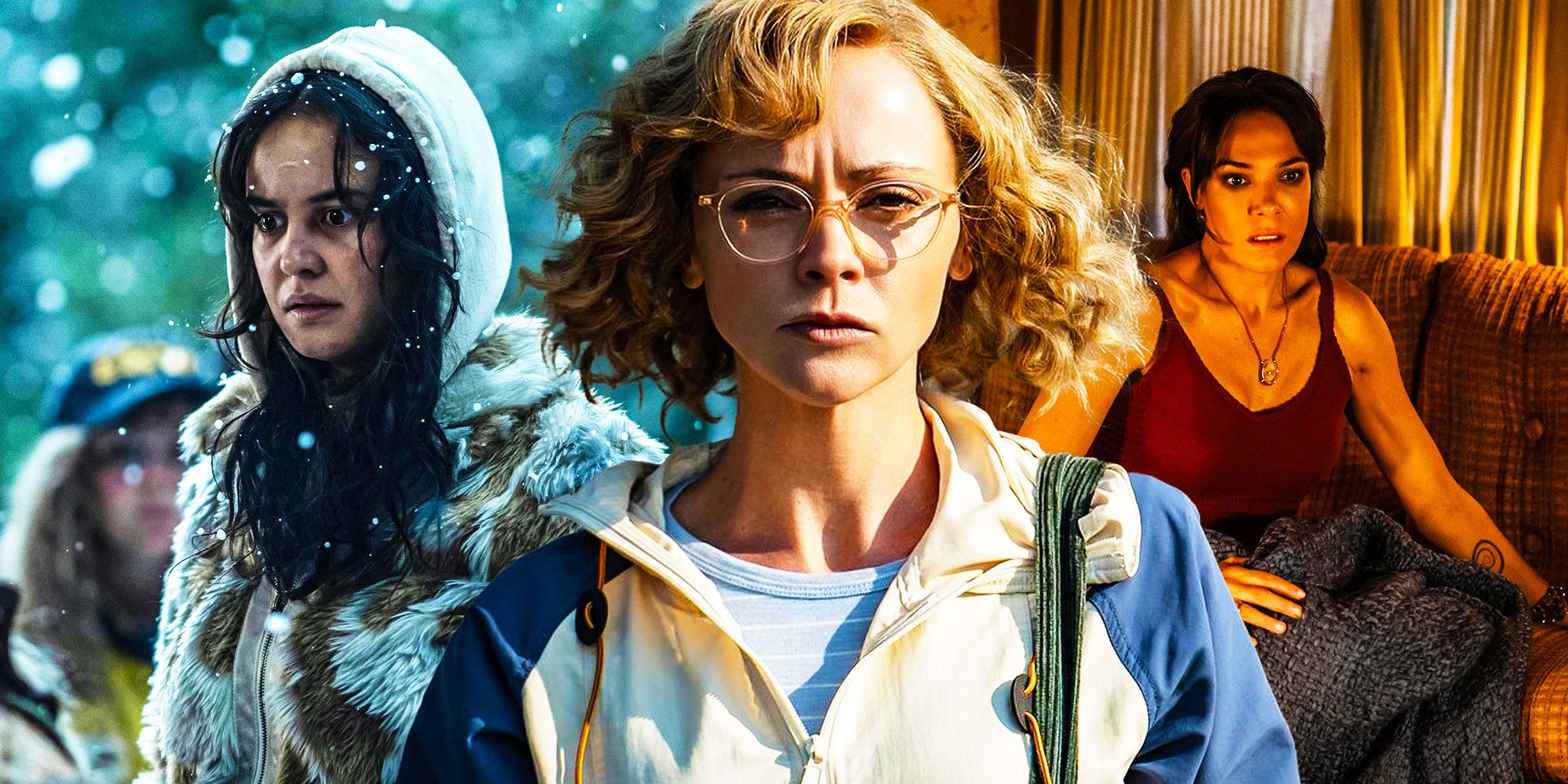
You’ve seen the posters. The one where a group of teenage girls is staring into the camera with a mix of trauma and primal intensity, half-covered in dirt and 1990s grime. Maybe you finally decided to see what all the "Citizen Detective" buzz was about, or maybe you're just planning a weekend binge and need to know if you can actually finish the first arc before Monday morning rolls around.
So, how many episodes of Yellowjackets season 1 are there?
There are exactly 10 episodes.
That’s it. Just ten. In an era where streaming services often bloat their flagship shows into 13-hour slogs or cut them down to a measly six, Showtime hit a sweet spot with this debut. It’s tight. It’s mean. It doesn't waste your time with "filler" episodes where nothing happens but people staring gloomily at a lake—well, okay, they stare at a lake a lot, but usually, someone is hallucinating or planning a ritual while they do it.
The Breakdown: What Happens Across Those 10 Hours
The season kicked off on November 14, 2021, and wrapped up its initial run in January 2022. If you're watching it now, you're experiencing what many of us had to endure week-to-week, which was basically a slow-motion car crash of cannibalism and suburban dread.
The pilot, simply titled "Pilot" and directed by Karyn Kusama, sets the tone immediately. You get the 1996 crash and the 2021 aftermath. Honestly, the way the show toggles between these timelines is the reason the 10-episode count feels so much heavier than it sounds. You aren't just watching one story; you’re watching two distinct genres—a survival horror and a psychological thriller—happening at the exact same time.
By the time you hit episode 9, "Doomcoming," you realize why the writers didn't need 12 or 15 episodes. Things escalate. Fast. The fermented berry trip in the woods is arguably one of the most stressful hours of television produced in the last decade. It’s chaotic. It’s visceral. It makes you realize that the "real" monsters aren't the wolves or the "Bad One" in the woods, but just a bunch of hungry, scared teenagers with no supervision.
Why 10 Episodes Was the Magic Number for Showtime
Usually, when a show feels too short, you’re left with unanswered questions that feel like mistakes. When a show is too long, you start checking your phone. Yellowjackets managed to avoid both.
The 10-episode structure allowed for a very specific narrative "bloom."
- Episodes 1-3: The setup and the immediate post-crash reality.
- Episodes 4-6: The introduction of the supernatural (or psychological) elements like the Man with No Eyes and Taissa’s sleepwalking.
- Episodes 7-9: The complete breakdown of social order.
- Episode 10: The "Sic Transit Gloria Mundi" finale that leaves everyone screaming at their television.
Showrunners Ashley Lyle and Bart Nickerson have gone on record—most notably in interviews with The Hollywood Reporter—stating they have a five-season plan. Because they know where the story is going, they don't have to stall. Each of those 10 episodes serves a purpose. Even the "slower" moments, like the 2021 storyline involving the blackmail plot, tie back into the themes of guilt and the inability to leave the past in the dirt where it belongs.
The Pacing Secret: Two Shows for the Price of One
Let's be real. If Yellowjackets only took place in the woods, 10 episodes might have felt like a lot of trekking through the Ontario wilderness. But because we keep cutting back to Melanie Lynskey’s Shauna dealing with a boring marriage and a dead rabbit, or Christina Ricci’s Misty being... well, Misty... the pacing feels electric.
You’ve got the 1996 timeline, which is a slow descent into Lord of the Flies territory. Then you have the 2021 timeline, which is basically Desperate Housewives if the housewives had a shared history of ritualistic violence.
The 10-episode count ensures that the mystery of "Who is the Antler Queen?" stays front and center without becoming annoying. By the time the finale, "Sic Transit Gloria Mundi," finishes its 60-minute runtime, you've witnessed a death that changes the trajectory of the entire series. No spoilers here, but if you haven't seen it, just know that episode 10 is why people are still obsessed with the show years later.
What Most People Get Wrong About Season 1
A common misconception is that the first season covers the entire 19 months the girls were stranded. It doesn't. Not even close.
Season 1 only covers the first few months. It starts in the late spring/early summer of 1996 and ends just as the first snow begins to fall. That’s why the 10 episodes feel so dense. There is still so much more "winter" to get through. If they had tried to cram the whole 19 months into one season, we wouldn't have the character development that makes the show work. We wouldn't care about Jackie and Shauna’s crumbling friendship if it happened in episode 2. We needed all 10 episodes to see that relationship rot from the inside out.
The show also deals with the "Citizen Detective" trope through Juliette Lewis’s character, Natalie. Some viewers thought the blackmail subplot took up too much space, but looking back, it was essential. It showed how the trauma of the wilderness didn't just stay in the woods. It followed them home. It’s in their bank accounts, their political campaigns, and their basements.
The Impact of the 10-Episode Run
When the season ended, it wasn't just a quiet "to be continued." It was a cultural moment. The finale drew massive ratings for Showtime, becoming one of their most-watched episodes ever. It proved that audiences are hungry for "mystery box" shows that actually provide answers while raising new, even more terrifying questions.
Critics from Vulture and Variety praised the season for its unapologetic gore and its refusal to simplify the girls' experience. It’s a messy show. It’s a loud show. And by keeping the episode count at a firm 10, the creators ensured that the messiness felt intentional, not accidental.
If you’re planning to watch, here is the best way to do it:
- Watch the pilot alone. You need to pay attention to the small details in the opening scenes. Most of those "Easter eggs" don't pay off until the very end.
- Give it until episode 3. If you aren't hooked by the time the "No Exit" vibe of the cabin starts to sink in, it might not be for you. But honestly? You probably will be.
- Pay attention to the music. The soundtrack is a character in itself. From Hole to PJ Harvey, the 90s alt-rock isn't just nostalgia; it’s a mood setter for the violence to come.
Actionable Takeaways for Your Binge Watch
If you’re about to dive into these 10 episodes for the first time, or even a rewatch, keep these things in mind to get the most out of the experience.
- Track the Symbols: The "hook" symbol appears early. It isn't just graffiti. It shows up in places you wouldn't expect in the 2021 timeline.
- Watch the Background: In the 1996 scenes, keep an eye on the characters who aren't talking. The "background" survivors start to become more prominent as the season progresses, and their alliances shift subtly.
- Don't Trust the Narrators: Almost every adult survivor is lying to themselves or someone else. Shauna is the most obvious, but Taissa and Misty have secrets that are buried deep in the subtext of the early episodes.
- Check the Episode Length: Most episodes run between 55 and 60 minutes. This isn't a "30-minute sitcom" binge. You need to carve out a solid 10 hours to get through the whole thing.
Yellowjackets season 1 is a rare example of a show that knows exactly what it wants to be. It doesn't apologize for its weirdness, and it doesn't overstay its welcome. Ten episodes was the perfect amount of time to introduce us to the wilderness, and it’s the perfect amount of time to ruin your sleep schedule for a weekend.
Once you finish the tenth episode, your next move is straightforward. You move immediately into Season 2, which picks up exactly where the snow started to fall. Just make sure you have some comfort food nearby. You're going to need it after watching what these characters consider a "meal."



