Honestly, if you're still thinking about the crash itself, you're missing the point. By the time we hit Yellowjackets Season 1 Episode 4, titled "Bear Down," the show shifts gears from a survival thriller into something much more psychological and, frankly, disturbing. This is the episode where the cracks in the foundation don't just show—they split wide open. We see the girls realize that the wilderness isn't just a place they're stuck in; it's a place that’s starting to live inside them.
It’s heavy. If you enjoyed this piece, you should look at: this related article.
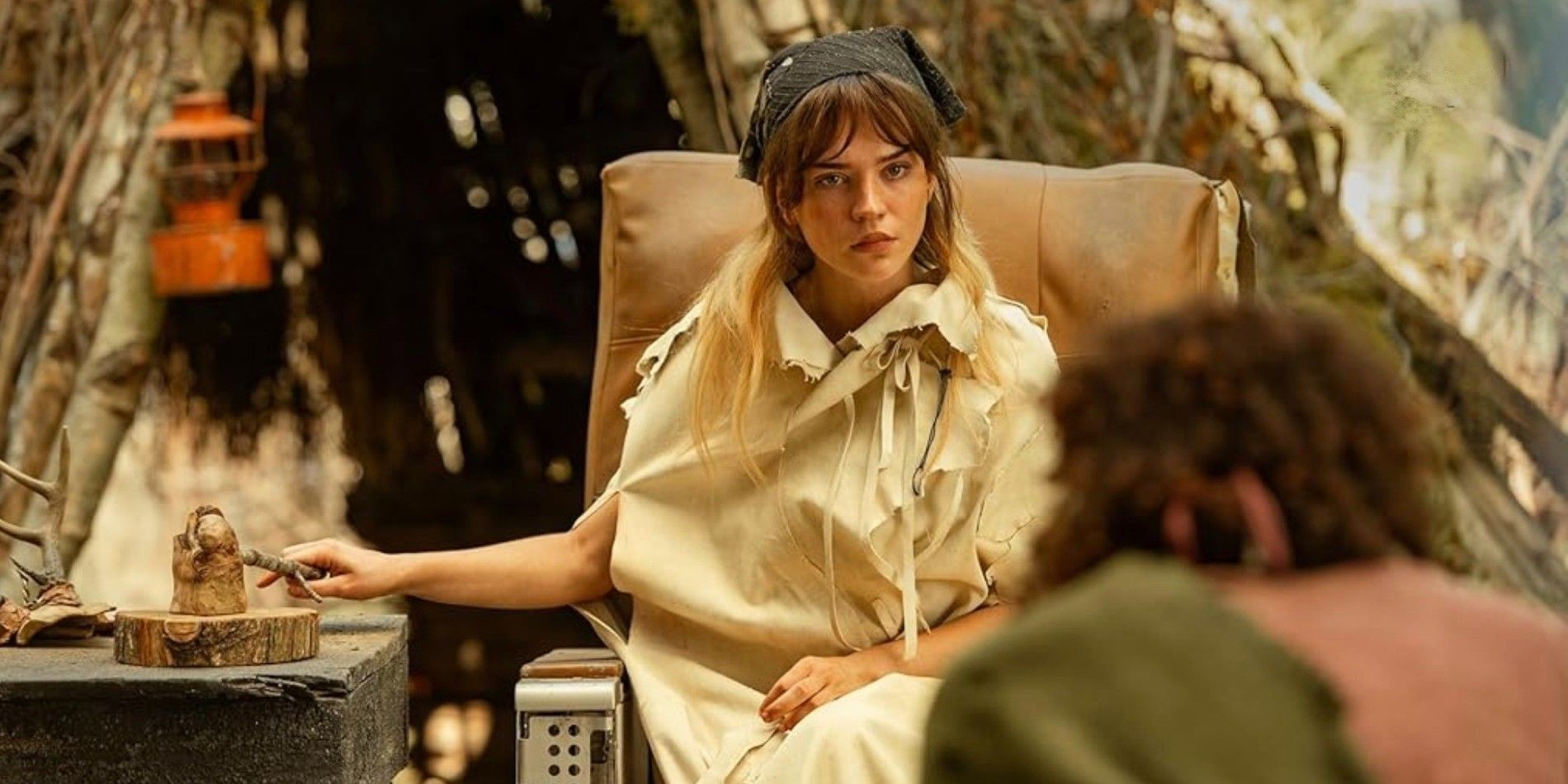
Natalie takes center stage here, and Sophie Thatcher’s performance is nothing short of a masterclass in "traumatized teenager trying to hold it together with duct tape and spite." While the pilot hooked us with the promise of cannibalism and the second and third episodes dealt with the immediate gore of the crash, "Bear Down" is about the slow rot of hope. It’s also where the 2021 timeline starts to get really messy, proving that you can leave the woods, but the woods never really leave you.
The Brutal Reality of the Hunting Trip
The core of the 1996 timeline in this episode is the hunt. Or rather, the desperate, starving attempt at one. The group is hungry. Not "I skipped lunch" hungry, but "my body is eating its own muscle" hungry. This is where the power dynamics start to get wonky. Travis and Natalie are the only ones with a gun, which effectively makes them the most important people in the woods, whether the others like it or not. For another perspective on this event, check out the recent coverage from Deadline.
But there’s a problem. Travis can’t shoot.
Watching him struggle with the rifle while Natalie—who spent her pre-crash life being belittled by a hunting-obsessed, abusive father—effortlessly handles the weapon is such a sharp reversal of 90s gender roles. It’s not just about who gets the deer; it’s about who has the "right" to the violence required to survive. Natalie’s flashbacks give us the context we didn't know we needed. We see her father, a man who represented the worst kind of domestic survival, and we see the moment his own violence literally blew up in his face. It’s dark stuff. It explains why Natalie is the way she is in the present: she’s been in survival mode since she was a toddler. The wilderness is just a bigger version of her childhood home.
Shauna and the Rabbit: A Metaphor for Everything
While Natalie is out in the woods, Shauna is dealing with her own kind of carnage back at the cabin. If you’ve seen the episode, you know the scene. The rabbit.
Most shows would make the "city girl kills an animal" moment a huge, weeping ordeal. Not Yellowjackets. Shauna’s clinical, almost bored approach to skinning and prepping the rabbit is our first real hint that something is deeply "off" with her. It’s not just that she’s adapting; it’s that she seems to be discovering a part of herself that likes the control. She’s pregnant, she’s lied to her best friend, and she’s trapped. Killing that rabbit is the only thing she has total agency over.
It's a mirror to the 2021 timeline where adult Shauna (Melanie Lynskey, who is terrifyingly good) kills a rabbit in her garden. She doesn't do it because she's hungry. She does it because she can. It’s a chilling reminder that the "Antler Queen" energy didn't stay in 1996. It’s sitting in a suburban kitchen in New Jersey, making chili for a husband she doesn't particularly like.
The Flare Gun and the False Hope of Rescue
Let’s talk about the flare gun. In Yellowjackets Season 1 Episode 4, the discovery of the flare gun in the wreckage of the small prop plane feels like a win. For a second, you almost believe they might get out. But this show loves to twist the knife.
The scene where they try to use it is a perfect example of the show’s "half-win" philosophy. They find a tool, but they don't have the expertise. They have a plan, but nature doesn't care. It’s also where we see the first real stirrings of the supernatural—or is it just group psychosis? Lottie is starting to see things. She’s out of her medication (Loxapine, an antipsychotic), and the "visions" are starting to bleed into her reality. When she looks at the red smoke of the flare, she doesn't see a rescue signal; she sees something else. Something older.
Why the Present-Day Mystery Kicks Into Overdrive
In the 2021 timeline, "Bear Down" is where the blackmail plot actually starts to feel dangerous. We’ve got the postcard—"Wish You Were Here"—and the sense that someone knows exactly what they did out there.
Natalie and Juliette Lewis’s portrayal of her is just... it's iconic. The way she interacts with Misty (Christina Ricci) is the highlight of the episode. Misty is basically a human personification of a "Reply Guy" mixed with a serial killer, and watching her try to "bond" with Natalie while Natalie just wants to find out who killed Travis is peak dark comedy. They find Travis’s body—which, spoiler alert for those who forgot, was hanging in a way that looked like a ritual.
This is the moment the show confirms this isn't just a "trauma drama." It’s a conspiracy. The police think it’s a suicide, but Natalie knows Travis. They made a pact. They survived the impossible together. He wouldn't just quit. The fact that his bank account was emptied right after his death points to something much more calculated.
Shattering the "Good Girl" Archetype
Taissa is also falling apart in this episode, though she’s better at hiding it than the others. Her son, Sammy, is drawing these creepy pictures of "the lady in the tree." If you’re paying attention to the framing of the shots in the backyard, you start to realize that Taissa’s sleepwalking isn't just a stress reaction. It’s a manifestation of her suppressed memories.
In the 1996 timeline, Taissa is the one trying to remain logical. She wants to find the "red creek" and follow it. She’s the one who refuses to believe in the "spooky" stuff. But the show is subtly telling us that the more you fight the wilderness, the harder it hits back. By the end of the episode, the divide between the "believers" and the "skeptics" is clearly drawn, and that’s a line that will eventually lead to the ritualistic hunting of their own.
What People Get Wrong About Episode 4
A lot of viewers at the time thought this was a "filler" episode because no one died (in the 1996 timeline). That’s a mistake. "Bear Down" is the structural pillar for the rest of the season. Without Natalie’s backstory here, her eventual arc in the finale doesn't land. Without the rabbit scene, Shauna’s descent into violence feels unearned.
It’s about the loss of innocence, but not in a cliché way. It’s about realizing that "innocence" was a lie they told themselves back in high school. These girls were already broken; the woods just removed the social pressure to act "normal."
How to Piece Together the Mystery After Watching
If you're rewatching or diving in for the first time, keep these specific things in mind to track the plot better:
- Watch the eyes: In the 1996 scenes, notice who is looking at the woods and who is looking at the ground. Lottie and eventually others start looking into the trees. Taissa and Jackie are always looking at the camp. It’s a visual cue for who is being "taken" by the environment.
- The Symbol: The hook-shaped symbol appears again. It’s not just a random carving; it’s a map, though the characters don't know it yet. Pay attention to where it appears in relation to the "red" features of the landscape.
- The Soundtrack: The music in this episode—specifically the use of "Mountain Song" by Jane’s Addiction—isn't just for 90s nostalgia. It sets the frantic, hungry tone of the episode perfectly.
- The Chemicals: Keep an eye on the mention of the red dirt and the "iron" in the water. Some fans argue there’s a scientific explanation (heavy metal poisoning) for the hallucinations, while others stay firmly in the supernatural camp. Episode 4 gives fuel to both sides.
The next logical step for any fan is to go back and look at the pilot’s opening scene—the girl running through the snow—and try to identify the jewelry. Now that you’ve seen Natalie’s skill with the rifle in episode 4, you can start to rule out certain characters based on their physical capabilities and their specialized roles in the group. You’ll find that the "roles" they adopt in "Bear Down" (The Hunter, The Butcher, The Seer) are exactly what they become in the ritual we saw at the very beginning.