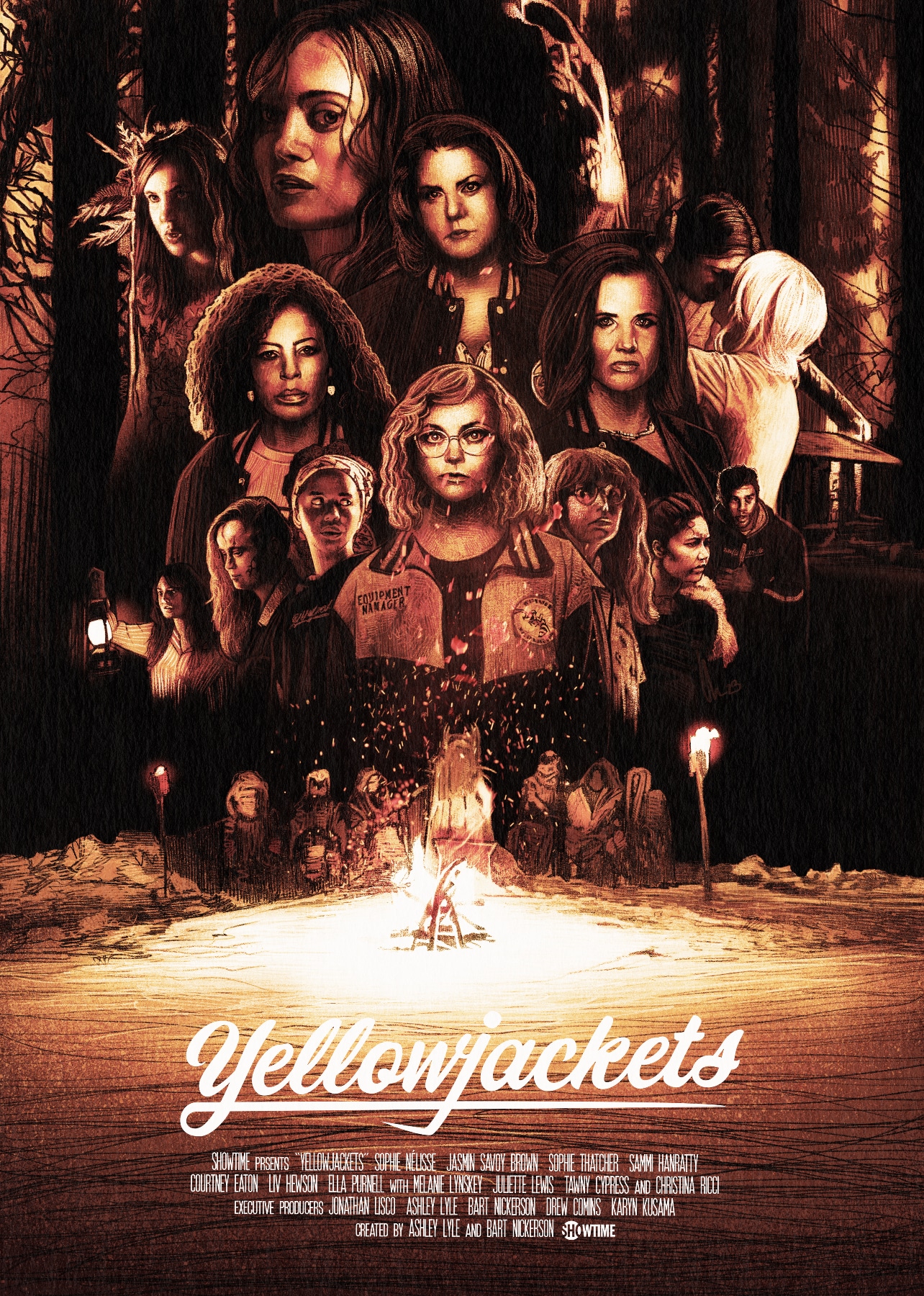
The odds of successfully casting one person to play a complex character are high enough. Trying to find two different actors—separated by twenty-five years of trauma, age, and bitter life experience—who can convince an audience they share the same soul? That’s basically a suicide mission for a casting director. Yet, the Yellowjackets cast didn't just pull it off; they turned a potentially gimmicky premise into the most gripping psychological horror-drama on television.
It’s messy. It’s brutal. Honestly, it shouldn't work as well as it does.
When Showtime first announced the series, the hook was "Lord of the Flies with girls." Cool. We’ve seen that. But the secret sauce was always going to be the chemistry. If you don't believe that Juliette Lewis is the jagged, grown-up version of Sophie Thatcher’s Natalie, the whole house of cards collapses. Fans obsess over the "uncanny" physical resemblances, but the real magic is in the shared mannerisms. The way they hold a cigarette. The specific tilt of a head when they’re being defensive.
The Casting Philosophy: Why physical resemblance wasn't enough
Libby Goldstein and Junie Lowry-Johnson, the casting directors who arguably saved the show from being a "one-and-done" binge, clearly prioritized vibe over bone structure. Sure, the 1996 and present-day counterparts look alike, but look closer.
Take Melanie Lynskey and Sophie Nélisse as Shauna. Nélisse captures that quiet, simmering resentment of a teenager who’s always lived in her best friend’s shadow. Then Lynskey picks up that torch decades later, showing us what happens when that resentment curdles into something dangerous and suburban. It’s a masterclass in continuity.
Most shows would just slap some prosthetic makeup on a 40-year-old and call it a day. Yellowjackets took the hard road. They found actors who could mirror each other’s internal rhythms. It's why the Yellowjackets cast feels like a cohesive unit despite being split across two decades of storytelling.
Breaking down the heavy hitters
You can't talk about this show without mentioning Christina Ricci. She’s Misty Quigley. There is no other Misty. Ricci plays the adult version with a terrifying, wide-eyed cheerfulness that makes your skin crawl. But Samantha Hanratty, playing the teen version, provides the blueprint. She shows us the lonely girl who just wants to be needed—even if she has to break your legs to make it happen.
- Tawny Cypress and Jasmin Savoy Brown (Taissa): They share a specific, intense "type A" drive. Brown plays Tai as a girl who believes she can outrun the darkness with sheer willpower. Cypress plays the adult who realizes the darkness has already caught up.
- Juliette Lewis and Sophie Thatcher (Natalie): These two are the heart of the show's tragedy. Thatcher’s "cool girl" exterior is constantly cracking. Lewis shows us what happens when those cracks never heal.
- Lauren Ambrose and Liv Hewson (Van): Fans practically rioted until Ambrose was cast as the adult Van in Season 2. The resemblance is striking, but it’s the dry, sardonic wit they both nail that makes it believable.
Then there’s the Lottie of it all. Courtney Eaton’s performance in the wilderness is ethereal and frightening. When Simone Kessell joined the Yellowjackets cast as adult Lottie, she had to pivot from "cult leader" to "wellness guru" without losing the underlying instability. It’s a tightrope walk.
The "Redshirt" problem and the Season 2 expansion
In the beginning, we only really focused on the "Core Four." But as the story shifted deeper into the winter, the background characters had to step up.
Think about Crystal or Gen. In Season 1, they were basically scenery. By Season 2, the stakes changed. The show stopped being about "who survives" and started being about "how do they live with what they did?" This shifted the casting requirements. It wasn't just about looking like a high schooler; it was about being able to handle scenes involving cannibalism, ritualistic sacrifice, and the slow-motion collapse of civilization.
The addition of Elijah Wood as Walter in the present-day timeline was a stroke of genius. He’s the perfect foil for Ricci’s Misty. It’s "chaos meets chaos."
Why the 90s nostalgia works for the actors
A lot of the adult Yellowjackets cast are actually 90s icons themselves. Christina Ricci and Juliette Lewis were the "it girls" of indie cinema during the exact era the show's flashback timeline takes place. That’s meta-casting at its finest.
It adds a layer of authenticity that you can't fake. When we see Juliette Lewis on screen, we’re subconsciously remembering her in Natural Born Killers. We see Ricci and think Addams Family or Casper. The show leverages our own nostalgia against us, making the tragedy of their characters feel more personal.
The technicalities of the dual-performance
How do they do it? The actors have mentioned in various interviews that they don't necessarily "rehearse" together to mimic movements. Instead, they watch each other’s dailies.
Sophie Thatcher watched Juliette Lewis’s older films to capture her energy. Melanie Lynskey and Sophie Nélisse reportedly discussed Shauna’s inner monologue to ensure they were playing the same psychological "note." It’s an intellectual exercise as much as an emotional one.
What most people get wrong about the casting process
People often assume the show had the adult actors lined up before casting the teens. In reality, it was often the other way around. The showrunners, Ashley Lyle and Bart Nickerson, had to find the "essence" of the characters in the 90s timeline first.
The adult actors weren't just chosen because they were famous; they were chosen because they could carry the weight of what those girls went through. If the adult versions felt too "healed," the show would lose its teeth. The Yellowjackets cast succeeds because every single adult actor looks like they are perpetually waiting for the other shoe to drop.
The missing pieces: Characters we still haven't seen
We’re still waiting on some answers. We know there are other survivors. Who plays them? The speculation is half the fun. Names like Neve Campbell or Sarah Michelle Gellar constantly pop up in fan forums.
But the show has been careful. They don't just stunt-cast for the sake of it. Every addition to the Yellowjackets cast has to feel like they’ve spent 19 months eating their friends in the woods. That’s a specific "look" that not everyone can pull off.
Actionable steps for fans and viewers
If you’re obsessed with the performances and want to dive deeper into how this ensemble works, here is how to truly appreciate the craft:
- Watch for the "Mirror Moments": Next time you re-watch, look for specific physical ticks. Notice how both versions of Taissa rub their wrists when they’re anxious. Notice the specific way Shauna tilts her head when she’s lying.
- Track the "Original" Cast vs. the "New" Survivors: Pay attention to how the dynamic changes when adult Van or adult Lottie is introduced. The power balance in the present-day timeline shifts based on who was "in charge" in the woods.
- Compare the 90s Filmography: If you want to see why the casting is so brilliant, watch the adult actors' work from the actual 1990s. Watch Heavenly Creatures for Lynskey or Now and Then for Ricci. You’ll see the DNA of their Yellowjackets characters in their younger selves.
- Follow the Casting Directors: Keep an eye on the work of Libby Goldstein and Junie Lowry-Johnson. Their ability to find "matched pairs" is becoming a gold standard in the industry, and they often work on other high-caliber ensemble dramas.
The brilliance of the Yellowjackets cast isn't just in the individual talent—it's in the terrifyingly seamless bridge they've built between a traumatic past and a dysfunctional present. They've made us believe that the girl in the woods and the woman in the suburbs are the same person, and that is exactly why the show haunts us long after the credits roll.