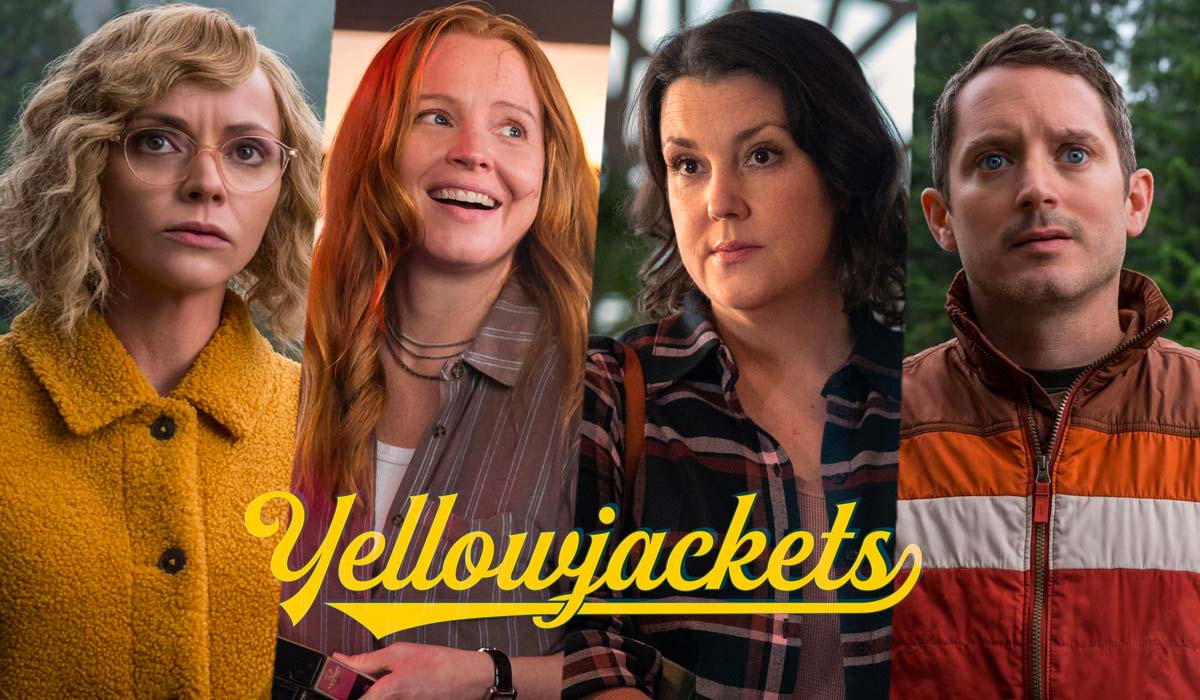
Honestly, trying to cast a show like Yellowjackets sounds like a literal nightmare for a casting director. You don’t just need one good actor; you need two people who look, move, and vibe like the same human being across a twenty-five-year gap. If the Yellowjackets cast didn't click, the whole "Lord of the Flies but with teenage girls" premise would have folded faster than a cheap tent in the Ontario wilderness.
It’s rare. Usually, in TV, you just put some bad prosthetic makeup on a 20-year-old and call it a day. But Ashley Lyle and Bart Nickerson went the hard route. They found legends like Juliette Lewis and Christina Ricci and paired them with newcomers who had to match their energy perfectly. It’s the kind of lightning-in-a-bottle casting that makes you forget you're watching two different people.
The Shauna Paradox: Sophie Nélisse and Melanie Lynskey
Shauna is the heart of the show, but she’s also a deeply unreliable narrator of her own life. Melanie Lynskey plays the adult version with this simmering, polite rage that is honestly terrifying if you look at it too long. But look at Sophie Nélisse. She had the harder job in some ways. She had to establish the "before" version of a woman who is essentially a human shadow.
People keep talking about the physical resemblance, but it’s the eyes. They both have this way of looking at people—sort of tilted, sort of judging—that feels identical. When Nélisse’s Shauna kills that rabbit in the pilot, you see the blueprint for Lynskey’s suburban housewife who can butcher a human body without breaking a sweat. It wasn't just luck. The Yellowjackets cast members spent time together. Lynskey has mentioned in interviews how they discussed Shauna’s internal monologue to make sure the character felt like one continuous, traumatic arc.
Why the Misty Casting is Genuinely Unsettling
Samantha Hanratty and Christina Ricci as Misty Quigley is just... inspired. Misty is the character everyone loves to hate, or maybe hates to love? She’s a sociopath, sure, but she’s a sociopath who just wants a best friend.
Ricci brings that 90s indie-queen energy back to the screen, playing Misty as someone who is constantly performing "normalcy." But Hanratty? She manages to make the teenage Misty feel even more dangerous because she’s so invisible to her peers. The way they both use that high-pitched, helpful "nurse voice" to manipulate everyone around them is a masterclass in character continuity. It’s not just about wearing the same glasses. It’s about that specific, chirpy brand of malice.
Most shows would have made Misty a caricature. Instead, these two actresses make her feel like a real person who just happens to be missing a moral compass. You find yourself rooting for her to hide the body, which is a weird place for an audience to be.
Natalie, Travis, and the Weight of Survival
Juliette Lewis brought a raw, jagged edge to Natalie that felt like a natural evolution of Sophie Thatcher’s younger version. Sadly, with the way Season 2 ended, the dynamic of the Yellowjackets cast shifted significantly. Thatcher had to play Natalie as the moral center of a group that was rapidly losing its morality.
Then you have the adult Natalie, who is just tired. She’s lived twenty-five years with the weight of what they did out there.
- Sophie Thatcher: The hunter, the rebel, the one who tried to keep them human.
- Juliette Lewis: The survivor who couldn't figure out why she bothered surviving.
The tragedy of Natalie is that she was always the strongest one, which made her the most broken as an adult. The casting works because you can see the light dying in those eyes over the course of two seasons.
The Secret Sauce: Casting the "New" Adults
Season 2 threw a wrench into things by introducing adult versions of characters we thought might be dead. Lauren Ambrose as adult Van? Literal perfection. Liv Hewson had already established Van as the cynical, lucky-to-be-alive heart of the teen group. Ambrose stepped in and didn't miss a beat. She even mimics Hewson’s specific smirk.
And then there's Simone Kessell as Lottie. Courtney Eaton played Lottie as a girl lost in her own head, possibly psychic, possibly schizophrenic. Kessell turned her into a "wellness guru" which is the most terrifyingly logical progression for a cult leader. The Yellowjackets cast expanded in a way that felt additive, not crowded. It’s hard to bring in new heavy hitters into an established ensemble, but the chemistry was there immediately.
The Casting Process: How They Actually Did It
Libby Goldstein and Junie Lowry-Johnson are the casting directors behind this. They didn't just look for lookalikes. They looked for "soul-alikes."
- They cast the adults first in most cases. You get the stars like Lynskey and Lewis to anchor the project.
- They searched for younger actors who could mimic the vocal patterns and physical tics of the veterans.
- They held "chemistry reads" that weren't just about romance, but about group dynamics.
The teens had to feel like a real soccer team. They had to look like they’d spent years playing together before the crash ever happened. You can’t fake that kind of rapport. If you watch the background of the 1996 scenes, the girls are always moving as a unit. That’s a testament to the actors, not just the writing.
What Most People Get Wrong About the Cast
There’s this weird misconception that the actors are playing "good" or "bad" versions of themselves. That’s not it. They are playing the same person at different stages of a nervous breakdown.
Take Taissa. Tawny Cypress and Jasmin Savoy Brown play a woman who is literally splitting in two. The "Bad Tai" stuff could have been so cheesy. But because both actresses lean into the stillness of the character—that terrifying, stoic ambition—it works. Taissa isn't "evil" when she's eating dirt in a tree; she's just a woman whose trauma has finally fractured her psyche.
The Unsung Heroes of the Wilderness
We focus on the big names, but the Yellowjackets cast is deep. Kevin Alves as Travis is a standout, especially in the way his relationship with Natalie anchors the 1996 timeline. And let’s talk about Steven Krueger as Coach Ben. He’s the only adult in the room for a long time, and watching his authority slowly dissolve into pure, unadulterated fear is one of the most grounded parts of the show. He is the audience surrogate. He is all of us realizing that the kids are not alright.
Then there are the "red shirts"—the teammates who don't have adult counterparts. Every time one of them gets a line of dialogue, you start sweating. Are they the next meal? Are they going to join Lottie’s forest religion? The tension only works because those actors make their limited screen time count.
Actionable Insights for Fans and Aspiring Creators
If you’re watching Yellowjackets and trying to figure out why it hits differently than other ensemble dramas, it’s the commitment to character consistency over plot twists. The plot is wild, but the characters are solid.
- Observe the "Physical Echoes": Next time you rewatch, look at how the younger cast mimics the posture of the adults. Sophie Nélisse often stands with her arms crossed exactly like Melanie Lynskey.
- Study the Vocal Cadence: Listen to the way Christina Ricci and Samantha Hanratty both use a specific upward inflection when they are being particularly manipulative.
- Research the Background: Many of the younger cast members have backgrounds in indie film or theater, which explains the high level of technical skill they bring to a "genre" show.
The Yellowjackets cast succeeded because they treated the roles as a shared responsibility. They didn't try to outshine their counterparts; they tried to disappear into them. That is why, even when the plot gets truly bizarre—we’re talking human hearts and Greek mythology rituals—you stay grounded in the reality of these women. They feel like people you know, or at least, people you’re afraid of becoming.
The production of Season 3 is already underway, and the stakes for the casting of any remaining "adult" versions of the survivors are sky-high. Fans are still theorizing about who could play an adult Mari or Akilah, assuming they even make it out. It’s a testament to the show’s quality that we care this much about who fills those shoes. Casting isn't just about finding a face; it's about finding the ghost of who that person used to be.