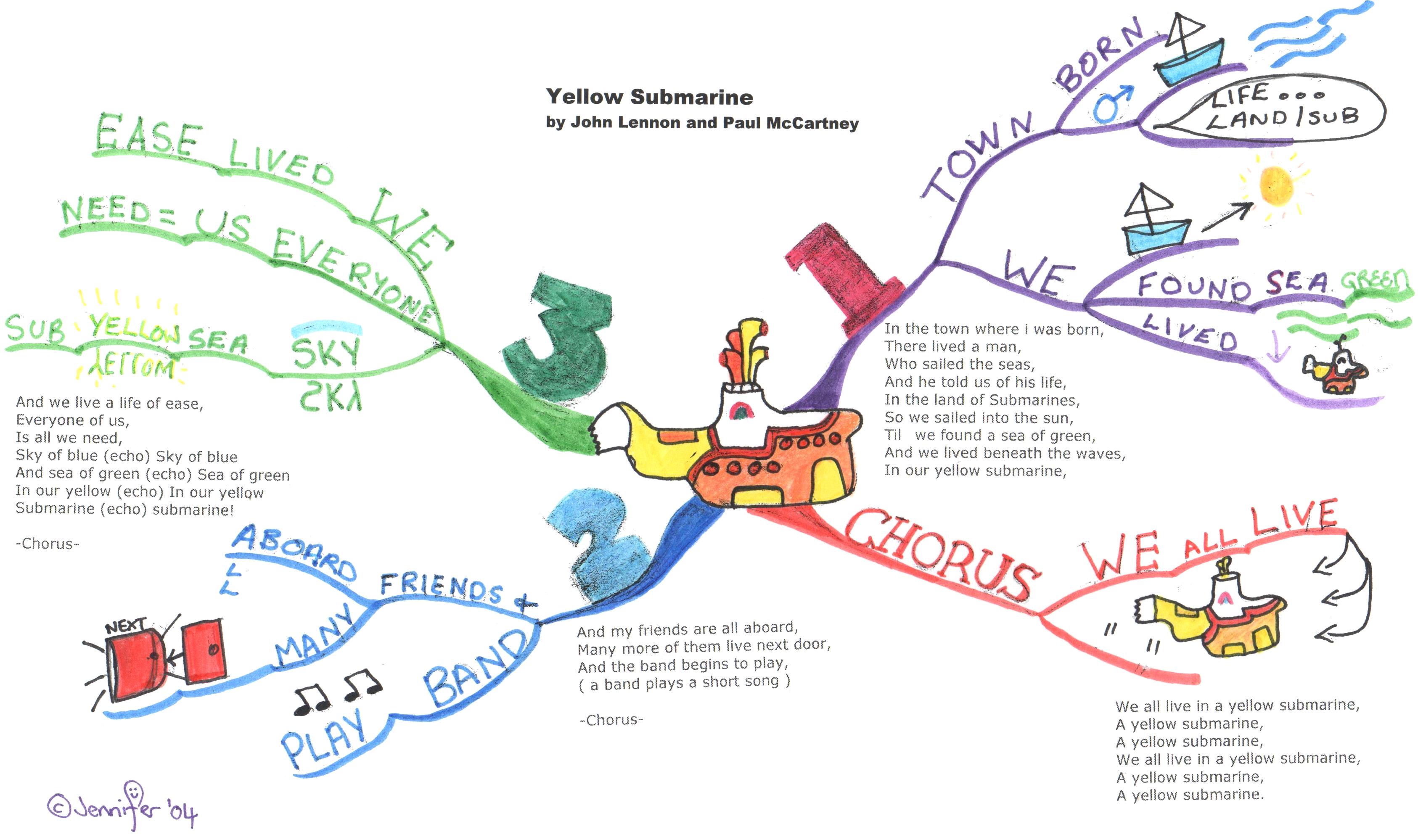
Everyone thinks they know the Yellow Submarine. You see the lunchboxes in vintage shops, the neon-bright socks at the mall, and maybe you've hummed along to Ringo Starr’s nasal, charming vocals while stuck in traffic. It feels like a nursery rhyme. It feels safe. But if you actually sit down and look at the history of the 1968 film and the album that followed, you realize it was a chaotic, desperate, and surprisingly accidental masterpiece. It almost didn't happen. In fact, the Beatles themselves initially wanted almost nothing to do with it.
They were tired. By 1967, the band was pivoting away from the "moptop" era and deep into the experimental weeds of Sgt. Pepper. When United Artists came knocking to collect on a three-movie contract, the Fab Four were basically looking for the exit. They hated the idea of another Help! or A Hard Day's Night. So, they figured an animated film was the perfect loophole. Let some artists draw them, let some actors mimic their voices, and they could go back to the studio to record "Revolution."
That’s the irony of the Yellow Submarine. One of the most iconic pieces of psychedelic pop culture was born out of a desire to do as little work as possible.
The Myth of the "Throwaway" Album
People usually rank the Yellow Submarine soundtrack at the bottom of the Beatles' discography. Honestly? That's a bit of a tragedy. While it's true that Side B of the original vinyl is entirely George Martin’s orchestral score, Side A contains some of the weirdest, most underrated gems in the entire catalog.
Take "Hey Bulldog." It was recorded during a filming session for the "Lady Madonna" promotional video. It’s got one of the nastiest, grittiest basslines Paul McCartney ever tracked. It sounds nothing like a children's cartoon. It sounds like a band having a blast in the middle of a breakdown. John Lennon and McCartney end the song barking like actual dogs. It’s raw. It’s loud. It’s the sound of a band that accidentally made a hit while trying to fulfill a contractual obligation.
Then there’s George Harrison’s "Only a Northern Song." Talk about meta. Harrison wrote it as a direct jab at the band’s publishing company, Northern Songs Ltd. The lyrics are basically him saying, "It doesn't matter what words I say or what notes I play, because I don't own this anyway." It’s cynical. It’s grumpy. And yet, it’s wrapped in this swirling, dissonant psychedelic production that fits the Yellow Submarine aesthetic perfectly.
Heinz Edelmann and the Look That Changed Everything
If you ask a random person who designed the movie, they might guess Peter Max. They’d be wrong. Peter Max actually had nothing to do with it, though his style is remarkably similar. The real genius was a Czech-born German illustrator named Heinz Edelmann.
Edelmann didn't want to make a Disney movie. He hated the "round, soft" look of traditional animation. He wanted something that looked like a moving poster, something that captured the vibrating energy of swinging London. The Blue Meanies weren't just villains; they were symbols of the "anti-music" and the "anti-color" forces that the 1960s counterculture was fighting against.
The production was a nightmare. The animators were working around the clock in a cramped studio in Soho. They were literally inventing techniques as they went. The "Eleanor Rigby" sequence, for example, used high-contrast photographic stills and rotoscoping in a way that felt more like fine art than a Saturday morning cartoon. It was melancholy. It was lonely. It was a huge risk for a film marketed toward kids.
Why the Beatles Changed Their Minds
The story goes that the Beatles saw a rough cut of the film and were floored. They realized it wasn't a cheap cash-in. It was brilliant. They liked it so much that they agreed to appear in a live-action cameo at the very end.
You’ve seen that clip. They’re standing in a dark room, looking a bit scruffy, joking about "newer and bluer Meanies." It’s a brief moment, but it’s essential. It gave the film the "official" stamp of approval. Without that endorsement, Yellow Submarine might have been forgotten as a weird experimental footnote. Instead, it became the definitive visual representation of the Summer of Love, even though it came out a year later.
A Few Facts People Often Forget:
- The Beatles didn't voice themselves. Paul, John, George, and Ringo were played by actors (including Paul Angelis and Geoffrey Hughes).
- The movie saved the band's relationship with United Artists, allowing them to make Let It Be later.
- The song "Yellow Submarine" was actually released two years before the movie, on the Revolver album.
- The "Sea of Holes" sequence was a massive technical achievement for 1968, requiring painstaking hand-painting of cells.
The Sonic Architecture of Pepperland
We have to talk about George Martin. Most people skip the second half of the album. Don't do that. Martin was the "Fifth Beatle" for a reason, and his work on the Yellow Submarine score is some of the best orchestral writing of his career. He wasn't just writing "background music." He was translating the Beatles' psychedelic language into a symphonic context.
The tracks "Sea of Monsters" and "Pepperland" are incredible. They use brass and strings to create a sense of wonder and dread that matches the animation's surrealism. It’s easy to forget that while the band was off meditating in India or fighting in the studio, Martin was the one holding the musical legacy together. He gave the film its heart.
The Cultural Ripple Effect
You can see the influence of the Yellow Submarine everywhere today. From the animation style of South Park to the colorful absurdity of Adventure Time, the DNA of this film is baked into modern media. It broke the "Disney mold." It proved that animation could be surreal, political, and avant-garde while still being accessible to families.
It’s also one of the few pieces of Beatles media that feels truly timeless. A Hard Day's Night is a black-and-white time capsule of 1964. Let It Be is a gritty documentary of a band falling apart. But Yellow Submarine exists in its own dimension. It’s a world where music literally saves the day and where "all you need is love" isn't just a slogan—it's a weapon against the grey, boring forces of the world.
How to Experience it Now
If you want to truly "get" the Yellow Submarine, you can't just listen to the song on a "Best Of" playlist. You need the full immersion.
- Watch the 4K Restoration: The colors in the latest digital cleanup are eye-popping. It’s like seeing it for the first time in 1968.
- Listen to the "Songtrack": In 1999, they released a "Songtrack" version that replaced the orchestral score with all the actual Beatles songs used in the movie (like "Lucy in the Sky with Diamonds" and "Eleanor Rigby"). It’s a much more cohesive listening experience than the original 1969 LP.
- Check out the Graphic Novel: Bill Morrison did a fantastic adaptation that captures the frantic energy of the animation on the page.
The Yellow Submarine is more than a submarine. It’s a reminder that even when things are falling apart—as the Beatles were in the late 60s—you can still create something that radiates pure joy. It’s a mess of a project that turned into a masterpiece.
Think about that the next time you hear Ringo start that iconic first verse. It wasn't just a song for kids. It was a lifeboat for a band that was drowning in their own fame.
To get the most out of your next viewing, pay close attention to the transition between the "real" world of Liverpool and the fantasy world of Pepperland. The shift in color palette isn't just for show; it's a deliberate narrative device designed to show how art and music can transform a mundane environment. If you're a musician, try learning the bassline to "Hey Bulldog." It will give you a whole new respect for McCartney's ability to turn a "cartoon song" into a masterclass in rock composition. Finally, look into the work of Heinz Edelmann beyond the movie; his darker, more satirical illustrations provide a fascinating context for why the film looks as strange and haunting as it does.
The movie isn't just a trip; it's a blueprint for creative freedom.