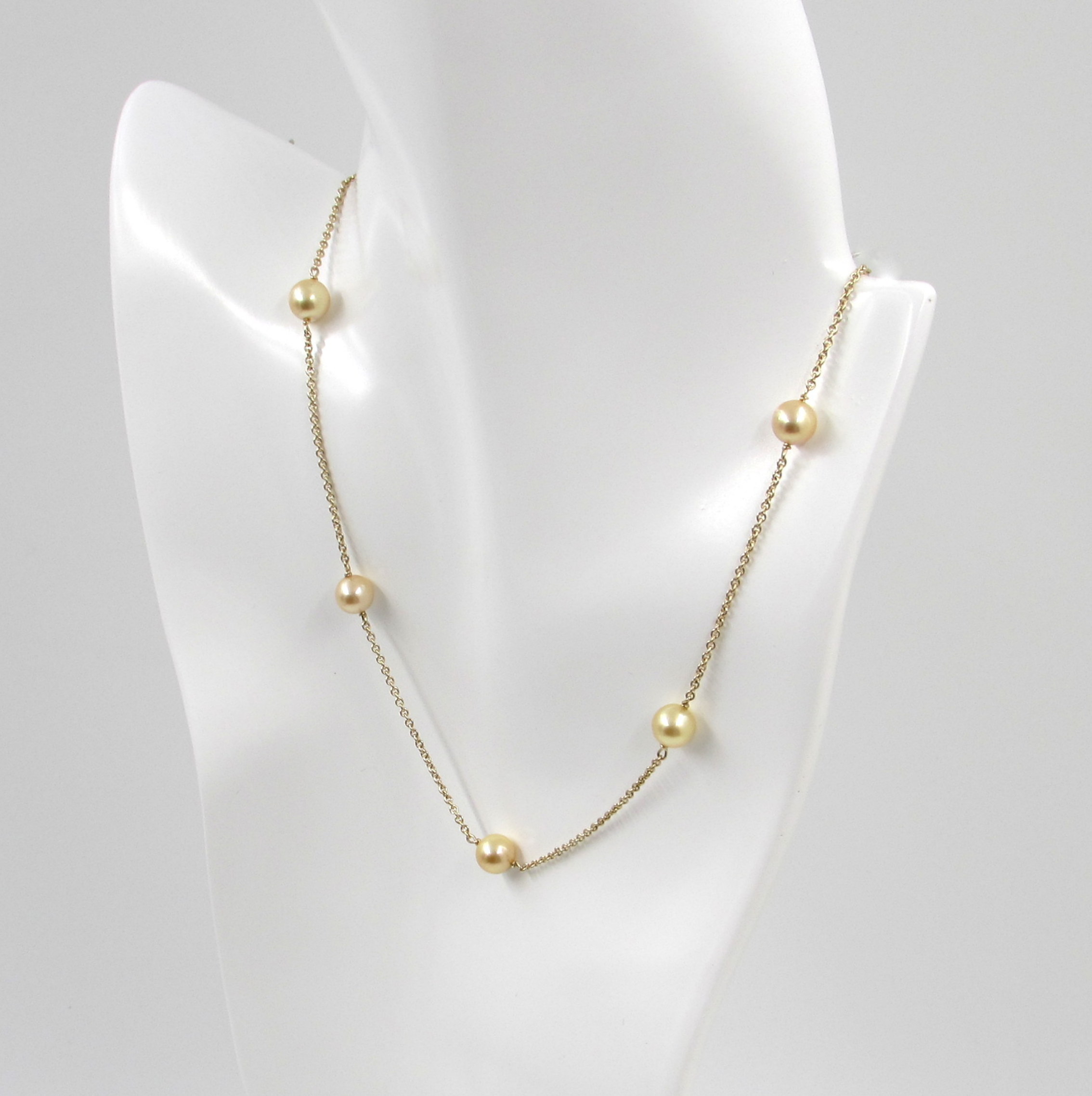
You’ve seen them everywhere lately. It’s not just your grandmother's jewelry box anymore. From TikTok influencers layering dainty chains to high-end runways in Paris, the yellow gold pearl necklace has reclaimed its throne as the ultimate "it" accessory. But why now? Honestly, it’s about the warmth.
White gold and silver had a long run, but they can feel a bit clinical. Yellow gold brings a certain "glow" that mimics golden hour sunlight. When you pair that with the organic, slightly imperfect shimmer of a real pearl, you get something that feels alive. It’s a vibe. It’s basically the jewelry equivalent of a cashmere sweater—expensive-looking, effortless, and weirdly versatile. In other updates, read about: The Miao Tree Of Life Is The Best Philosophy For Modern Burnout.
The Real Reason Yellow Gold and Pearls Just Work
There’s actual science behind why this combination looks so good on almost everyone. Yellow gold, specifically 14k or 18k, has those rich yellow undertones that complement the natural "orient" or luster of a pearl.
Pearls aren't just white blobs. If you look closely at a high-quality Akoya or South Sea pearl, you’ll see overtones of pink, silver, or cream. The warmth of a yellow gold pearl necklace pulls those colors out. It makes the pearl look deeper. It makes your skin look healthier. Refinery29 has analyzed this fascinating topic in great detail.
Think about the iconic Vivienne Westwood "Mini Bas Relief" choker. It’s been a viral sensation for years now. Why? Because it took the stuffy, traditional idea of pearls and wrapped them in gold-tone brass (or solid gold for the high-end versions) with a punk-rock edge. It proved that pearls don't have to be "preppy." They can be edgy. They can be daily wear.
Most people think pearls are fragile. And sure, they aren't diamonds. They are organic gemstones, meaning they’re made by a living creature. But they aren't made of glass. A well-constructed yellow gold pearl necklace can survive decades if you just follow one simple rule: "Last on, first off." Put your perfume and hairspray on before the necklace. The alcohol in those products can dull the pearl's luster over time. It’s a small price to pay for looking like a million bucks.
Choosing Your Vibe: Baroque vs. Uniform
If you want to avoid looking like you're heading to a 1950s debutante ball, you have to talk about shape.
The Uniform Strand: These are the perfectly round, matched pearls. They are classic. They are also the hardest to pull off without looking "costume-y" unless you style them with something totally unexpected, like a graphic tee and a leather jacket.
The Baroque Pearl: This is where the magic happens lately. Baroque pearls are irregular. They’re lumpy, elongated, and unique. No two are the same. A single, large baroque pearl on a heavy 18k gold paperclip chain? That’s a statement. It says you have taste but don't take yourself too seriously.
Then you have the "tin cup" style. Remember the movie Tin Cup? Rene Russo wore a necklace with pearls spaced out along a delicate gold chain. It’s still one of the most requested styles in jewelry stores today. It’s breathable. It doesn't feel heavy around the neck.
The Metal Matters More Than You Think
Don't get tricked by "gold-plated" if you want an heirloom. "Gold-filled" is okay for a season, but if you're investing in a yellow gold pearl necklace that you want to pass down, you need solid gold.
Why? Because pearls are often re-strung. Every few years, the silk thread between the pearls can stretch or get dirty. If your clasp and spacers are solid 14k gold, they can handle the heat and tension of being reworked. Plated jewelry will flake. It will turn your neck green. It will eventually look cheap against the timeless beauty of the pearls.
Spotting the Fakes (Without Being an Expert)
You don't need a GIA certification to spot a total dud. Use the "Tooth Test." It sounds gross, but it works. Gently rub the pearl against the edge of your front tooth. A real pearl—whether it's freshwater, Akoya, or Tahitian—will feel slightly gritty or sandy. This is because of the crystalline structure of the nacre. A fake pearl, usually made of glass or plastic, will feel perfectly smooth.
Also, look at the drill holes. On a real yellow gold pearl necklace, the holes where the gold chain or silk thread passes through should be clean. If you see chipped "paint" around the hole, run. That’s a plastic bead with a coating.
How to Layer Like a Pro
One necklace is fine. Three is better.
Start with a 14-inch gold herringbone chain. Then, add your 16-inch yellow gold pearl necklace with a small pendant. Finally, drop a 20-inch gold coin necklace at the bottom. The contrast between the sleek metal and the textured pearls creates visual interest. It stops the pearls from looking too "bridal."
We’re seeing a huge shift toward "Men in Pearls" too. Look at Harry Styles or A$AP Rocky. They’ve been pairing pearls with yellow gold chains for years, breaking the gender barrier for this gemstone. It’s not about being feminine anymore; it’s about texture and luxury.
What to Expect to Pay
Price varies wildly. You can find a decent freshwater pearl necklace with 14k gold accents for $200. But if you're looking at South Sea pearls—the "rolls royce" of pearls—you’re easily looking at $2,000 to $10,000+.
- Freshwater pearls: Often more affordable because mussels can produce dozens of pearls at once. They come in great shapes.
- Akoya pearls: These are your classic Japanese saltwater pearls. Perfectly round, incredibly shiny.
- South Sea pearls: Massive, often naturally golden or white. These are the ones that look incredible with yellow gold.
Actionable Steps for Your Next Purchase
If you're ready to pull the trigger on a yellow gold pearl necklace, don't just buy the first one you see in a targeted ad.
Check the luster first. Hold the necklace under a lamp. You should be able to see your own reflection on the surface of the pearl. If it looks dull or chalky, it's low quality. No amount of gold can fix a "dead" pearl.
Verify the gold markings. Look at the clasp. It should be stamped with "14k," "585," "18k," or "750." If it just says "925," that’s sterling silver with a gold wash (vermeil), which is fine, but it’s not solid gold.
Consider the strand length. An 18-inch "Princess" length is the standard because it hits right at the collarbone. It’s the safest bet for a gift. If you want something more modern, go for a 15-inch choker length.
Pearls are the only gemstone that comes from a living organism. They don't need to be cut or polished to be beautiful. When you set them in yellow gold, you're wearing a piece of the earth and a piece of the ocean at the same time. It’s a classic for a reason, but the way you wear it—layered, messy, or with a simple white tank top—is what makes it modern.
Maintenance Checklist:
- Storage: Never store pearls in a plastic bag. They need to "breathe" or they can dehydrate and crack. Use a soft cloth pouch.
- Cleaning: Just wipe them with a damp, soft cloth after wearing. Never use ultrasonic cleaners or steam. They will destroy the pearl.
- Restringing: if you wear your strand daily, take it to a jeweler every 18 months. If the pearls can slide around on the string, the thread is about to snap.
Own the look. Don't save it for a wedding or a fancy dinner. Wear your pearls to the grocery store. That’s how you make a classic actually feel like yours.



