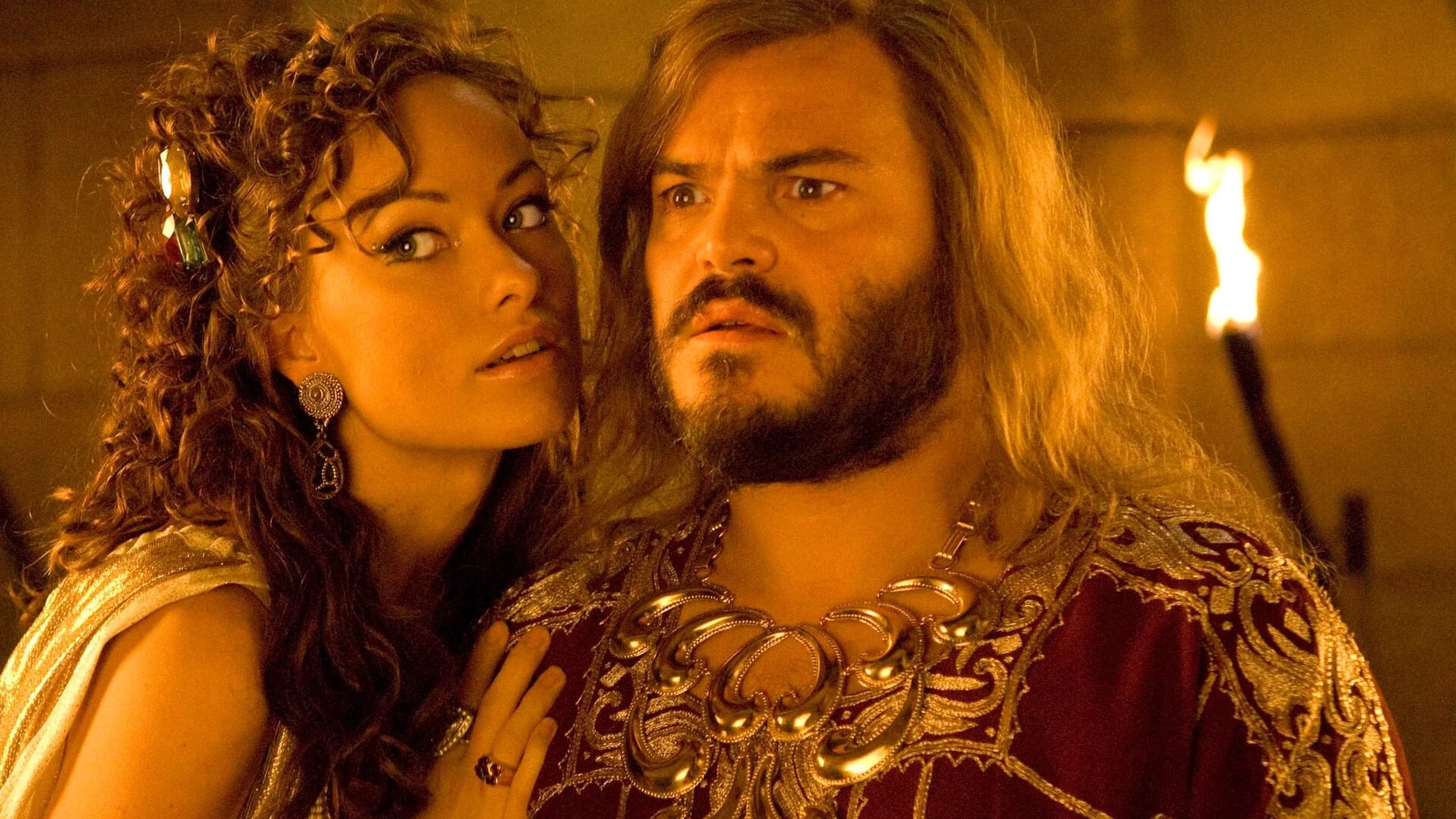
When you look back at 2009, it felt like Harold Ramis was about to hand over the comedic crown to a new generation. He had the pedigree. He had the legends. Honestly, the year one movie cast looked like a fantasy draft for a comedy nerd's dream team. You had Jack Black coming off Tropic Thunder and Michael Cera basically owning the "awkward teen" market after Superbad and Juno. Then you throw in a supporting lineup that included Bill Hader, David Cross, and Olivia Wilde.
It should have been a slam dunk.
Instead, we got a movie where Jack Black eats a prop that is definitely supposed to be rhinoceros dung. Critically, the film didn't exactly set the world on fire. But looking back at the ensemble now, it’s wild how many of these actors went on to become massive stars or cult icons. The cast is basically a "Who's Who" of mid-2000s comedy, mixed with future A-listers who were just getting their feet wet.
The Weird Dynamic of the Year One Movie Cast
The core of the movie relies on the odd-couple energy between Zed (Black) and Oh (Cera). It’s a strange pairing if you think about it. Jack Black is a whirlwind of high-energy physical comedy and "jazz-hands" energy. Michael Cera is... well, Michael Cera. He’s the king of the quiet, mumbled retort.
In the film, Zed is the hunter who can’t hunt, and Oh is the gatherer who’s terrified of everything. After Zed eats from the Tree of Knowledge (and gets them kicked out of their village), they wander into a literal mashup of Biblical history.
What’s funny is how the year one movie cast was actually split between these two very different eras of comedy. You had the old guard like Oliver Platt and Hank Azaria, who played their roles with this theatrical, Shakespearean gravity that made the poop jokes feel even weirder. Then you had the "Apatow Pack" kids who were just improvising their way through ancient Mesopotamia.
Why the Supporting Roles Stole the Show
If you ask anyone who still watches this on cable at 2:00 AM what they remember, it’s rarely the main plot. It’s the cameos.
- David Cross and Paul Rudd: They play Cain and Abel. Paul Rudd is uncredited here, which is sort of a "blink and you'll miss it" moment, but David Cross as the first-ever murderer is peak David Cross. He’s cynical, annoyed, and totally over it.
- Hank Azaria as Abraham: This might be the most underrated part of the whole movie. Azaria plays Abraham with this bizarre, intense commitment. The scene where he tries to explain circumcision to a terrified Michael Cera is arguably the funniest three minutes in the film.
- Christopher Mintz-Plasse: Fresh off Superbad, he shows up as Isaac. He basically plays the "sacrifice" who is very much not okay with being sacrificed.
The Leading Ladies Before They Were Superstars
It’s easy to forget that the year one movie cast featured two actresses who were right on the edge of massive mainstream breakthroughs.
Olivia Wilde played Princess Inanna. At the time, she was mostly known for her role on House, but Year One was one of her first big swings at a studio comedy. She plays the "straight man" to Jack Black’s chaos, which is a thankless job, but she holds her own.
Then you have Juno Temple. She played Eema. If you look at her now—winning awards for Ted Lasso or leading Fargo—it’s hilarious to see her as a dirt-smudged primitive girl in 2009. She’s part of the reason the movie has this weirdly high-quality feel despite the low-brow jokes; the acting talent was genuinely top-tier.
A Masterclass in Cameos
The movie is packed with people who would eventually lead their own shows or movies.
- Bill Hader shows up briefly as a Shaman.
- June Diane Raphael (from How Did This Get Made?) plays Maya, the love interest for Zed.
- Vinnie Jones brings his usual "tough guy" energy as Sargon.
- Kyle Gass, Jack Black’s Tenacious D partner, appears as a eunuch named Zaftig.
What Most People Get Wrong About the Production
There’s a common misconception that Year One was just a lazy studio cash-grab. But if you look at the creative team, that doesn’t hold water. Harold Ramis directed this. This is the man who gave us Caddyshack, Groundhog Day, and National Lampoon's Vacation.
Ramis actually wanted to make a movie about the "legendary" nature of history. He wasn't worried about the fact that Cain and Abel lived thousands of years before the Roman-style Sodom depicted in the film. He called it "conflating time." He wanted to explore the origins of Western civilization through a lens of total stupidity.
The script was co-written by Gene Stupnitsky and Lee Eisenberg, the guys who wrote some of the best episodes of The Office (like "The Dinner Party"). On paper, this should have been the greatest comedy of the decade.
So why did it feel a bit "off"?
A lot of people think the studio interference was the real culprit. The film feels like it was edited for a PG-13 rating when it clearly wanted to be a hard R. You can see the seams where jokes were cut short or sanitized. In a way, the year one movie cast was too talented for the material they ended up with.
Where is the Cast Now?
Looking at the year one movie cast today is like looking at a time capsule of 2009's "next big things."
Jack Black is a global treasure, voicing Kung Fu Panda and appearing in Jumanji blockbusters. Michael Cera has carved out a niche as the king of indie-weird, recently appearing in Barbie as Allan. Olivia Wilde transitioned into a highly successful director with Booksmart.
Harold Ramis, sadly, passed away in 2014. Year One ended up being the final film he ever directed. While it isn't held in the same regard as Groundhog Day, it remains a fascinating piece of his legacy—a massive, expensive, weird experiment that allowed a bunch of funny people to play dress-up in the desert.
Actionable Insights for Fans of the Film
If you're revisiting this movie or discovering it for the first time because of the cast, here is the best way to enjoy it:
- Watch the Unrated Version: The theatrical cut is choppy. The unrated version restores the flow of the improv and makes the comedic timing of the year one movie cast much more apparent.
- Focus on the Background: Half the fun is spotting actors like Paul Scheer or Horatio Sanz in minor roles.
- Ignore the History: Don't try to make the timeline work. It’s meant to be a fever dream of Sunday School stories mixed with Animal House.
Whether you love it or hate it, you can’t deny that getting this many funny people together in one place was a rare feat. It’s a snapshot of a very specific moment in Hollywood when the "Apatow style" of comedy was meeting the old-school legends of the 80s.
To see how the stars of this film evolved, you might want to check out the early work of June Diane Raphael in her sketch comedy days or track Olivia Wilde’s transition from actor to director. If you're looking for more from the writers, the early seasons of the American version of The Office show off the same dry humor they tried to bring to the ancient world.



