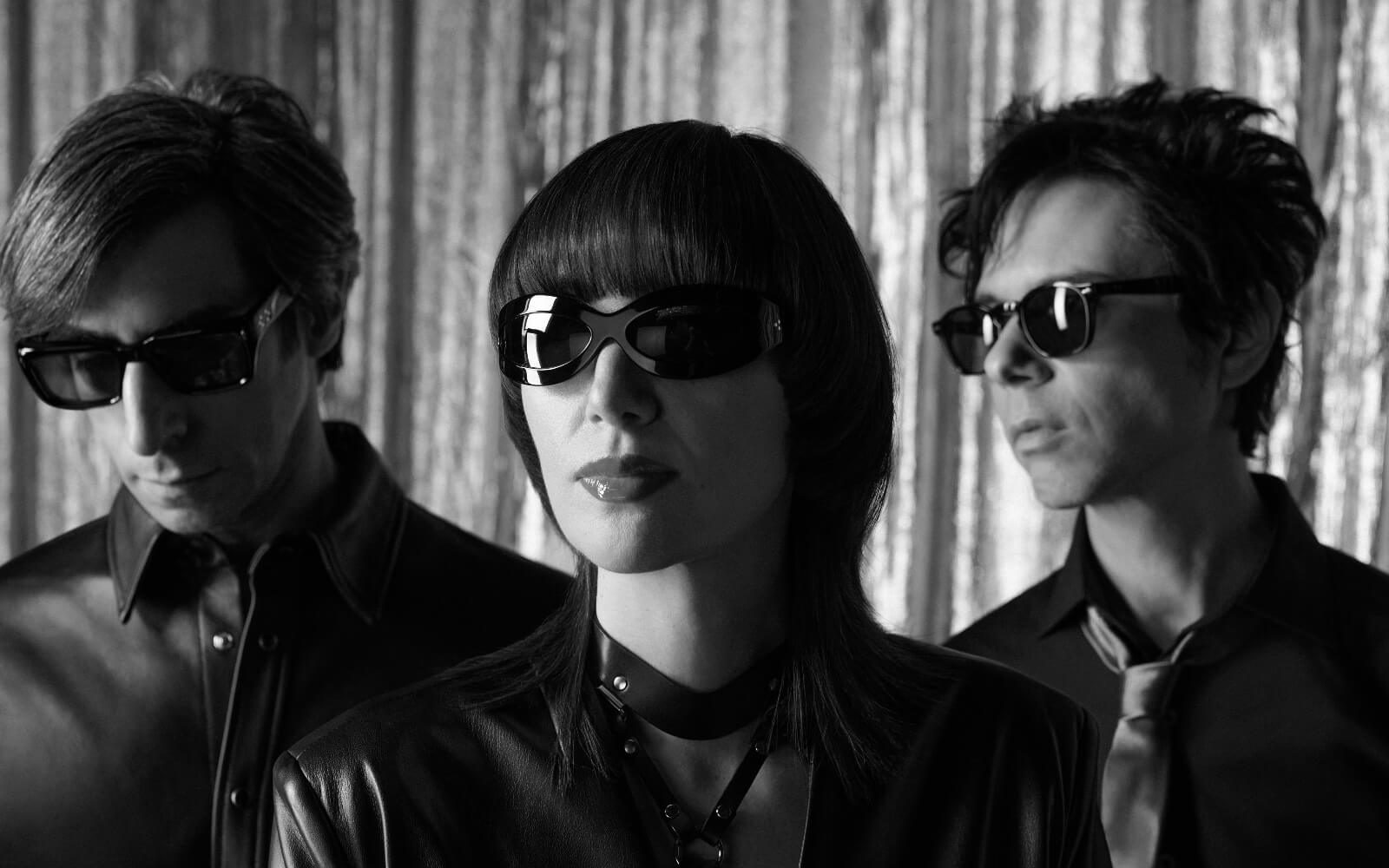
Karen O didn’t just scream; she reset the entire blueprint for what a frontwoman could be in a post-grunge world. If you were around the New York City club scene in the early 2000s, you remember the beer-soaked floors and the sheer, unadulterated chaos of their live sets. The Yeah Yeah Yeahs emerged from that specific, grimy intersection of art-punk and garage rock, proving that you could be both fashion-forward and incredibly messy at the same time. They weren't just another band in the "The" craze—The Strokes, The White Stripes, The Hives—they were the weirdest of the bunch.
Honest talk? Most bands from that era burned out or became legacy acts playing the same ten songs at Coachella forever. But the Yeah Yeah Yeahs managed something different. They evolved from the jagged, screeching energy of Master and Art Star into the polished, synth-driven vulnerability of Maps and eventually the grand, sweeping textures of Cool It Down. It’s a rare trajectory.
The NYC Explosion and the "Fever to Tell" Era
New York in 2001 was a pressure cooker. The city was recovering from trauma, and the music reflected a need for something raw. When the Yeah Yeah Yeahs dropped their self-titled EP, it felt like a punch to the gut. Nick Zinner’s guitar work was—and still is—wildly underrated. He doesn’t play like a traditional rock god; he creates textures that sound like a swarm of bees or a failing industrial engine. It's abrasive. It's beautiful. Brian Chase, meanwhile, brought a jazz-influenced precision to the drums that kept the whole thing from spinning off the rails.
Then came Fever to Tell.
Released in 2003, this album is a masterclass in tension. You have tracks like "Date with the Night" that make you want to break furniture, immediately followed by the raw, bleeding heart of "Maps." It’s basically the record that defined an entire generation’s aesthetic. Everyone mentions "Maps," and for good reason. The music video, featuring Karen O actually crying because her then-boyfriend Angus Andrew was late to the shoot, is one of the most authentic moments in rock history. There was no acting. It was just real, messy human emotion captured on film.
Beyond the "Maps" Shadow
A lot of people get stuck on the early stuff. They think of the Yeah Yeah Yeahs as just a garage rock band. That’s a mistake. If you actually listen to Show Your Bones (2006), you hear a band grappling with the pressure of following up a masterpiece. It’s a more acoustic-leaning, introspective record. "Gold Lion" showed they could write an anthem that worked in a stadium just as well as a dive bar.
Then they threw a complete curveball with It’s Blitz! in 2009.
They traded the guitars for synthesizers. "Zero" is a glittery, dance-punk explosion that felt like a neon sign in a dark alley. It was a risky move. Most punk-adjacent bands lose their soul when they go electronic, but Karen O’s vocals are so distinct—ranging from a whisper to a howl—that the identity of the band remained intact. They weren't chasing trends; they were setting them. The influence of It's Blitz! can be heard in dozens of indie-pop acts that followed in the 2010s.
The Cultural Weight of Karen O
You can’t talk about the Yeah Yeah Yeahs without talking about Karen O’s costumes. Designed mostly by Christian Joy, these outfits were art pieces. They were armor. In an era where female performers were often pushed toward a very specific kind of sex appeal, Karen O chose to be a "psycho opera" star. She was covered in feathers, sequins, and shredded fabric.
She paved the way.
Without her, do we get the stylistic fearless of Florence Welch or Lady Gaga? Maybe, but the path would have looked a lot different. She showed that you could be feminine, aggressive, vulnerable, and terrifying all in the span of a 45-minute set. Her stage presence is legendary. She would spit water into the air, wrap the microphone cord around her neck, and own every square inch of the stage. It was performance art in the truest sense.
Why "Cool It Down" Proved They Weren't Done
After a long hiatus following 2013's Mosquito (which, let's be real, was their most polarizing record), many thought the band was effectively over. They all had side projects. Karen O did the Where the Wild Things Are soundtrack and collaborated with Danger Mouse. Nick Zinner was doing photography and playing with various ensembles.
But then 2022 happened.
Cool It Down was a revelation. It didn’t try to recapture the "indie sleaze" energy of 2003. It was mature. The lead single "Spitting Off the Edge of the World" featuring Perfume Genius is an apocalyptic, lush ballad about the climate crisis. It’s heavy. It’s slow. It shows a band that has grown up but hasn't lost its edge. They aren't trying to be twenty-somethings in the Lower East Side anymore. They are veterans of the scene, and they sound like it.
The Technical Brilliance of Nick Zinner
Let's nerd out for a second. Nick Zinner’s pedalboard is a thing of myth. He manages to make a three-piece band sound like an orchestra. By using loops and specific delay timings, he fills the space that a bass player would normally occupy. If you listen closely to the Yeah Yeah Yeahs discography, you'll notice the absence of a traditional bassist doesn't make the music feel thin. It makes it feel urgent.
His ability to switch from the jagged riffs of "Tick" to the shimmering, atmospheric layers of "Runaway" is what gives the band its sonic range. He’s a photographer by trade as well, and you can almost "see" the images he’s painting with his sound.
Misconceptions and the "Indie Sleaze" Revival
There is this current trend of "Indie Sleaze" nostalgia on TikTok and Instagram. People are wearing thin scarves and American Apparel again. They use the Yeah Yeah Yeahs as a soundtrack for a time they didn't actually live through. While it's cool that a new generation is discovering them, it sort of flattens the band's actual impact.
They weren't just a "vibe."
They were a hard-working, touring machine that survived a changing industry. They saw the transition from CDs to Napster to Spotify. They stayed together when most of their peers broke up over "creative differences" (which is usually just code for "we can't stand each other"). The fact that the original lineup is still intact in 2026 is nothing short of a miracle in the music business.
Actionable Ways to Experience Their Legacy
If you're just getting into them or want to deepen your appreciation, don't just shuffle their "This Is" playlist. You've gotta do it right.
- Watch "Tell Me What Rockers to Swallow": This 2004 documentary/concert film captures them at their absolute peak of raw energy. It’s the best way to understand why they were the most feared live band in New York.
- Listen to the B-Sides: Tracks like "Honeybear" or the acoustic version of "Despair" show a different side of their songwriting.
- Check out the solo work: Karen O’s Crush Songs is a lo-fi, intimate record that sounds like it was recorded in a bedroom on a cassette deck. It’s the polar opposite of the big Yeah Yeah Yeahs sound and it's brilliant.
- See them live if you can: Even now, their live shows are high-energy. They don't phone it in.
The Yeah Yeah Yeahs represent a specific kind of artistic integrity. They changed their sound when they wanted to, not when the labels told them to. They remained mysterious in an age of over-exposure. They are, quite simply, one of the last great rock bands that actually matter.
To really get the full picture, go back and listen to Fever to Tell from start to finish. Then jump immediately to Cool It Down. The distance between those two points tells the story of three people who found a way to grow up without ever selling out. It's a rare feat. Honestly, we're lucky to still have them.