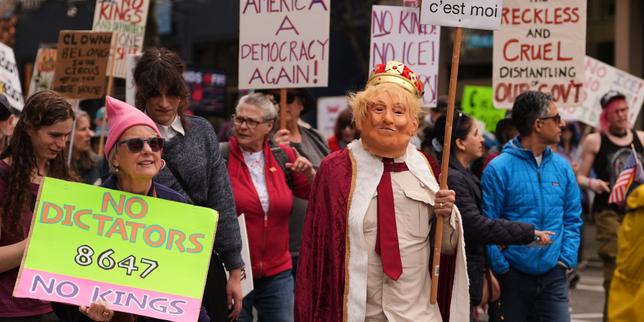
Donald Trump hadn't even spent twenty-four hours in the White House before the streets of Washington D.C. turned into a sea of pink. It was January 21, 2017. If you were there, or even if you just watched the grainy livestreams, you felt the vibration of a country splitting at the seams. This wasn't just a protest. It was a demographic explosion.
Estimates put the crowd in D.C. at over 500,000 people. That's more than double the attendance of the inauguration the day before. Across the entire United States, researchers from the University of Connecticut and the University of Denver estimated that between 3.3 million and 5.2 million people took to the streets. It stands as likely the largest single-day demonstration in American history. Recently making waves in related news: Finland Is Not Keeping Calm And The West Is Misreading The Silence.
People didn't just show up to vent. They showed up because they were terrified of what a Trump presidency meant for healthcare, reproductive rights, and civil liberties. It was raw. It was loud. It was remarkably peaceful for its size.
The numbers that defied the pundits
Mainstream media often struggles to count crowds. They rely on overhead photos and permit filings. But the 2017 Women's March was different because it happened everywhere at once. It wasn't just the big coastal cities like New York or Los Angeles. Marches popped up in small towns in deep-red states. Additional information into this topic are covered by Al Jazeera.
In Chicago, the crowd grew so large—estimated at 250,000—that the planned march route had to be canceled. People just stood in the streets because there was nowhere left to move. Los Angeles saw nearly half a million people. Even in London, Paris, and surprisingly, Antarctica, people gathered in solidarity.
Why does this matter now? Because it set the tone for the entire resistance movement of the late 2010s. It proved that the "silent majority" wasn't the only group with a pulse. The sheer volume of participants forced the Democratic party to stop licking its wounds from the 2016 election and start organizing.
Not just a march but a pipeline for power
Critics at the time called it "performative." They said a bunch of people wearing knitted hats wouldn't change a single vote in Congress. They were wrong.
The Women's March acted as a massive recruitment fair for local activism. I've talked to dozens of women who had never been to a city council meeting before that Saturday in January. Two years later, many of those same women were running for school boards, state legislatures, and eventually, Congress.
The 2018 midterm elections, which saw a "blue wave" in the House of Representatives, were a direct result of the energy sparked on that cold January afternoon. You can draw a straight line from the D.C. stage to the election of representatives like Alexandria Ocasio-Cortez and Ilhan Omar. It shifted the "Overton Window" of what was politically possible.
The friction within the movement
It wasn't all harmony. To understand the march, you have to look at the cracks in the foundation. From the beginning, there were heated debates about intersectionality. Black and Brown women often felt that the "pink hat" symbolism centered on white, cisgender experiences while ignoring the unique dangers faced by women of color under a Trump administration.
The leadership faced scrutiny over ties to controversial figures and accusations of excluding Jewish voices. These weren't just "Twitter dramas." They were fundamental growing pains of a movement trying to be everything to everyone. Honestly, it was a mess at times. But that mess reflected the reality of the American electorate.
Digital footprints and the era of viral dissent
This was the first great protest of the smartphone era. Unlike the anti-war protests of the 60s, the Women's March was documented in real-time from millions of individual perspectives. This created a decentralized narrative that the White House couldn't control.
When the Trump administration tried to argue about inauguration crowd sizes, the internet countered with side-by-side photos of the Women's March. It was a battle of optics. The images of the National Mall packed to the edges became a permanent visual shorthand for opposition to the Trump agenda.
The march also perfected the "viral sign." Snarky, hand-painted cardboard became the currency of the day. "I can't believe I still have to protest this" became a defining slogan. It made activism feel accessible, even trendy, which is a powerful tool for long-term mobilization.
How to keep the momentum going today
If you're looking at those photos from 2017 and wondering where that energy went, look at your local ballot. The march wasn't an end point. It was a starter motor.
Don't just wait for the next "mega-march" to feel like you're making an impact. Huge crowds are great for the evening news, but the real work happens in the boring gaps between elections.
Start by checking your voter registration today. Then, find one local organization that focuses on a single issue mentioned during the march—whether it's Planned Parenthood, the ACLU, or a local refugee resettlement group. Set up a recurring $5 donation or sign up for their volunteer alerts. The goal isn't to march once every four years. It's to make the spirit of that march a permanent fixture in your weekly routine.


