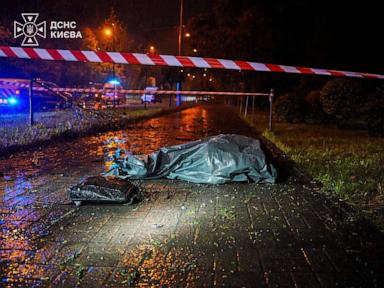
The headlines are always the same. Another grim toll from a nocturnal barrage, another emergency session in a cold glass hall in Manhattan, and another round of hand-wringing about how the international community must find a diplomatic off-ramp. Eight dead in a residential block. Condemnations issued. Speeches read into the record.
It is comfortable to pretend that the United Nations is an engine of peace stalled by bad faith actors. It is comforting to believe that if we just debate harder, draft a sharper resolution, or secure one more ceasefire agreement, the machinery will click into gear and stop the slaughter. For an alternative perspective, see: this related article.
That view is dangerously naive.
I have spent years watching diplomatic frameworks buckle under the weight of geopolitical reality. I have seen smart analysts treat procedural theater as if it were actual leverage. The lazy consensus dominating global media coverage right now is that the UN is failing simply because Vladimir Putin is stubborn, or because the Security Council is deadlocked by vetoes. Further coverage on the subject has been published by Reuters.
That diagnosis gets the mechanics entirely backward. The United Nations is not failing because of a temporary political gridlock. It is failing because it is operating precisely as it was engineered to operate.
The Architectural Flaw We Refuse To Name
Let us define our terms before we get nostalgic about international law. The United Nations was never designed to prevent war between major powers. It was designed to prevent a direct hot war between the victorious superpowers of 1945 by giving them a permanent bunker to yell at each other instead of firing nuclear-tipped missiles.
When a permanent member of the Security Council launches an unprovoked war of territorial conquest, the system does not glitch. The system freezes because it contains an explicit self-destruct clause called Article 27, paragraph 3. The veto power isn't a bug. It is the price of admission that kept the Soviet Union—and later Russia—inside the tent.
Yet every time civilian casualties mount, journalists and pundits rush back to the podiums to demand that the UN "do something." They treat the Secretariat like an impartial global police force with an army in the closet, waiting for permission to intervene.
Imagine a scenario where the General Assembly somehow votes overwhelmingly to override a Russian veto, dispatching a robust blue-helmet enforcement brigade to secure the Donbas. It sounds like justice on a placard. In practice, it is a recipe for a direct kinetic clash between nuclear-armed states. The paralysis of the Security Council is not an accidental obstruction; it is a thermal fuse preventing a localized catastrophe from expanding into a global one.
When we ask the UN to end this war, we are asking an insurance adjuster to put out a five-alarm house fire with a clipboard.
The Dangerous Myth Of The Diplomatic Off-Ramp
The second pillar of conventional commentary is the obsession with finding a negotiated settlement right now, at any cost. The argument goes that every day the conflict drags on, more infrastructure turns to dust, more soldiers die in the trenches, and the global economy bleeds. Therefore, compromise must be forced.
This view ignores the brutal mathematics of asymmetric survival.
Wars do not end because people are tired of fighting. They end when one side calculates that the cost of continuing exceeds any possible value of the objective, or when a decisive military shift shatters their capacity to resist.
Diplomacy in the absence of a changed military reality is not peace-making. It is capitulation management.
When international diplomats gather to debate peace formulas while civilians pull neighbors from concrete rubble, they are engaged in a displacement activity. They focus on peace talks because they lack the stomach or the tools to alter the battlefield balance. It is much easier to pressure a defender to trade land for a temporary ceasefire than it is to supply them with the overwhelming material superiority required to break an invading army's will.
I have watched policy shops churn out paper after paper on territorial swaps and neutralized buffer zones as if sovereignty were a real estate transaction. They treat borders as lines on a whiteboard that can be adjusted with a dry-erase marker.
History tells a different story. Every forced partition born of diplomatic exhaustion—from Munich onward—has merely served as an intermission before a bloodier act. When you reward aggression with legal title to stolen ground, you do not purchase stability. You rent it at an exorbitant rate, payable in blood by the next generation.
Dismantling The People Also Puzzles
Let us look at the standard questions people are asking as they scroll through these grim reports, and let's strip away the diplomatic varnish.
Can the UN peacekeepers be deployed to enforce a ceasefire?
No. Peacekeepers require an actual peace to keep. They are not combat units designed to separate two armies locked in a brutal artillery duel without the consent of both belligerents. Sending unarmed or lightly armed monitors into a hot zone where one side views international law as a minor inconvenience is a death sentence for the peacekeepers and a gift to the aggressor, who will use the pause to re-arm and reposition.
Why doesn't the international community just isolate Russia completely?
Because globalization is a web, not a switch. For all the talk of severe sanctions—and they have bitten deeply into Russian financial reserves—global supply chains for energy, fertilizers, and critical minerals remain structurally entangled. Total economic excommunication requires a global consensus that does not exist outside the Western alliance. Pretending that a global trade embargo is just a matter of political willpower ignores the economic survival of nations across the Global South that view this conflict through an entirely different lens.
Is a frozen conflict really that bad if it stops the killing?
Yes. A frozen conflict is not peace; it is a delayed detonation. It leaves millions living under occupation, creates a permanent zone of instability, and signals to every regional strongman with a grievance that patience and brutality pay off. A frozen border becomes a loading dock for the next invasion.
The Brutal Reality Of Hard Power
If we want to understand why strikes kill eight people in a residential block while diplomats debate in New York, we have to look past the rhetoric of international community and face the architecture of raw power.
Peace is not maintained by resolutions passed by majority vote among nations with vastly different definitions of human rights and territorial integrity. Peace is maintained by a credible balance of force that makes aggression prohibitively expensive.
The tragic reality of Ukraine is that the architecture built to save us from the ashes of World War Two was hollowed out decades ago. It cannot stop this war because it was never designed to stop a war initiated by a permanent veto-holder.
Until we stop treating the United Nations as a moral savior and start treating it for what it is—a bureaucratic talking shop designed solely to prevent great power nuclear annihilation—we will continue this cyclical tragedy. We will watch the strikes, read the statements, listen to the debates, and wonder why the machine is broken.
The machine isn't broken. It's working exactly as intended. The rest is just noise.