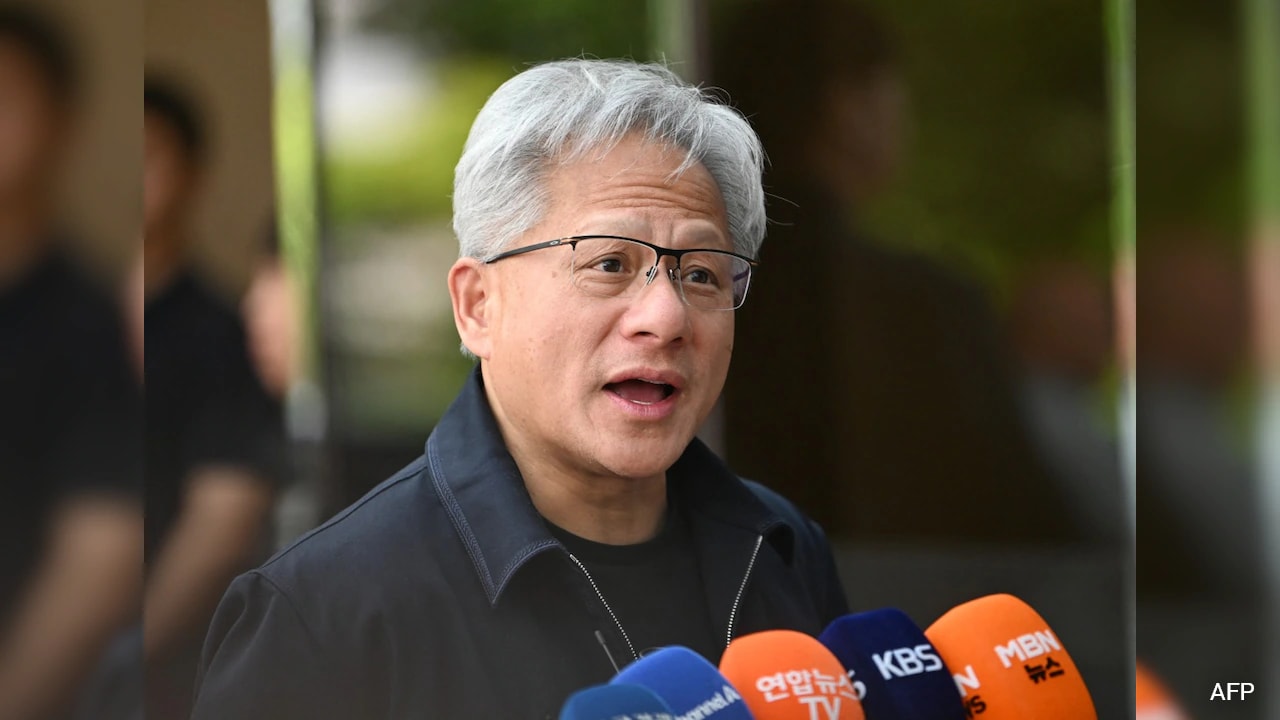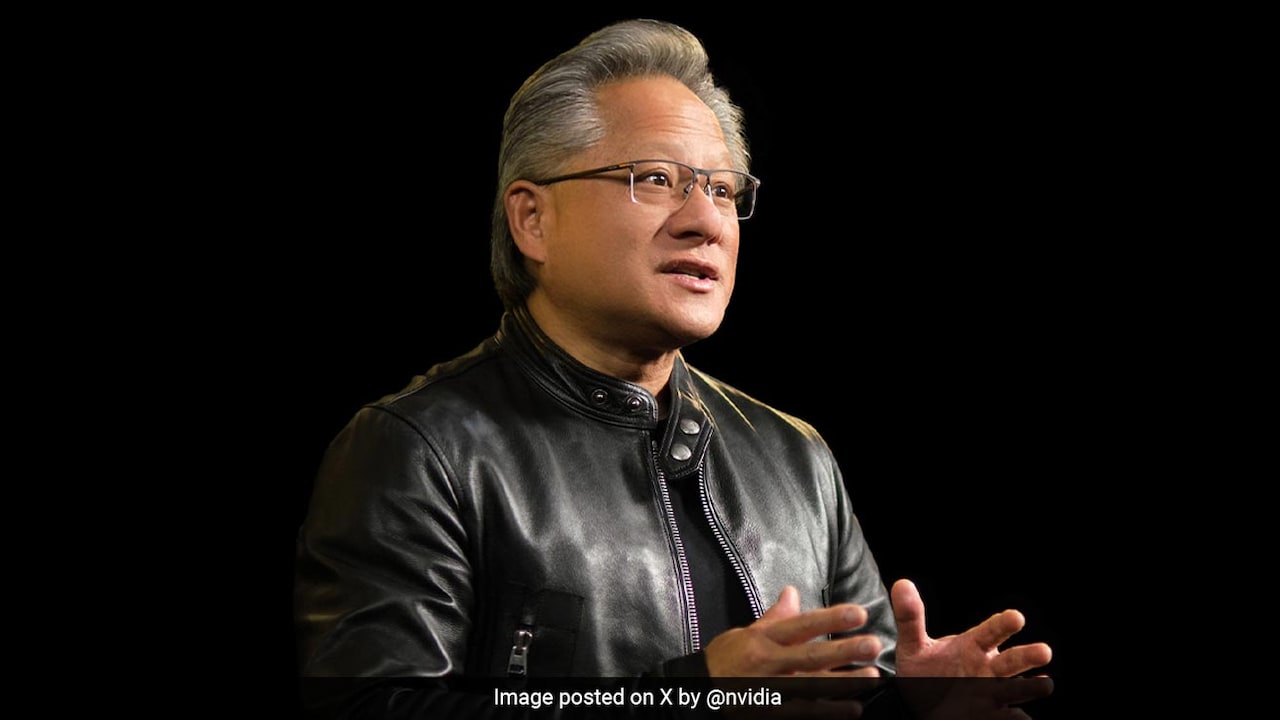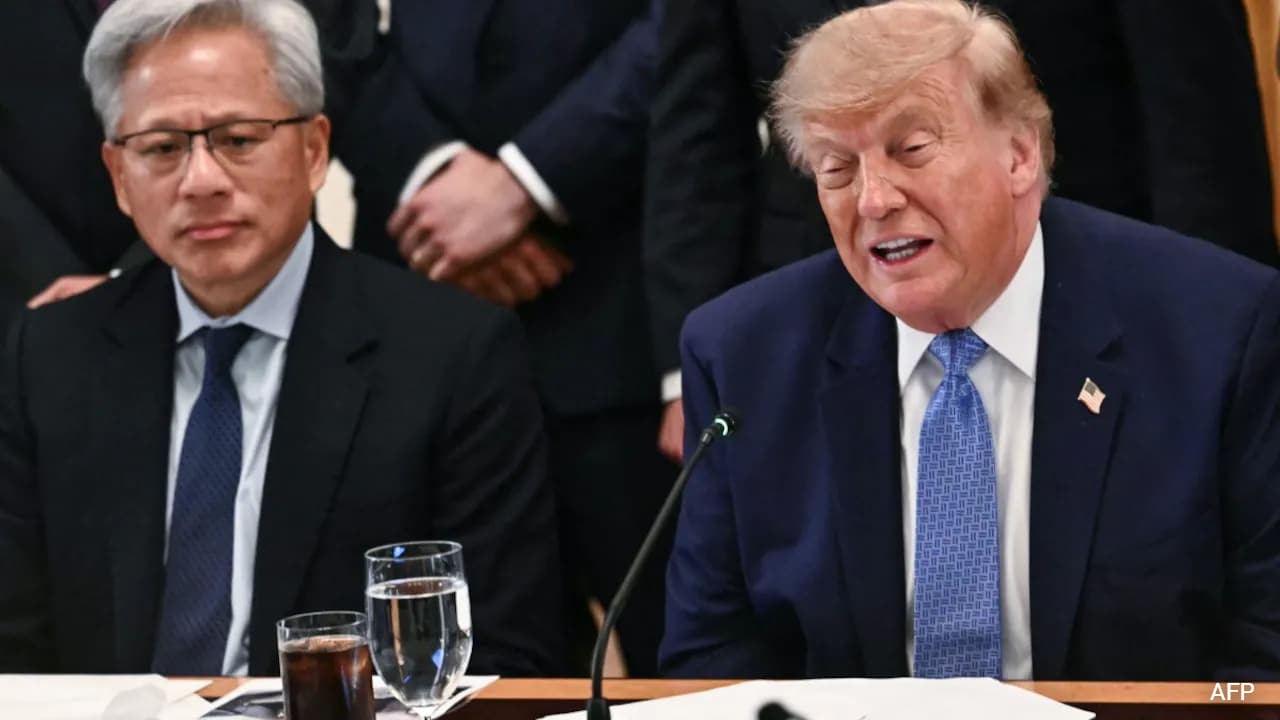
When President Donald Trump took to Truth Social on November 12, 2026, to declare that there was "only one man" fit to replace resigned Nvidia chief executive Jensen Huang, he wasn't offering a semiconductor recruitment tip. Trump's public endorsement of Apple executive chairman Tim Cook as the next Nvidia boss was a calculated exercise in political signaling—an attempt to claim executive authority over a private, multi-trillion-dollar artificial intelligence choke point during a national security crisis. By framing a corporate succession search as a White House coronation, the administration exposed how deeply American industrial policy has become entangled with personal loyalty, supply-chain geopolitics, and executive drama.
The Anatomy of a Truth Social Coronation
The pitch arrived in the middle of one of Silicon Valley's most chaotic fortnight-long spirals. Hours after Nvidia announced that Jensen Huang had stepped down as president, chief executive, and board member amid an independent investigation into reports of a foreign intelligence operation targeting him—and media reports detailing extramarital affairs, including one involving an alleged Chinese intelligence operative—Trump posted his verdict.
"NOW THAT Nvidia CEO JENSEN HUANG, who has done a fantastic job, has resigned, there is only one man to take his place – TIM COOK of Apple," Trump wrote. "A Legend replaces a Legend!"
On the surface, the suggestion had a veneer of corporate logic. Just two months earlier, on September 1, 2026, Cook had stepped down after fifteen years as Apple's chief executive, handing day-to-day operational control to hardware engineering veteran John Ternus while transitioning into the role of Apple's executive chairman. Cook was suddenly free from the daily grind of managing Cupertino's product cycles. Hours before Trump's post, Yale School of Management senior associate dean Jeffrey Sonnenfeld had even floated Cook's name in a Time op-ed, pointing to Cook's track record of successfully succeeding a larger-than-life founder like Steve Jobs.
Yet Trump's framing was fundamentally different from an academic governance argument. He did not suggest Cook as one option among many for an independent board to weigh. He declared him the sole viable successor before Nvidia's directors had even outlined a search timeline or confirmed external outreach.
"He framed Cook as the only option, which closes off every other name before the board has opened a file. And he used the language of a coronation rather than a suggestion, treating a private company's top job as something the White House can assign."
In interviews following the post, Trump reinforced the message, praising Cook for turning Apple into a global juggernaut while simultaneously revealing that he had spoken with Huang by phone prior to the resignation and urged him to fight to keep his job. That contradiction—mourning Huang's exit while anointing his replacement—is the skeleton key to understanding the White House's actual priorities.
Why Tim Cook Made Sense on Paper—And Nowhere Else
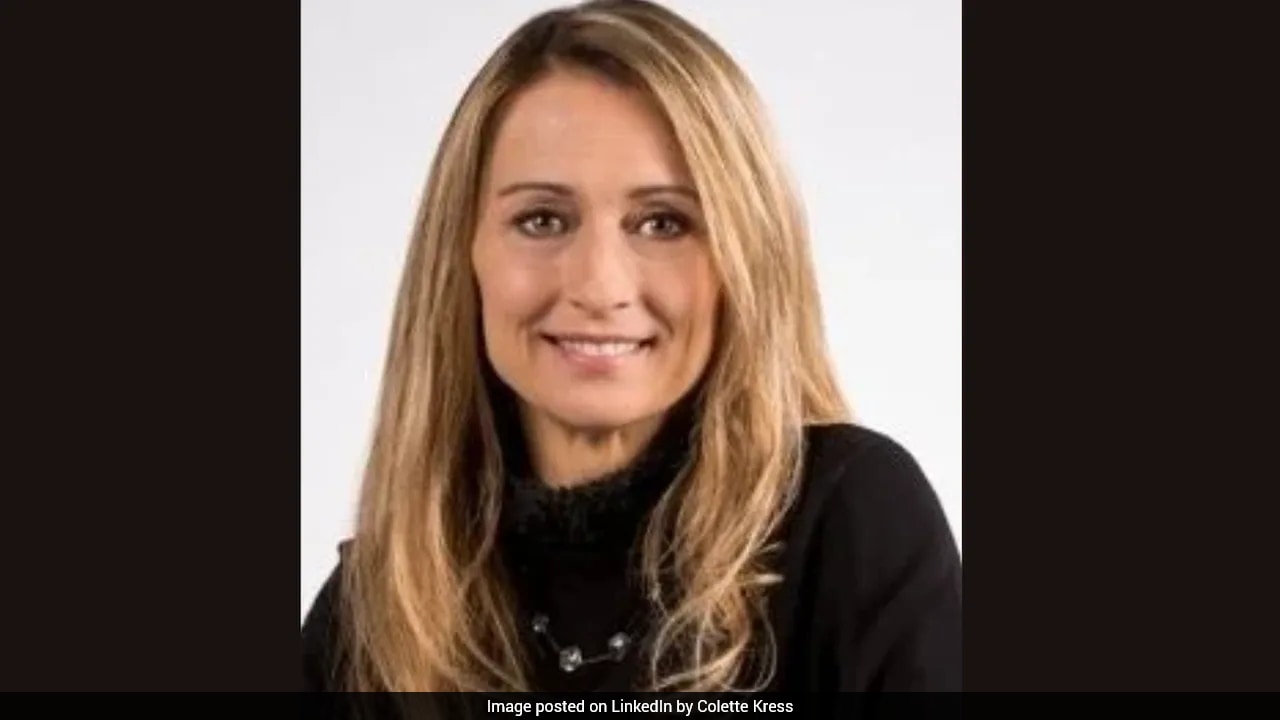
To understand why financial media instantly latched onto the "Tim Nvidia" headline, you have to look at the panic gripping institutional investors on November 12. Nvidia had appointed Chief Financial Officer Colette Kress as interim CEO, a steady hand who had been with the chipmaker since 2013. But Kress is a financial architect, not a wartime general capable of staring down export-control hawks in Washington and foundry executives in Hsinchu simultaneously.
Cook possessed three traits that made him look like a sedative for Wall Street:
- TSMC Leverage: Nobody on earth understands Taiwan Semiconductor Manufacturing Company's capacity allocation, pricing power, and packaging bottlenecks better than Tim Cook. For over a decade, Apple was TSMC's anchor customer, bankrolling leading-edge process nodes before Nvidia's AI accelerator boom rivaled Cupertino for wafer starts.
- Founder-Succession Pedigree: Replacing a visionary technical founder is the hardest trick in corporate governance. Cook did it at Apple after 2011 without breaking the company's operational spine, turning a hardware hit-maker into a $416-billion-a-year cash machine.
- Bipartisan Diplomatic Immunity: Cook has spent years cultivating direct lines to both the White House and Beijing, navigating tariff threats and regulatory crackdowns without losing access to either market.
Strip away the surface appeal, however, and the idea collapses under the weight of operational reality.
Apple and Nvidia are fundamentally different machines. Apple is a consumer hardware and services empire built on closed-ecosystem integration, supply-chain compression, and multi-year product roadmaps. Nvidia is an enterprise computing platform whose moat rests on developer software—specifically CUDA—and a relentless, annual data-center architecture cadence that leaves zero room for margin optimization at the expense of raw compute performance.
Cook is a master of procurement, inventory velocity, and operational discipline. He has never built a developer ecosystem from the silicon up, nor has he led an engineering organization whose primary customers are hyperscale cloud architects demanding custom rack-scale interconnects on twelve-month cycles. Putting Cook in charge of Nvidia would have been like hiring a master watchmaker to run an experimental rocket engine foundry.
More glaringly, Cook was not actually unemployed. As Apple's executive chairman, he remained bound to Cupertino's board, actively managing global policy relationships and international affairs. Attempting to poach the sitting chairman of Apple to run a company that competes with Apple for TSMC's finite advanced packaging capacity would have triggered immediate antitrust alarms and boardroom warfare across Silicon Valley.
The Geopolitical Subtext Behind the Endorsement
If Cook was never a realistic candidate, why did Trump spend political capital pushing his name?
Look at the timing and the nature of the crisis that forced Huang out. Nvidia is no longer just a graphics chip vendor; it is the hardware backbone of American artificial intelligence dominance and a central bargaining chip in U.S.-China trade and national security negotiations. When reports surfaced that Huang had been targeted by a foreign intelligence operation, the scandal immediately ceased to be a private corporate governance matter. Lawmakers demanded classified briefings. Treasury and national security officials weighed the diplomatic fallout ahead of international summits.
In that environment, an unguided CEO search at Nvidia represented an unacceptable loss of control for the executive branch. If Nvidia's board selected an internal engineering lieutenant unknown to the White House, or worse, an executive inclined to push back against strict semiconductor export controls to China, the administration would have to spend months establishing leverage.
By naming Tim Cook, Trump accomplished three strategic objectives in a single sentence:
- He established a loyalty benchmark. Cook had spent years visibly engaging with the administration on domestic manufacturing commitments and tariff exemptions. Naming him signaled to Nvidia's board that the next chief executive needed to be someone the Oval Office already trusted and could call directly.
- He turned a national security embarrassment into a strength-projection narrative. Rather than letting headlines focus on alleged Chinese espionage penetrating the upper echelons of America's most vital AI company, Trump pivoted the news cycle toward a "legend replaces a legend" succession spectacle.
- He boxed in Nvidia's directors. Corporate boards prize the illusion of total independence. By publicly anointing a candidate, Trump created a no-win optics trap for Nvidia's governance committee: hire Cook and look like a subsidiary of the federal government, or reject him and risk public hostility from a president who controls export licenses and federal AI procurement.
The Boardroom Trap and the Eleven-Day Reversal
The absurdity of the entire episode became undeniable less than two weeks later.
Neither Apple nor Cook ever dignified Trump's Truth Social post with an official comment. Nvidia's board refused to confirm any contact with Cupertino, keeping its public posture locked behind standard corporate boilerplate about evaluating internal and external candidates. Behind closed doors, however, the reality of Nvidia's operational fragility was setting in.
Nvidia without Jensen Huang was not Apple without Steve Jobs. Jobs left behind a deep bench of operational executives and a locked-in multi-year iPhone roadmap. Huang, who co-founded Nvidia in 1993 and led it for 33 years, was the singular architectural brain holding together the company's hardware roadmap, software stack, and hyperscaler customer relationships.
By November 16—just four days after pitching Cook—Trump shifted his tone, stating publicly that he would not mind seeing Huang return to the helm. By November 23, with Nvidia's independent investigation apparently clearing the immediate national security roadblocks that had forced his exit, Nvidia's board reinstated Huang as chief executive. The market's reaction was violent and definitive: Nvidia gained nearly $1 trillion in market capitalization following his return.
Tim Cook never packed a box. He never took a meeting in Santa Clara. The "only one man" narrative evaporated the instant the board realized that no outside executive—not even the architect of Apple's $3 trillion empire—could substitute for a founder whose technical intuition was priced directly into the stock.
What the Episode Reveals About Corporate Governance in 2026
Competitor coverage of Trump's Tim Cook pitch largely treated the story as a quirky clash of tech titans—a fun hypothetical about whether "Tim Apple" would become "Tim Nvidia." That framing misses the structural shift happening beneath the surface of American capitalism.
We have entered an era where the largest technology companies are treated by Washington as de facto public utilities and strategic defense assets. When a semiconductor firm's market value rivals the GDP of G7 nations and its silicon dictates the balance of military and economic power, traditional corporate governance breaks down.
Boards of directors no longer answer solely to institutional shareholders. They operate under the implicit supervision of the executive branch. Even when a presidential recommendation goes nowhere—as Cook's candidacy did—it alters the gravity inside the boardroom. Directors have to factor political survivability into executive succession, crisis management, and capital allocation.
At the same time, the November 2026 Nvidia saga proved the limits of political theater when it collides with technical reality. You can jawbone a board, threaten tariffs, or endorse a celebrity CEO on social media, but you cannot legislate engineering genius or transfer a thirty-year technical moat from one executive to another by presidential decree.
Trump's endorsement of Tim Cook was never a serious hiring proposal; it was a stress test of how far executive-branch influence could reach into Silicon Valley's corner offices. Nvidia's board survived the test not by finding a new legend, but by admitting that the old one was irreplaceable.