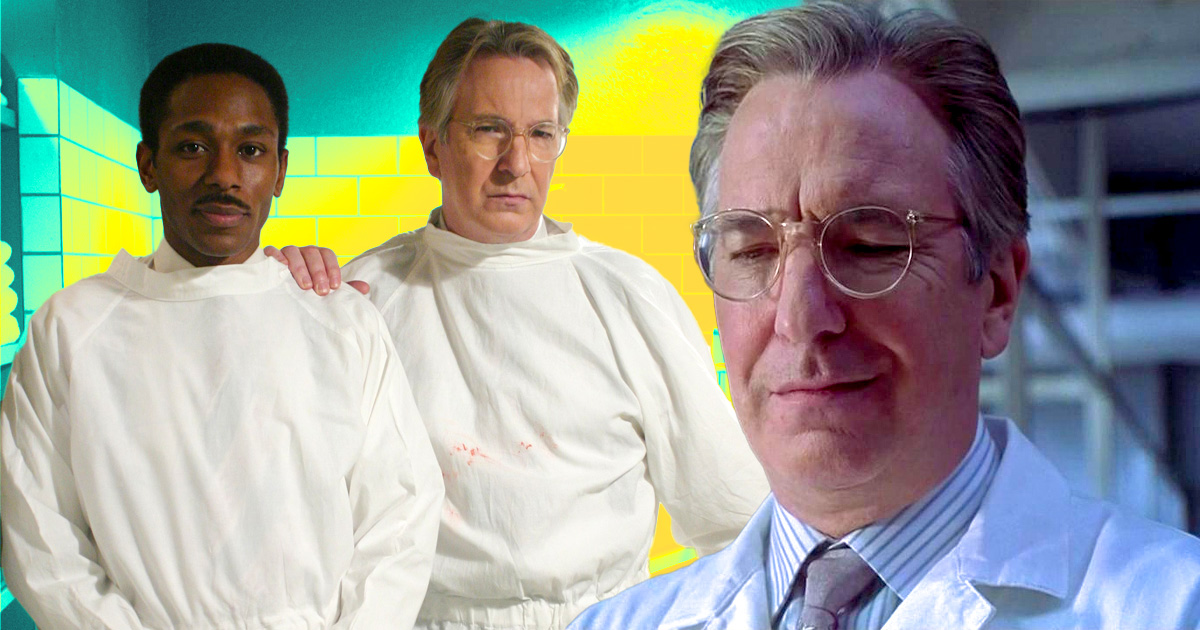
If you’ve ever watched the HBO film Something the Lord Made, you probably remember the scene where Alan Rickman, playing the prestigious surgeon Alfred Blalock, looks at a heart and says it looks like "something the Lord made." It’s a heavy moment. It frames the entire struggle of cardiac surgery in the 1940s. But movies, even the great ones, tend to smooth over the jagged edges of reality to fit a two-hour runtime.
The real story? It’s grittier. It’s more frustrating. And honestly, it’s a lot more impressive than what made it onto the screen.
We’re talking about the birth of modern heart surgery at Johns Hopkins. Before this, touching the heart was considered a death sentence or a medical taboo. But it wasn't just a "great man" story. It was a partnership between a white, temperamental surgeon and a Black man, Vivien Thomas, who was officially hired as a janitor but functioned as a master surgical scientist.
The Lab in the Basement
Vivien Thomas didn't have a medical degree. That's the part that usually gets glossed over or simplified. He wanted one. He had saved every penny from working as a carpenter to go to Tennessee State College, but the 1929 stock market crash wiped out his savings. He was stuck.
He ended up at Vanderbilt University in 18-year-old Alfred Blalock’s lab. Blalock needed someone who could follow directions; he got someone who could reinvent the process. Within weeks, Thomas was doing the work of a postdoctoral fellow. He was performing surgeries on canine models that Blalock himself struggled to master.
It was a strange, codependent relationship. Blalock had the pedigree and the social standing. Thomas had the hands. They moved to Johns Hopkins together in 1941, but the racial divide in Baltimore was a massive wall. While Blalock walked through the front doors of the hospital, Thomas often had to enter through the back. He worked in a white lab coat inside the lab, but once he stepped out into the hallway, he was just another Black man in the Jim Crow South.
The Blue Baby Mystery
The central medical breakthrough in Something the Lord Made revolves around Tetralogy of Fallot. People called it "Blue Baby Syndrome." Basically, because of a structural heart defect, the blood wasn't getting enough oxygen. Kids turned blue. They gasped for air. They died young.
At the time, the prevailing wisdom was: Don't touch the heart.
Helen Taussig, a pediatric cardiologist who was also dealing with her own challenges—she was deaf and had to "listen" to hearts with her fingers—approached Blalock. She had an idea. If the blood isn't getting to the lungs, why not build a "bypass" or a shunt to force it there?
Blalock was interested. But Thomas was the one who actually figured out how to do it.
For two years, Vivien Thomas labored in the lab. He created a model of the condition in dogs, which was an incredible feat of experimental biology on its own. He practiced the "Blalock-Taussig Shunt" over and over until he could do it in his sleep.
When the first human surgery finally happened on November 29, 1944, on a tiny, frail baby named Eileen Saxon, Blalock was nervous. He hadn't performed the procedure on a living person, and he certainly hadn't done it as many times as Thomas had in the lab.
He insisted Thomas stand on a stool behind him.
"Vivien, is this right?" "Move your hand to the left, Dr. Blalock."
That’s how it went. A man who wasn't allowed to treat patients was coaching the world’s most famous surgeon through a "miracle" operation. It worked. The baby turned from blue to pink. History was made.
Why the Recognition Took Decades
The movie portrays a bittersweet ending, but the reality of the 1950s and 60s was much harsher. When the papers were published about the Blalock-Taussig shunt, Vivien Thomas’s name wasn't on them. He wasn't even mentioned in the credits of the breakthrough.
He stayed at Hopkins for decades. He trained the next generation of surgeons—men who would go on to lead departments at the best hospitals in the world. These surgeons knew. They called him "The Master." But to the public, and to the university’s payroll department, he remained a lab technician.
It wasn’t until 1976 that Johns Hopkins finally awarded him an honorary doctorate. By then, he had been at the institution for 35 years.
The Nuance of the Blalock-Thomas Relationship
People often ask: Was Blalock a villain? Or was he a hero who gave Thomas an opportunity?
The truth is somewhere in the messy middle. Blalock was a product of his time. He defended Thomas in the lab and wouldn't work without him. He even got Thomas a higher salary when the university tried to lowball him. But he also never publicly broke the racial barriers of the era to give Thomas the co-author credit he deserved during their prime years.
Thomas, for his part, was remarkably stoic. In his autobiography, he doesn't spend a lot of time venting. He focuses on the work. He seemed to find his satisfaction in the mastery of the craft and the lives saved, though the lack of financial equity clearly weighed on him. He lived a modest life while the men he trained became wealthy and famous.
What Most People Get Wrong
There’s a common misconception that Thomas was just an "assistant."
That's a total misunderstanding of the surgical process. In the lab, Thomas was the lead investigator. He designed the surgical tools because the ones they had were too big for infant arteries. He literally bent needles and shaped forceps to make the surgery possible.
Without Vivien Thomas, the shunt likely wouldn't have happened when it did. Hundreds, maybe thousands, of children would have died while other surgeons tried to catch up.
Actionable Insights and Legacy
Understanding the history behind Something the Lord Made isn't just about trivia. It’s about recognizing how talent exists everywhere, often hidden by systemic barriers.
If you want to dive deeper into this story, here is what you can do:
- Read the Source Material: Pick up Partners of the Heart: Vivien Thomas and His Work with Alfred Blalock. It’s Thomas’s own words. It’s far more detailed than the movie and provides a raw look at the medical culture of the mid-20th century.
- Visit the Portrait: If you’re ever in Baltimore, go to the Johns Hopkins Hospital. There is a portrait of Vivien Thomas hanging there. It’s a powerful symbol because, for a long time, only white doctors were allowed to have portraits in those halls.
- Support Pipeline Programs: The story of Thomas is a reminder of the "lost Einsteins"—people with immense talent who lack the path to use it. Supporting organizations that provide medical mentorship to underrepresented students is a direct way to honor Thomas's legacy.
- Watch the Documentary: Before the HBO film, there was a documentary called Partners of the Heart (2003). It features interviews with the surgeons Thomas actually trained. Hearing their voices gives a different perspective on his technical genius.
The surgical world changed forever in 1944. It wasn't just a triumph of science; it was a triumph of a man who refused to let his lack of a degree define his capability. Vivien Thomas proved that the hands doing the work are just as important as the name on the diploma.