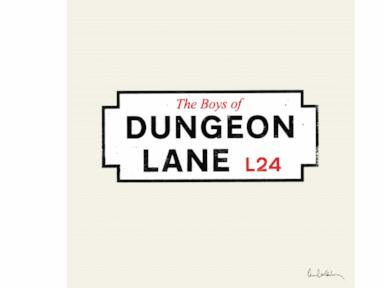
Paul McCartney has built a late-career empire on the commodification of his own memory, but his latest release, The Boys of Dungeon Lane, reveals the structural limits of rock mythology. While early reviews treat the album as a charming, late-stage victory lap, a colder look at the record reveals something more complicated. This is an expensive, highly engineered exercise in myth-making that attempts to rewrite Liverpool’s post-war reality into a cozy, palatable fable. McCartney is not just reminiscing; he is actively curation-remodeling his legacy before the concrete sets forever.
The industry has greeted the record with the usual reverence reserved for surviving architects of the 1960s cultural explosion. Yet, underneath the acoustic warmth and the meticulously preserved vintage tape hiss lies a calculated commercial strategy. The album capitalizes on a booming multi-billion-dollar nostalgia economy that thrives on vinyl box sets and streaming-playlist placement for classic rock demographics. By looking past the sentimental veneer, we can see how the album functions as both a corporate asset and a psychological shield against the harsh passage of time.
The Myth of the Liverpool Slums
The core narrative of The Boys of Dungeon Lane centers on an idealized version of working-class Liverpool. McCartney populates these tracks with colorful local characters, rain-slicked cobblestones, and the faint, romanticized ache of post-WWII austerity. It sounds beautiful. It feels authentic to an audience that never had to live through it.
The historical reality of the area surrounding the real-world inspirations for these tracks was far grimier than the acoustic arrangements suggest. Post-war Liverpool was defined by severe economic stagnation, industrial decay, and a desperate desire among its youth to escape the bleakness of their surroundings. McCartney’s songwriting glosses over the systemic neglect of the North of England, replacing raw economic anxiety with a sepia-toned playground.
This transformation of genuine hardship into a consumer product is not unique to McCartney, but he executes it with unparalleled skill. He strips the jagged edges from his youth, leaving behind a sanitized heritage trail that aligns perfectly with the branding of modern Beatles tourism. The songs act as musical museum exhibits, safe for consumption and stripped of the revolutionary, rebellious friction that originally defined Merseybeat.
Engineering the Sound of Imperfection
To understand the album's financial and critical success, one must look at the production ledger. McCartney reunited with high-profile analog purists to capture what marketing materials call an "honest, unvarnished sound."
This unvarnished sound is incredibly expensive to manufacture. The production team utilized rare, multi-thousand-dollar vintage microphones, pristine mixing consoles from defunct 1970s studios, and miles of rare magnetic tape. The result is a paradox: a multi-million-dollar record designed to sound like it was recorded in a drafty basement by an amateur.
- The Vocal Processing: McCartney’s voice, now showing the natural, gravelly fraying of an octogenarian, is pushed to the front of the mix. This choice is deliberate. It signals vulnerability to the listener, triggering an immediate emotional response that disarms critical analysis.
- The Instrumentation: Instead of polished, modern session musicians, the arrangements feature loose, slightly imperfect takes. Drums lag just a fraction behind the beat. Acoustic guitars buzz slightly against the frets. These are not mistakes; they are carefully curated signifiers of "real music" designed to contrast sharply with the quantized, digital perfection of contemporary pop.
This calculated imperfection targets a specific, affluent demographic. It speaks directly to the vinyl collector market—consumers willing to pay $150 for a deluxe, multi-LP edition because they believe it holds a spiritual purity missing from modern streaming platforms. McCartney isn't just selling songs; he is selling the concept of authenticity itself.
The Ghost of John Lennon as a Marketing Tool
No analysis of modern McCartney output is complete without examining how he manages the shadow of his former songwriting partner. On The Boys of Dungeon Lane, the ghost of John Lennon is invoked repeatedly, though never by name.
McCartney employs specific melodic intervals and lyrical tropes that mirror Lennon’s signature style. By mimicking the cynical, sharp edges of Lennon's historical contributions, McCartney attempts to create a synthetic version of the famous Lennon-McCartney dichotomy within his own solo work. It is a solo performance wearing the clothes of a legendary partnership.
[Lennon-McCartney Creative Dynamic]
   ┌────────────────┐         ┌────────────────┐
   │ McCartney      │         │ Lennon         │
   │ Optmism, Craft │◄───────►│ Cynicism, Raw  │
   └────────────────┘         └────────────────┘
                             ▲
                             │ (Simulated on the new album)
                             │
                     ┌───────────────┐
                     │ Solo Track    │
                     └───────────────┘
This creative choice serves a dual purpose. It satisfies the fans' eternal hunger for a reunion that can never happen, while simultaneously positioning McCartney as the ultimate custodian of the Beatles' flame. He becomes both the surviving witness and the author of the final narrative. The danger here is the erasure of complexity. Lennon’s actual relationship with McCartney was fraught with bitter financial disputes, artistic jealousy, and deep personal fractures. Minimizing those tensions into a series of sweet, wistful musical nods does a disservice to the complex reality of their history.
The Industrialization of Classic Rock Longevity
The broader music industry views The Boys of Dungeon Lane as a blueprint for the survival of legacy acts. As the pioneering generation of rock musicians ages, major record labels face a massive valuation problem. How do you maintain the monetization of these catalogs when the artists can no longer tour?
The answer lies in the creation of self-referential studio projects that require minimal physical strain from the artist but generate massive media footprints. McCartney’s promotional campaign for this album relied heavily on archival footage, deep-dive podcasts, and interactive digital maps of Liverpool. The music itself becomes almost secondary to the multimedia ecosystem built around it.
This approach sets a dangerous precedent for younger artists who lack a legendary past to mine. The streaming algorithms and retail shelf spaces are increasingly clogged by these high-budget legacy campaigns, leaving little room for new voices to establish their own histories. McCartney’s continued dominance on the charts is an impressive feat of personal stamina, but it also reflects a stagnant culture obsessed with recycling its past rather than inventing a new future.
Stripping Away the Cozy Consensus
The critical consensus around this record is comfortable. It allows reviewers to celebrate a living legend without confronting the darker implications of his modern output. To praise the album unconditionally is to ignore the corporate mechanics that make it possible.
McCartney’s late-era work should be understood as a masterclass in reputation management. He has successfully insulated himself from criticism by wrapping his new material in the untouchable fabric of the 1960s. If you critique the songwriting on The Boys of Dungeon Lane, you are accused of critiquing the soundtrack of a generation's youth. It is a brilliant, impenetrable defensive strategy.
The songs themselves fluctuate between genuine melodic brilliance and lazy, self-indulgent recycling. For every moment of genuine emotional resonance, there is a track that feels like a rewrite of a B-side from 1973. McCartney remains a gifted craftsman, but the tools he is using have grown dull from decades of repetitive use. The album works best when he stops trying to be an ex-Beatle and allows himself to be an old man facing the horizon, but those moments are fleeting, quickly obscured by the next wave of engineered nostalgia.
The true legacy of this period in McCartney’s career will not be the music itself, but the template he created for how a rock icon exits the stage. He is refusing to fade away, choosing instead to build a perpetual motion machine of memory that will keep generating revenue and cultural capital long after the final notes have faded. It is an admirable display of survival instinct, even if the art itself has to be compromised to achieve it.