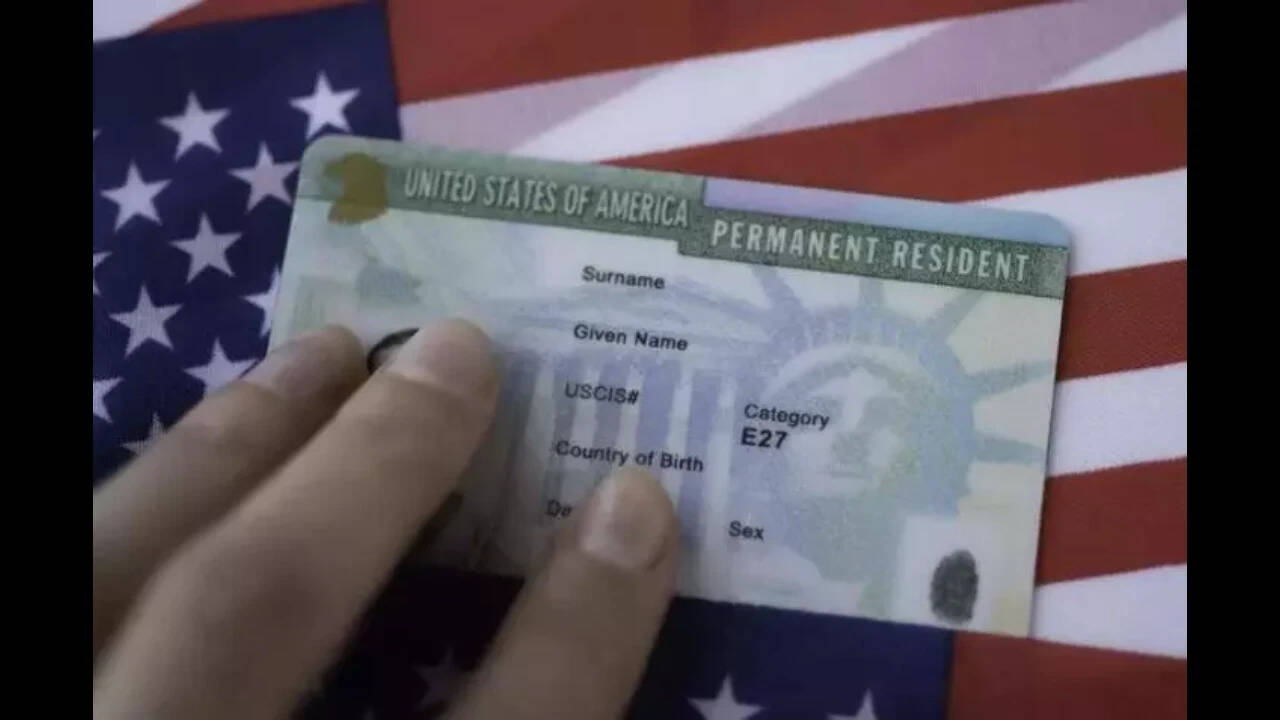
The institutional architecture governing permanent residency within the United States operates via two distinct legal channels: adjustment of status, executed domestically through U.S. Citizenship and Immigration Services (USCIS), and consular processing, executed externally through Department of State embassies and consulates. Recent policy directives altering how immigration agencies evaluate in-country applications have systematically restricted the domestic adjustment pathway, forcing applicants to exit the United States to complete their immigrant visa processing abroad.
This procedural shift introduces acute systemic frictions. By mandating geographic relocation for administrative completion, current rules interact with statutory inadmissibility triggers in a manner that maximizes the operational risk of prolonged family separation. Understanding this dynamic requires examining the legal mechanics, the friction points of administrative discretion, and the economic and operational costs imposed on applicants. Also making waves recently: The Stone Teeth Beneath the Sphinx That Whispers of Lost Worlds.
The Mechanics of Jurisdictional Routing
Statutory eligibility for permanent residency under Section 245 of the Immigration and Nationality Act historically provided a domestic mechanism for individuals who entered inspection pathways or qualified under specific exemptions to adjust status without leaving sovereign U.S. territory. However, administrative tightening via recent policy memos has re-engineered the threshold criteria for domestic adjudication.
When an applicant is disqualified from domestic adjustment—either due to strict interpretations of discretionary bars or modifications to evidentiary standards—they are funneled into consular processing. This transition shifts the adjudicative burden from a domestic agency bound by specific administrative review standards to foreign consular posts where consular non-reviewability insulates decisions from standard judicial scrutiny. More insights regarding the matter are explored by USA Today.
The structural consequence is a forced migration of processing location. Applicants who maintain established economic ties, employment continuity, and family dependencies within the United States must physically relocate to their countries of origin to attend mandatory interviews.
The Three Structural Failure Points
The operational friction of forcing applicants abroad is driven by three compounding legal and administrative variables.
1. The Statutory Unlawful Presence Trigger
Under 8 U.S.C. Section 1182(a)(9)(B), foreign nationals who accrue more than 180 days of unlawful presence in the United States and subsequently depart trigger mandatory three-year or ten-year bars to re-entry. While waivers such as the I-601A provisional unlawful presence waiver were designed to mitigate this exact penalty by allowing applicants to seek waiver approval prior to departure, restrictive adjudication policies and narrowed waiver interpretations create an environment of extreme uncertainty. If an applicant exits the country without an approved waiver—or if a consular officer discovers an independent ground of inadmissibility—the departure converts a domestic administrative process into a multi-year transnational exile.
2. Evidentiary Asymmetry and Notice Standards
Recent policy shifts empowering adjudicators to issue outright denials without issuing Requests for Evidence (RFEs) or Notices of Intent to Deny (NOIDs) dismantle the iterative verification process traditionally used to cure minor evidentiary defects. In a domestic setting, an applicant served with an RFE retains legal counsel and maintenance of status while curing the deficiency. When applied to applicants navigating consular channels or facing sudden domestic disqualifications, the elimination of the cure window converts administrative friction into terminal case rejections.
3. Evidentiary Burden of Extreme Hardship
For applicants who must utilize waiver mechanisms to overcome statutory bars, the legal standard requires proving "extreme hardship" not to any dependent, but specifically to a U.S. citizen or lawful permanent resident spouse or parent. Statutory definitions explicitly exclude U.S. citizen children as qualifying relatives for specific waiver classes. This creates a misalignment between the demographic reality of mixed-status families—where children are frequently the primary U.S. citizen dependents—and the narrow legal criteria required for relief.
Cost-Function Analysis of Forced Consular Processing
The imposition of out-of-country processing generates quantifiable impacts across economic, institutional, and human capital dimensions.
[Domestic Filing]
       │
       ▼ (Policy Restriction / Discretionary Bar)
[Forced Consular Relocation]
       │
       ├──► [Unlawful Presence Trigger (3/10 Year Bar)]
       ├──► [Consular Non-Reviewability & Decision Finality]
       └──► [Employment Disruption & Income Cessation]
From an economic perspective, the requirement to exit the country introduces immediate labor market shocks. Legally authorized workers face sudden termination of employment authorization while awaiting consular interviews abroad. For employers reliant on stable human capital, this generates unplanned attrition and recruitment friction.
Institutionally, shifting the volume of adjudication from domestic service centers to overseas consular posts concentrates administrative bottlenecks. Consular offices operate with fixed staffing allocations and variable local conditions, meaning that processing delays abroad are frequently open-ended.
Strategic Risk Mitigation and Operational Realities
For practitioners and applicants navigating this environment, standardizing risk assessment requires decoupling optimistic assumptions from statutory realities.
- Audit Inadmissibility Vectors First: Prior to initiating any movement or filing, legal counsel must map all potential grounds of inadmissibility beyond mere unlawful presence, including historical entries, prior removal orders, and misrepresentation findings. Standard waivers do not cure fraud or criminal bars.
- Assume Zero Administrative Grace: Given policies that permit immediate denials without RFE issuance, application packages must be built with absolute forensic completeness on initial submission.
- Evaluate Jurisdictional Vulnerability: Assess whether an active petition places the applicant inside or outside the protective umbrella of domestic adjustment provisions before submitting documents that trigger agency awareness.
The structural trajectory indicates that administrative friction will remain high, utilizing geographic displacement as an intentional mechanism of immigration control. Long-term planning must account for the reality that physical exit from the United States carries irreversible legal exposure unless statutory waivers and adjudicative pathways are verified prior to travel.