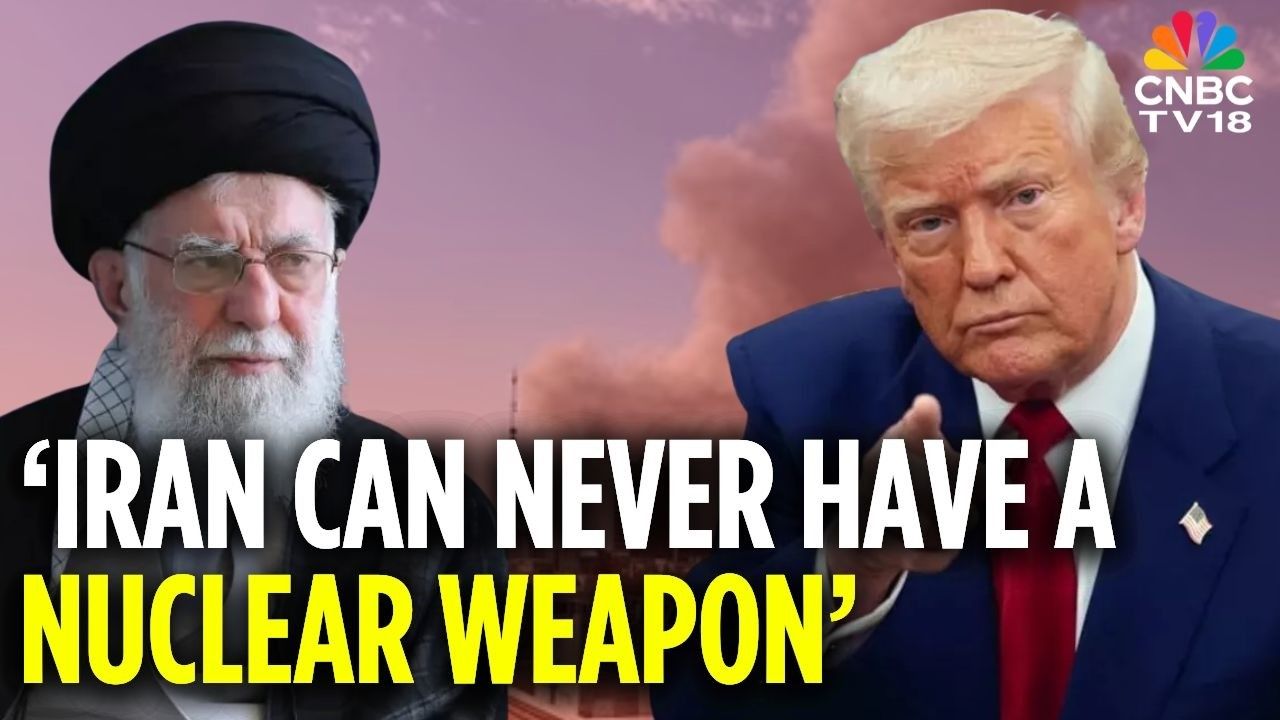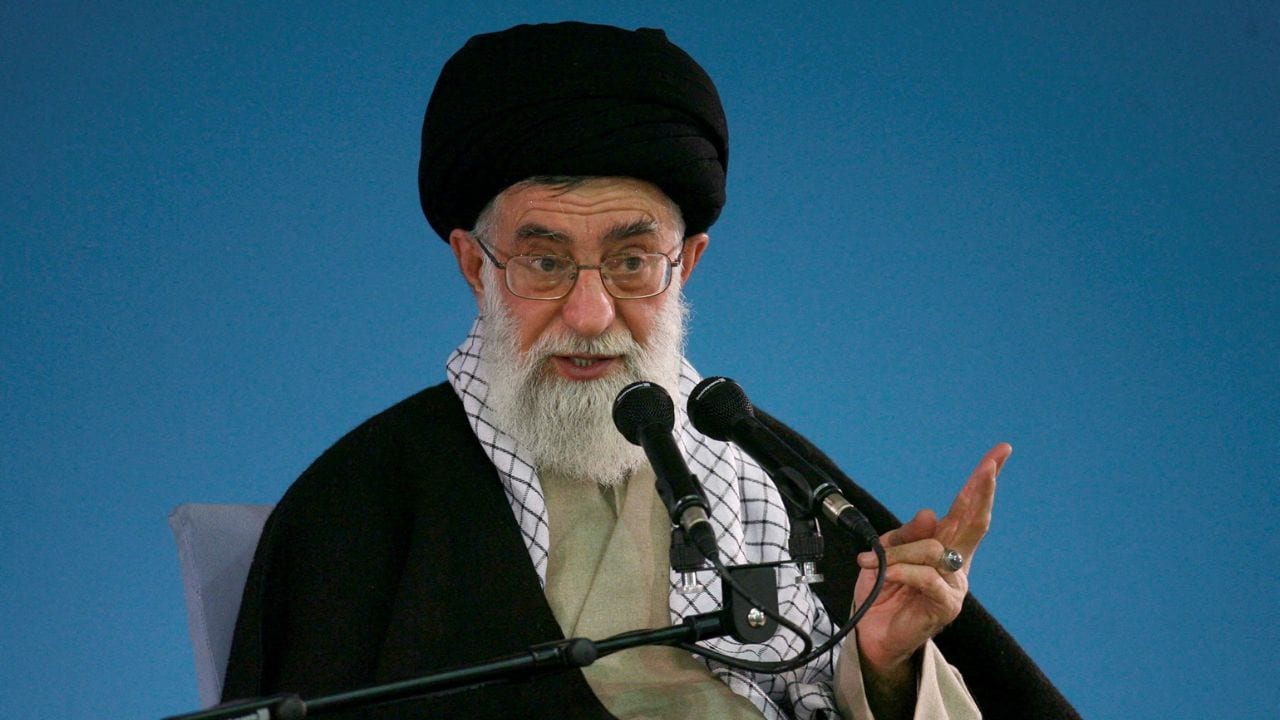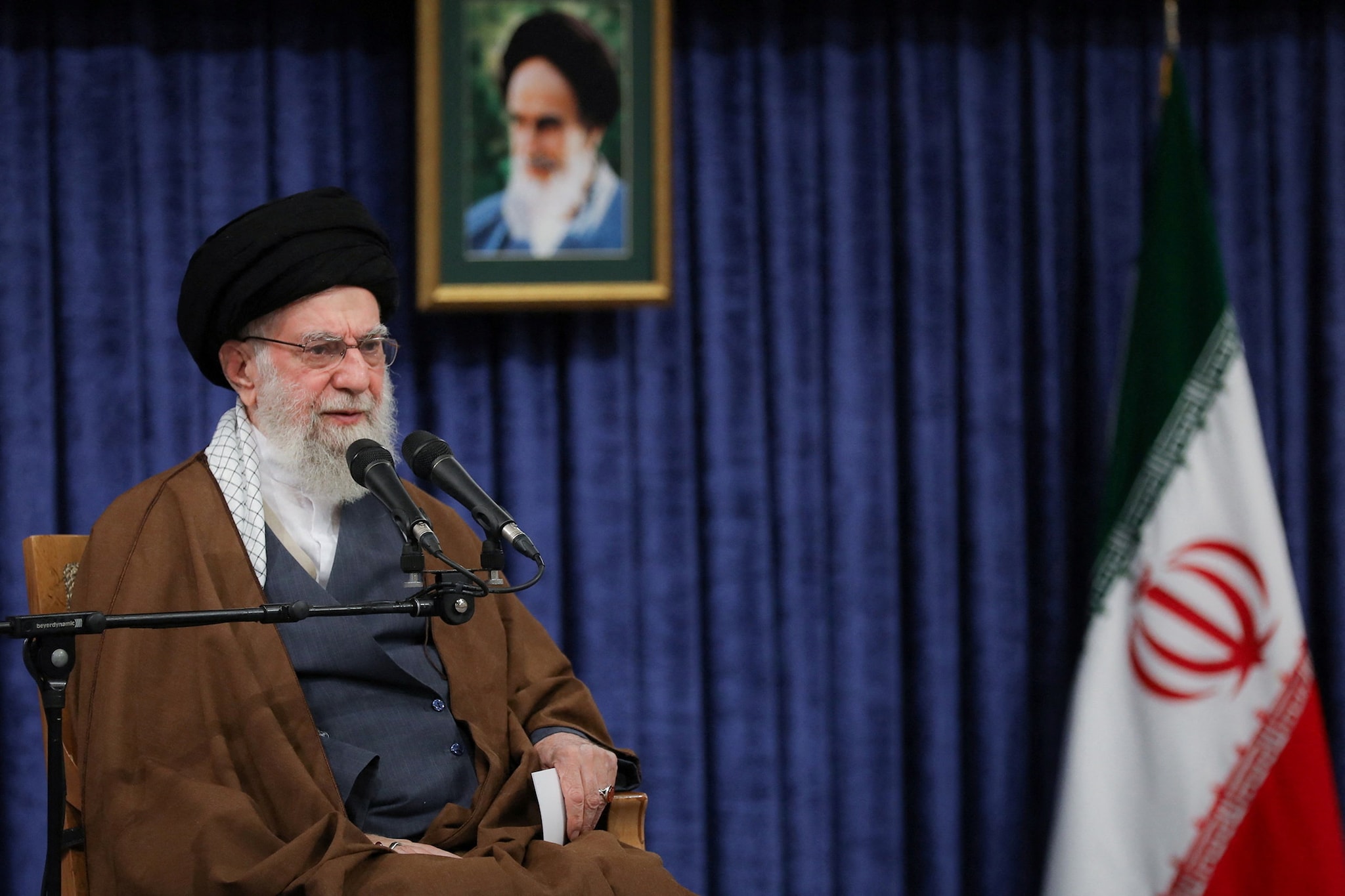
The targeted elimination of a sovereign state’s supreme ideological and political authority represents a total departure from traditional gray-zone warfare into the territory of structural decapitation. When the United States executes a strike against a figure of Ali Khamenei's stature, it is not merely removing a head of state; it is dismantling the specific neurological hub of the Velayat-e Faqih system. This action forces an immediate transition from managed containment to a high-entropy power vacuum. The efficacy of such a strike depends less on the tactical success of the kinetic event and more on the systemic inability of the target state to replicate its command-and-control hierarchy under duress.
The Triad of Iranian Power Displacement
To evaluate the impact of this event, one must categorize the Iranian power structure into three distinct functional layers. The removal of the Supreme Leader creates specific, non-linear failures across each: Recently making news in this space: The Kinetic Deficit Dynamics of Pakistan Afghanistan Cross Border Conflict.
- The Ideological Monopole: Unlike a secular presidency, the Office of the Supreme Leader provides the theological justification for the state's existence. His absence creates a legitimacy crisis that cannot be solved via a standard democratic or military transition.
- The IRGC Financial-Military Complex: The Islamic Revolutionary Guard Corps (IRGC) operates as a state-within-a-state, answering only to the Rahbar. Without this central arbiter, the IRGC’s internal factions—ranging from the Quds Force to its domestic construction conglomerates—lose their primary mechanism for dispute resolution.
- The Proxy Network Tether: Iran’s "Axis of Resistance" relies on personalistic loyalty and religious decrees emanating from Khamenei. When the source of this "divine" mandate is severed, the coordination costs for groups like Hezbollah and the Houthis increase exponentially.
Kinetic Precision vs. Strategic Equilibrium
The technical execution of such an operation signals a total failure of Iranian counter-intelligence and electronic warfare capabilities. For a strike to be confirmed by the U.S. Executive Branch, the intelligence chain must have achieved "High Confidence" through a fusion of SIGINT (Signals Intelligence) and HUMINT (Human Intelligence).
The use of precision-guided munitions in a high-threat environment indicates that the U.S. has bypassed the Iranian "Integrated Air Defense System" (IADS). This suggests a sophisticated suppression of enemy air defenses (SEAD) or the use of low-observable (stealth) platforms that render the S-300 and indigenous Bavar-373 systems obsolete. The mechanism of the strike serves as a psychological deterrent, proving that no depth of hardening or geographic displacement offers sanctuary. Additional insights into this topic are explored by The New York Times.
The Succession Bottleneck and Institutional Fragility
Article 111 of the Iranian Constitution dictates that a Leadership Council shall manage affairs until a new leader is elected by the Assembly of Experts. However, this legalistic framework ignores the reality of entrenched factionalism. The transition faces a significant bottleneck:
- The Vetting Gap: Any successor must maintain the support of the clerical establishment in Qom while simultaneously satisfying the IRGC’s requirement for a leader who will not curtail their economic hegemony.
- The Popular Legitimacy Deficit: The Iranian state has faced recurring waves of domestic unrest. A transition period is the point of maximum vulnerability where the gap between state coercion and public dissent is thinnest.
This creates a scenario where the state must choose between a "Hardline Consolidation"—likely a military-backed cleric—or a "Fractured Leadership" that leads to provincial autonomy movements.
Economic Cascades and Resource Reallocation
The immediate economic result is the catastrophic devaluation of the Rial and a flight to hard assets. Beyond currency volatility, the removal of the central authority disrupts the informal "Bonyad" system—charitable trusts that control up to 20% of Iran’s GDP. These organizations operate under the Supreme Leader's oversight. In his absence, the lack of transparent auditing leads to internal asset stripping by mid-level managers, further hollows out the domestic economy, and reduces the capital available for foreign paramilitary operations.
The cost function of maintaining a regional shadow war increases. Without a centralized authority to greenlight the massive subsidies required for fuel and weapons transfers to proxies, the Iranian state is forced to prioritize domestic survival over regional expansion.
The Probability of Asymmetric Escalation
A direct conventional military response from Iran is unlikely due to the massive disparity in kinetic reach. Instead, the "Retaliation Calculus" shifts toward:
- Cyber-Kinetic Offensives: Targeting critical infrastructure in the West, specifically electrical grids or financial clearinghouses, to force an economic cost on the U.S. populace.
- Maritime Chokepoint Manipulation: Utilizing "Fast Attack Craft" and anti-ship cruise missiles in the Strait of Hormuz to spike global insurance premiums on oil tankers.
- Sleeper Cell Activation: Utilizing pre-positioned assets in Europe and Latin America to conduct low-tech, high-visibility attacks on soft targets.
Transitioning from Containment to Transformation
The U.S. objective in this strike moves beyond the "Maximum Pressure" campaign of previous administrations. It represents an active "Systemic Reset." By removing the terminal node of the Iranian hierarchy, the U.S. is betting that the internal contradictions of the Islamic Republic—the tension between a modernizing youth and a geriatric clerical elite—will result in a domestic collapse rather than a foreign war.
The limitation of this strategy lies in the "Hydra Effect." In the absence of a central negotiator, the IRGC may decentralize, leading to a "Warlordism" model where various commanders control different sectors of the country and its nuclear program. This increases the risk of rogue proliferation, as there is no longer a single point of contact for international diplomatic or back-channel pressure.
The tactical play for the coming 72 hours requires an immediate deployment of carrier strike groups to the Persian Gulf to signal a "Ready-to-Strike" posture against any IRGC naval mobilization. Simultaneously, the U.S. Treasury must freeze all known offshore accounts associated with the Office of the Supreme Leader to prevent the liquidation of assets during the confusion. The move is not just a kill; it is an attempt to bankrupt the ideological engine of the Middle East's most potent revisionist power. Any delay in following the kinetic strike with these financial and maritime "Hard-Locks" will allow the IRGC to regroup and install a puppet successor, nullifying the strategic gains of the operation.