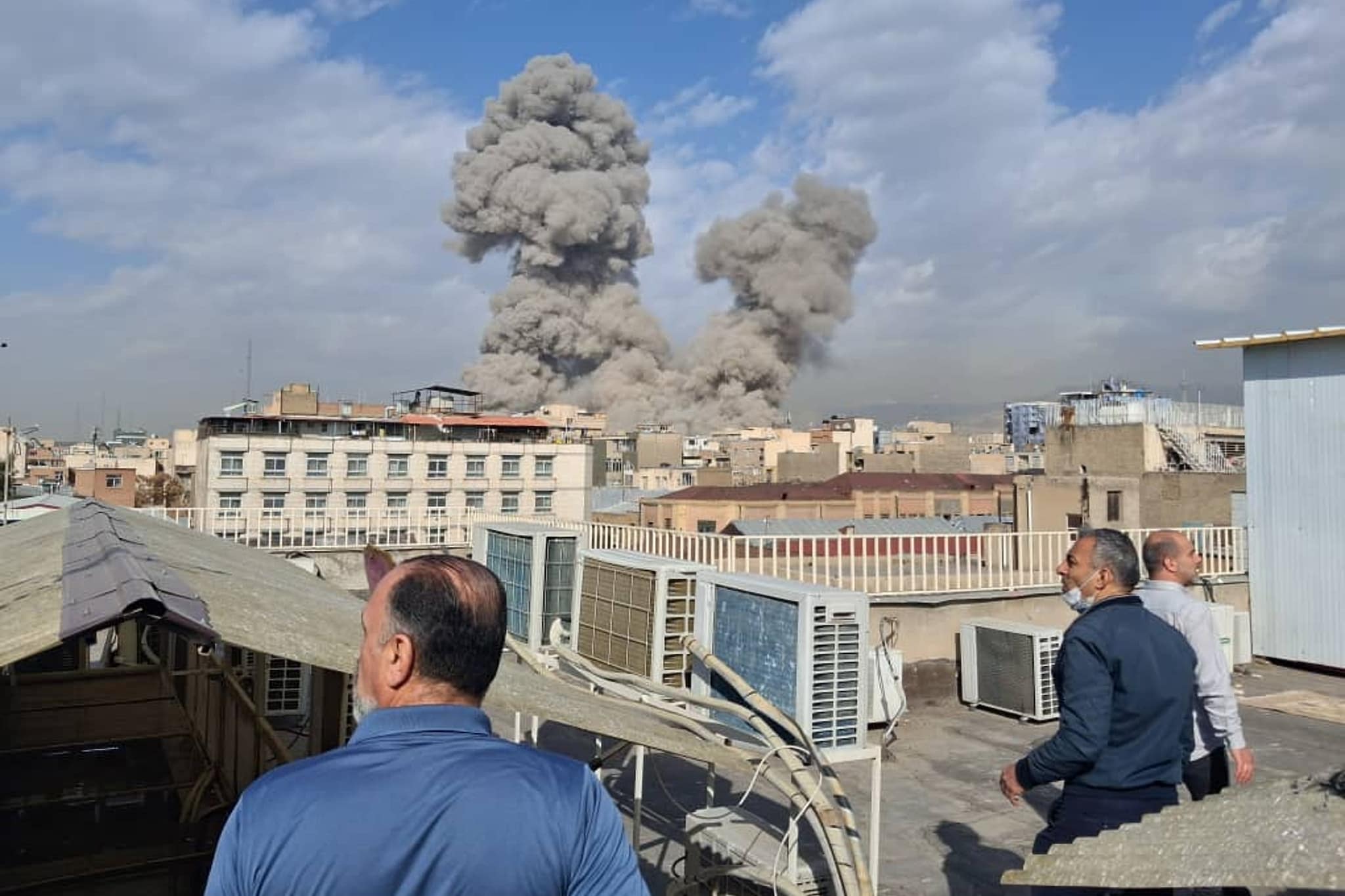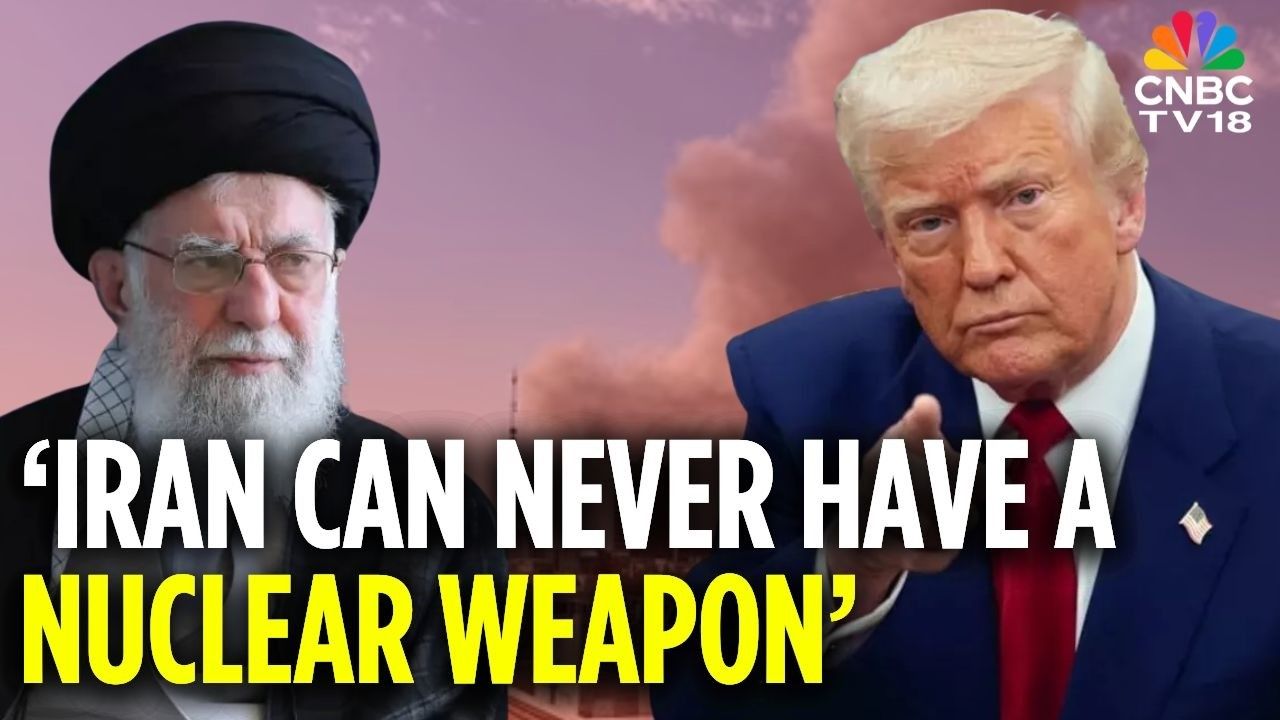
The headlines are screaming about a regional apocalypse because that’s what sells subscriptions and defense contracts. Israel and the US strike Iran. Tehran throws a desperate punch back. Trump claims Khamenei is dead. The "expert" class is currently hyperventilating on cable news about the "unprecedented" nature of this escalation.
They are lying to you. Or worse, they’re just incompetent.
This isn't a breakdown of the world order. It’s the birth of a new one where the old rules of "deterrence" and "proportionality" have been tossed into the trash. The consensus view—that we are on the brink of a World War III that will collapse global markets—misses the cold, hard reality of the new geopolitical ledger. This isn't a crisis to be "solved"; it is a systemic adjustment.
The Myth of the "Surgical Strike"
Mainstream reporting obsesses over the technical success of the strikes. They want to talk about F-35s, missile interception rates, and bunker-busters. They treat war like a box score.
Here is the truth: The physical damage to Iranian infrastructure is secondary. The real target was the psychological architecture of the "Axis of Resistance." For decades, the West operated under the delusion that Iran was a rational actor that could be bribed into stability through sanctions relief and back-channel diplomacy.
I’ve sat in rooms with policy analysts who truly believed a few billion dollars in frozen assets could buy peace. It was a fantasy. You cannot "manage" a revolutionary state; you can only contain it or dismantle it. By striking directly inside Iranian borders alongside Israel, the US hasn't just "responded." It has signaled that the era of fighting proxies is over.
Why Retaliation is a Sign of Weakness, Not Strength
When Tehran retaliates, the media paints it as a show of force. It’s the opposite. It’s a performative necessity for a regime that is terrified of its own population.
Look at the data from the 2022-2023 "Woman, Life, Freedom" protests. The internal friction in Iran is at a boiling point. A regime that is confident doesn't need to launch salvos of missiles that it knows will be 90% intercepted by the Iron Dome and Arrow systems. They do it because they have no other currency.
If Khamenei is indeed dead—as the rumors claim—we aren't looking at a "power vacuum" that leads to chaos. We are looking at the inevitable collapse of a theocratic management style that hasn't updated its operating system since 1979.
The Trump Factor: Chaos as a Tool
The competitor's piece treats Donald Trump’s rhetoric as a wild card that adds "uncertainty."
That’s a lazy take. Trump isn't a wild card; he’s a wrecking ball specifically designed for this type of wall. His "Khamenei is dead" claim—whether verified by the CIA this morning or not—is a masterclass in information warfare. It forces the Iranian leadership to prove they are alive, which creates a target-rich environment for intelligence agencies.
In the business world, we call this "disruptive transparency." You force your competitor to reveal their hand by making a claim so bold they can't afford to ignore it.
The Mathematical Reality of Oil Markets
The biggest "People Also Ask" fear is always: "Will gas prices hit $10 a gallon?"
The short answer is: No.
The long answer requires looking at the actual $\Delta$ in global production. In the 1970s, an Iranian hiccup could starve the world of energy. In 2026, the Permian Basin and Brazilian offshore drilling have shifted the center of gravity.
- US Crude Production: Currently hovering near record highs of 13.5 million barrels per day.
- OPEC Spare Capacity: Saudi Arabia is sitting on millions of barrels they can flip onto the market the moment Iran tries to block the Strait of Hormuz.
The market has already priced in a regional war. The "fear premium" is a ghost. If you’re dumping energy stocks or panic-buying gold based on this morning’s headlines, you’re the liquidity that smarter players are using to exit.
Stop Asking if the War Will Spread
It already has.
The mistake is thinking that "war" only looks like tanks crossing borders. This conflict is being fought in the Red Sea via the Houthis, in the cyber-grids of Tel Aviv, and in the semiconductor supply chains that run through the region.
The consensus view says we need to "return to the status quo." That is the most dangerous idea in the room. The status quo was a slow-motion suicide for Western interests in the region.
"Stability is not the absence of conflict; it is the presence of a dominant power capable of enforcing its will."
If the US and Israel are finally willing to be that power, the short-term volatility is a small price to pay for long-term structural clarity.
The Actionable Reality for the C-Suite
If you are running a company or managing a portfolio, stop waiting for "peace talks." Peace talks in the Middle East are just a way for both sides to reload.
- De-risk the Strait: Assume the Strait of Hormuz will be a high-friction zone for the next 36 months. If your supply chain relies on it, you’ve already failed.
- Ignore the "Escalation Ladder": The old academic theory of the escalation ladder (moving from step A to step B) is dead. We are in a world of "Maximum Pressure 2.0." Expect strikes to jump from minor skirmishes to decapitation attempts overnight.
- Bet on Technical Superiority: The gap between Western/Israeli kinetic tech and Iranian/Russian-backed hardware is widening, not closing. The "mass over class" theory of drone swarms is being debunked in real-time by directed energy weapons and AI-integrated interceptors.
The Brutal Truth about "Humanitarian Concerns"
The media loves to wring its hands over the "human cost." It’s an effective way to get clicks, but it’s a terrible way to analyze geopolitics.
In every major shift in history, there is a period of intense friction. The dismantling of the Iranian proxy network is a violent process. Pretending there is a "clean" way to do this is a lie fed to the public to keep them compliant.
We are seeing the final gasp of a 45-year-old revolutionary experiment. It’s going to be loud, it’s going to be bloody, and it’s going to be the best thing to happen to global security since the fall of the Berlin Wall.
Stop mourning the "stability" of a graveyard. The strikes aren't a sign that the world is falling apart; they are the sound of the world being put back together by people who have finally stopped apologizing for winning.
The era of managed decline is over. Pick a side or get out of the way.