The G7 energy ministers are meeting Tuesday morning to discuss releasing oil reserves. The market yawns. The media treats this like a masterstroke of geopolitical chess. It isn’t. It is a desperate signal of impotence from leaders who have spent a decade sabotaging their own energy security and now want to use a finite emergency stockpile to fix a self-inflicted supply crunch.
Releasing the Strategic Petroleum Reserve (SPR) to lower prices is like trying to cure a fever by breaking the thermometer. It doesn't fix the infection; it just hides the evidence while you get sicker. Recently making headlines recently: The Cuban Oil Gambit Why Trump’s Private Sector Green Light is a Death Sentence for Havana’s Old Guard.
The Myth of Price Control
The "lazy consensus" among G7 bureaucrats is that a coordinated release of millions of barrels will scare the shorts out of the market and provide immediate relief at the pump. This assumes the oil market is a simple bathtub where you just pull a plug to lower the level. It’s not. It’s a complex, global, high-frequency pricing engine that prices in "emergency" releases weeks before they happen.
When the G7 announces a meeting to discuss a release, they have already lost. The market has already baked in the volume. If they release 30 million barrels—a common "bold" number—they are effectively dumping about 15 hours of global demand into the system. Fifteen hours. More information into this topic are detailed by The Economist.
Traders don't see a "flood" of supply. They see a depleted insurance policy. They see that the biggest economies in the world are so terrified of $100 crude that they are willing to burn through their physical hedges. In the world of commodities, fear is a buy signal.
Why the SPR Was Never Meant for This
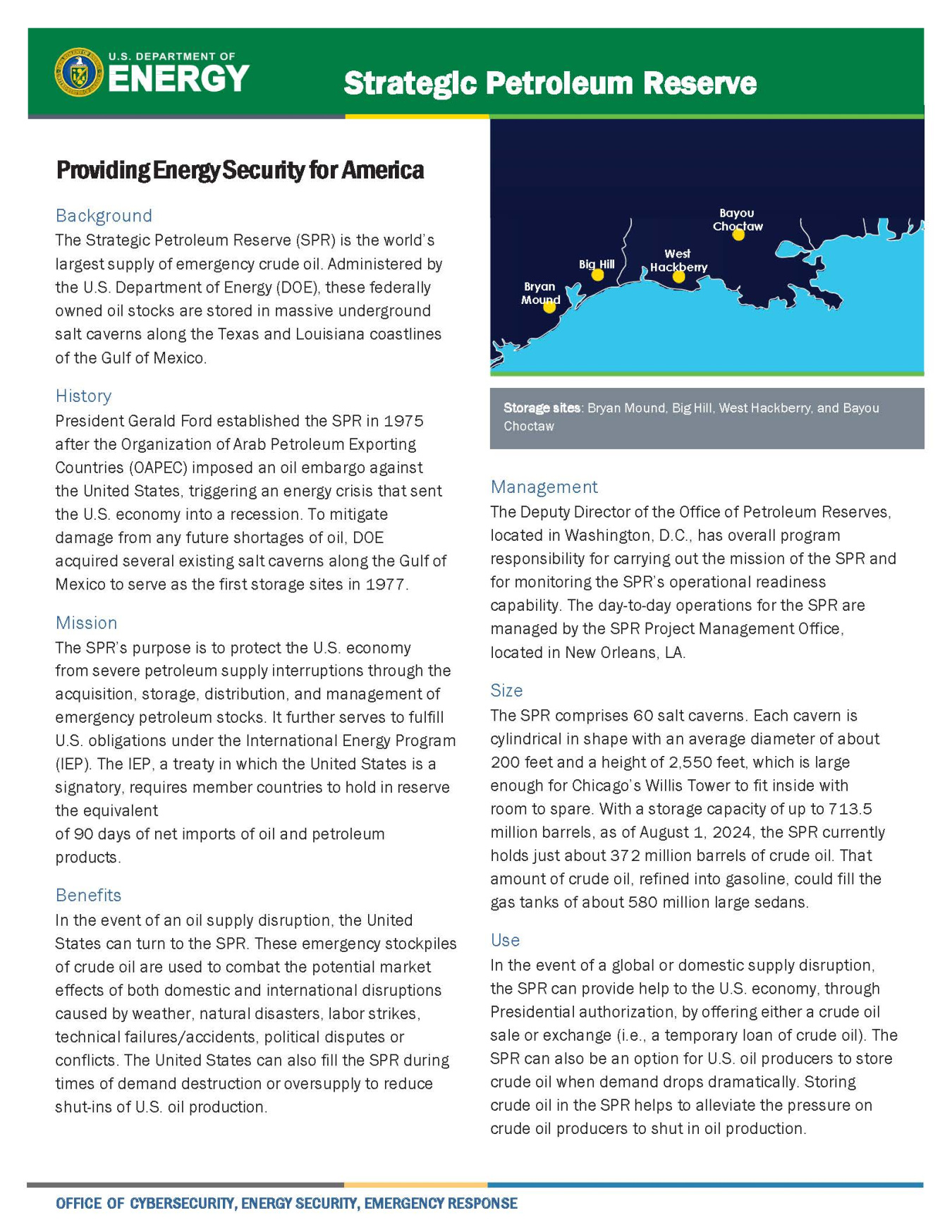
The SPR was created in the 1970s for one reason: physical supply disruptions. It was a shield against a literal blockade or a natural disaster that severed pipelines. It was never intended to be a price-manipulation tool for cooling off voter anger before an election cycle.
When you use an emergency reserve to manage a price point, you create a massive moral hazard. You tell producers—the people who actually drill and refine—that if they invest capital to increase production, the government will just dump "cheap" state oil on the market to crush their margins.
I have watched energy firms pull back on multi-billion dollar CAPEX (Capital Expenditure) projects because the regulatory environment is a schizophrenic mess. On Monday, the government screams for more production. On Tuesday, they meet to discuss how to artificially lower the value of that production. You cannot build a stable energy grid on a foundation of political whims.
The Refinement Bottleneck Nobody Mentions
Even if the G7 dumped every drop of their reserves into the market tomorrow, your gas prices wouldn't plummet. Why? Because you don’t put crude oil in your car.
The G7 energy ministers love to talk about "barrels," but they rarely talk about "cracking spreads." Our refining capacity is aging and maxed out. We are missing the industrial hardware to turn that extra crude into gasoline, diesel, and jet fuel.
The Real Math of a Reserve Release
Imagine a scenario where the US and its allies dump 60 million barrels over 30 days.
- Volume: 2 million barrels per day (mb/d).
- Context: Global demand is roughly 102 mb/d.
- Net Impact: A 2% temporary bump in supply.
While that 2% sounds useful, it ignores the fact that OPEC+ can simply dial back their production by the same 2% with a single Zoom call. The G7 is playing a hand of poker with their cards face up on the table, while the house (OPEC) owns the deck.
The Hidden Cost of Refilling
Here is the part the Tuesday morning press release won't mention: Every barrel released today must be bought back later.
By dumping oil now to lower prices, the G7 is committing to becoming a massive, price-insensitive buyer in the future. They are telegraphing to every hedge fund on the planet exactly when and how much they will need to buy to replenish the stocks. They are literally subsidizing the next bull run in oil prices with taxpayer money.
If the goal is truly energy "independence" or "stability," the solution isn't emptying the pantry. It’s building a bigger kitchen. We need more pipelines, more permits, and more refining capacity. But those things take years and don't make for a punchy headline on a Tuesday morning.
The "Green" Paradox
The irony of the G7 energy meeting is that most of these ministers have spent the last five years campaigning on the "end of oil." They have discouraged investment in fossil fuels, pushed ESG mandates that starved oil companies of credit, and championed a rapid transition that the current grid cannot handle.
Now, faced with the reality that the world still runs on hydrocarbons, they aren't admitting they were wrong about the pace of the transition. Instead, they are looting the emergency reserves to buy themselves a few months of political breathing room. It is the height of hypocrisy to spend your mornings calling for the death of an industry and your afternoons begging that same industry to lower its prices.
Stop Asking if the Release Will Work
The "People Also Ask" section of the internet is full of queries like "Will a reserve release lower gas prices?" or "How much oil is in the SPR?"
These are the wrong questions.
The right question is: "Why are our leaders more interested in burning our emergency insurance than in fixing the underlying supply chain?"
If you want cheaper energy, you need a policy that rewards production instead of punishing it. You need a regulatory environment that doesn't change every time a new party takes office. You need to acknowledge that "transition" is a process, not a light switch.
The Brutal Reality of Tuesday’s Meeting
When the news breaks that the G7 has agreed to a "coordinated response," expect a minor dip in the price of Brent and WTI for about 48 hours. Then, watch as the market realizes that nothing has actually changed. The tankers are still the same size. The refineries are still at 95% capacity. The geopolitical tensions are still simmering.
A reserve release is a sugar high. It feels good for a second, but the crash is inevitable and it's always harder than the peak.
The G7 is trying to manage a $4 trillion global industry with a press release and a bucket. They are outclassed by the market, outmaneuvered by the producers, and the only people who will pay for this theater are the taxpayers who will eventually have to fund the refill at much higher prices.
The SPR is not a piggy bank for unpopular politicians. It is a vital piece of national security infrastructure that is being misused to cover up for a decade of failed energy policy.
Stop cheering for the release. Start asking what happens when the tanks are empty and the price is still $120.