The conventional wisdom floating around energy desks is lazy, comfortable, and completely wrong. Watchers of the heavy machinery sector love to frame Beijing’s export push as a cautious, baby-step crawl into foreign markets, starting politely in places like Malaysia with low-risk utility contracts. They look at a single order for Sarawak Energy or a shipment to Kazakhstan and write it off as regional experimentation.
They are missing the entire war.
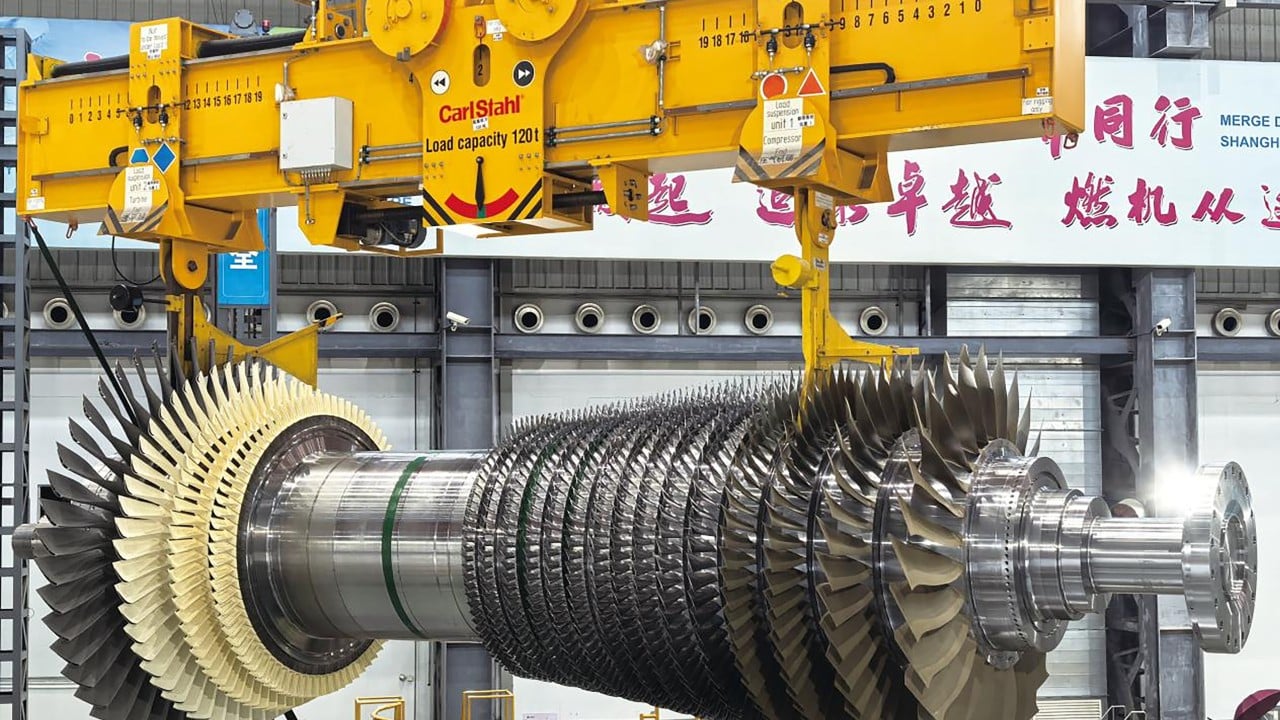
China’s heavy-duty gas turbine manufacturers are not dipping their toes into the water. They are kicking down the front door of a multi-billion-dollar global power monopoly. Driven by domestic production backlogs stretching past 2030, industrial giants like Shanghai Electric and Dongfang Electric are executing a high-speed offensive to capture international market share. While GE Vernova, Mitsubishi Heavy Industries, and Siemens Energy spend quarters managing supply chain bottlenecks and defending legacy margins, Chinese state-backed manufacturing muscle has rewritten the cost and delivery timeline equation.
Forget the polite narrative about Malaysia being a tentative first stop. Malaysia is a beachhead.
The Five Year Waiting List Scandal
To understand why this export wave is unstoppable, you have to look at the structural failure of Western manufacturing. If an independent power producer or a hyperscale data center operator orders a heavy-duty gas turbine from legacy Western suppliers today, they are staring at an allocation queue that stretches out for half a decade.
Western boardrooms spent the last ten years choking capital expenditures, prioritizing share buybacks over foundry expansions, and treating high-end metallurgy as a mature, low-growth cash cow. Then the artificial intelligence boom hit. Energy demand from data centers exploded, and the grid ran out of headroom. BloombergNEF projects that data center electricity consumption will quadruple to over 2,300 terawatt-hours by 2035.
Western manufacturers cannot build fast enough. Beijing can.
When Dongfang Electric secured a massive 2.1-gigawatt-equivalent supply deal for thirty turbines to power Canadian data center infrastructure, or when Shanghai Electric landed its landmark 500-megawatt heavy-duty turbine package in Malaysia, it wasn't because of charity pricing. It was because Western competitors literally could not deliver the hardware before the end of the decade.
Dismantling the Quality Myth
The standard pushback from incumbent lobbyists is that Chinese turbines lack the reliability, efficiency, and lifecycle track record of Western counterparts. This argument smells of desperation.
I have watched companies blow millions of dollars waiting for legacy turbines, paying a massive premium for brand-name reassurance while their grid interconnect queues expired. The engineering reality has shifted. Years of heavy state capital injection under indigenous innovation mandates have forced domestic turbine builders to master single-crystal blade casting, advanced thermal barrier coatings, and high-temperature combustion chambers.
Furthermore, these platforms are no longer isolated mechanical dinosaurs. Chinese manufacturers are embedding industrial artificial intelligence directly into manufacturing and lifecycle maintenance protocols. Real-time vibration sensors, predictive thermal mapping, and automated diagnostics are standard equipment on these units.
The total cost of ownership has flipped. Western service agreements lock operators into multi-decade maintenance extortion, where a simple proprietary software update requires a battalion of flown-in engineers charging hourly rates that rival legal counsel. The localized supply chain models championed by Chinese exporters shorten maintenance turnaround cycles dramatically, slashing the downtime that kills project profitability.
The Real Geopolitical Pivot
Framing this as a simple trade dispute over heavy machinery misses the macroeconomic chess game. The global energy transition is not a straight line toward intermittent wind and solar; it is a chaotic scramble for firm, dispatchable baseload power capable of keeping data centers and industrial complexes online 24/7.
When the China National Energy Administration pushes its turbine makers to target overseas data center power needs, it is exporting industrial overcapacity to solve a structural grid crisis across the Global South and beyond. Emerging economies cannot afford to wait five years for Western equipment while their industrialization stalls out. They need megawatts on the ground, and they need them now.
Malaysia, Kazakhstan, and Canada are just the early indicators of a structural realignment. The global gas turbine oligopoly is dead. If you are still betting your energy strategy on Western delivery schedules, you aren't being conservative. You are simply refusing to look at the horizon.