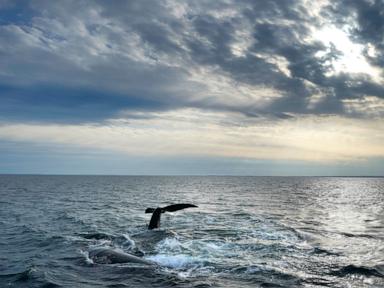
Every autumn, the marine conservation press releases the exact same obituary. A new population estimate drops. The number hovers around 350 to 370 individuals. Scientists express "alarm." Headlines scream about imminent extinction. Everyone shares the tragedy on social media, and nothing changes in the water.
The standard narrative treats the North Atlantic right whale's decline like a mysterious biological failure or an unstoppable force of climate doom. That framing is lazy, counterproductive, and flat-out wrong. If you liked this post, you should read: this related article.
The North Atlantic right whale is not failing to survive. We are actively, systematically strangling it with poly-blend ropes and crushing it with container ships while pretending the problem is too complex to solve quickly. Counting carcasses every October and acting shocked by the math is not conservation. It is bureaucratic theater.
The Lie of the "Mysterious" Population Drop
Read any mainstream report on the North Atlantic Right Whale Consortium’s annual report card. You will see heavy emphasis on low calving rates, shifting zooplankton populations in the Gulf of Maine, and warming ocean temperatures pushing whales out of protected zones into the Gulf of St. Lawrence. For another perspective on this development, see the recent update from Reuters.
All of those ecological shifts are real. None of them are the primary killer.
When a female right whale has to drag 400 pounds of commercial lobster or snow crab gear wrapped around her pectoral fins and jaw for eight months, she does not have the caloric surplus to get pregnant. If she does manage to carry a calf to term, the metabolic toll of towing fishing traps starves her milk production. Marine biologists call this "sub-lethal entanglement." In plain English, it means slow-motion torture that ruins reproductive capacity long before the animal actually drowns or dies of systemic infection.
Data from the National Oceanic and Atmospheric Administration (NOAA) and the New England Aquarium confirms that over 85 percent of living North Atlantic right whales carry scars from fishing gear. More than half have been entangled multiple times.
Yet, mainstream coverage routinely buries the industrial mechanics of fixed-gear fisheries beneath vague paragraphs about climate change. Blaming ocean warming is convenient because nobody in Boston, Halifax, or Washington has to take responsibility for a global atmospheric trend. Blaming vertical buoy lines forces a direct confrontation with multi-million-dollar commercial fisheries and consumer seafood habits.
Why Counting Whales Distracts From Saving Them
I have watched conservation groups and federal agencies pour tens of millions of dollars into aerial surveys, acoustic monitoring buoys, and genetic cataloging over the past twenty years. We now have one of the most thoroughly documented wild animal populations on Earth. We know their individual names, their mothers, their migration paths, and the exact serial numbers of the scars on their backs.
We are documenting their extinction in high definition.
The obsession with annual population estimates creates a false sense of scientific progress. Tracking a 1 or 2 percent dip in the population model does not save a single breeding female. In fact, the hyper-focus on population headcounts often stalls policy. Whenever a new estimate shows a tiny stabilization—say, the population holds steady at 360 instead of dropping to 350—industry lobbyists immediately argue that existing regulations are working and new protections should be delayed.
Conversely, when the number drops, regulators call for "more study" and "stakeholder working groups."
The Brutal Math of Breeding Females
Forget the total population number. The only metric that matters for the survival of Eubalaena glacialis is the number of reproductively active females. Right now, there are fewer than 70 breeding females left on the planet.
Let that sink in. Seventy.
A single vessel strike or one bad entanglement event during a calving season does not just remove one animal from a spreadsheet. It wipes out decades of future generations. Right whales do not reproduce like rabbits. A healthy female historically gave birth every three to four years. Today, the average calving interval has stretched to nearly ten years because the mothers are physically exhausted from dodging ships and dragging gear.
Dismantling the Myths Around Whale Protection
If you look up public questions about North Atlantic right whales, you run into the same tired talking points pushed by maritime trade associations and repeated uncritically by local news outlets. Let’s tear them down.
"Aren't fishermen already using whale-safe gear?"
No. For years, the regulatory compromise was "weak links" and "sinking groundlines." The theory was that a 40-ton whale could snap a rope engineered to break at 1,700 pounds of tension.
In practice, weak links fail miserably on juvenile whales, which lack the mass and leverage to snap the line before it wraps tightly around their flippers or baleen. Furthermore, weak rope only breaks after the whale is already wrapped up, meaning the animal swims away trailing hundreds of feet of heavy line and traps anyway. Sinking groundlines solved one problem—whales swimming through floating rope between traps—while doing nothing to eliminate the vertical buoy lines stretching from the ocean floor to the surface. Those vertical lines act like a lethal curtain across the whale's migratory highway.
"Won't ropeless fishing bankrupt the lobster industry?"
This is the loudest argument in New England and Atlantic Canada, and it relies on ignoring how technology actually scales.
On-demand fishing gear—often called ropeless gear—uses acoustic triggers to keep buoys and ropes coiled on the seafloor until the fisherman arrives to haul the trap. No vertical lines in the water column means zero entanglements. Right now, a single acoustic release unit costs anywhere from $2,500 to $4,000. At retail prices, outfitting a commercial boat running 800 traps is undeniably expensive.
However, treating current prototype pricing as permanent economic reality is absurd. Every marine technology—from GPS chartplotters to side-scan sonar—started out prohibitively expensive before government subsidies, bulk manufacturing, and competition drove prices down by 80 percent. Moreover, fishermen do not need to convert 100 percent of their traps overnight. They only need to run ropeless gear inside seasonal closure zones where right whales actually congregate. Right now, those zones are completely shut down to traditional traps for months at a time. On-demand gear actually gives fishermen back access to closed waters.
"Why don't ships just steer around them?"
Right whales are dark, lack a dorsal fin, float just below the surface, and move slowly. From the bridge of a 1,000-foot container ship traveling at 20 knots, a right whale is practically invisible until it is underneath the bulbous bow.
The only thing that prevents fatal blunt-force trauma is speed. Vessel speed restrictions—forcing ships to slow down to 10 knots or less in Seasonal Management Areas—drastically reduce both the probability of a strike and the lethality when a collision occurs. Yet, compliance among major shipping lines and recreational yachts remains spotty at best because fines are treated as a minor cost of doing business, and NOAA’s proposed expansion of speed rules to smaller vessels (35 to 65 feet) sat stalled in federal review for years while yachts continued slicing whales open.
What Actually Works (And Why Nobody Wants to Do It)
If the goal is genuinely to reverse the population decline rather than manage a polite decline into extinction, the playbook is brutally simple. It requires abandoning voluntary compliance and half-measures.
- Mandate on-demand gear in all high-risk corridors. Stop handing out endless exemptions and multi-year delays. Subsidize the hardware transition directly using federal infrastructure funds, deploy acoustic locators so mobile trawlers do not run over submerged traps, and pull vertical lines out of primary feeding and calving grounds permanently.
- Enforce 10-knot speed zones with automated AIS penalties. Every commercial vessel and large yacht carries an Automatic Identification System transponder. Regulators already know the exact second a ship exceeds 10 knots in a protected zone. Stop issuing warning letters. Automate the fines, scale them to vessel tonnage, and suspend port entry privileges for repeat offenders.
- Shift seasonal closures dynamically using real-time acoustic gliders. Static calendar closures fail because whales follow shifting copepod blooms. Autonomous underwater gliders developed by researchers at Woods Hole Oceanographic Institution can detect right whale vocalizations in real time and trigger immediate, mandatory slow-down and gear-removal zones within hours.
The Uncomfortable Downsides of the Hardline Fix
Pretending this transition is painless would be dishonest. Moving aggressively to ropeless gear and strict speed limits comes with real operational friction.
Acoustic releases fail in rough seas. When a $3,000 transponder refuses to surface in a six-foot swell, a lobsterman loses expensive gear and income. Furthermore, removing surface buoys creates a genuine gear-conflict nightmare between fixed-gear trap fishermen and mobile-gear draggers who rely on visual buoys to avoid tearing up seabed traps. Until digital subsea mapping integration becomes standard across every wheelhouse on the East Coast, submerged gear will occasionally get destroyed by passing trawlers.
On the shipping side, mandatory 10-knot zones add hours to transit times, burn fuel inefficiently on engines tuned for higher cruising speeds, and complicate tight port scheduling in hubs like New York, Savannah, and Halifax.
Those are legitimate engineering and logistical headaches. We solve engineering headaches every day in offshore energy, naval defense, and commercial aviation. What we cannot engineer our way out of is a species dropping below its minimum viable breeding threshold.
Stop Mourning and Start Regulating
The next time a headline warns that the North Atlantic right whale population has dropped again, ignore the hand-wringing quotes from agency spokespeople. Look at the cause of death in the necropsy reports.
Every single dead whale pulled onto a beach with rope embedded four inches into its blubber or a propeller gash across its spine is a policy choice, not an act of God. Until regulators value 70 breeding females more than cheap seasonal lobster margins and uninterrupted yacht speeds, the annual population count will keep ticking down—and every scientist acting surprised by the result will be complicit in the show.