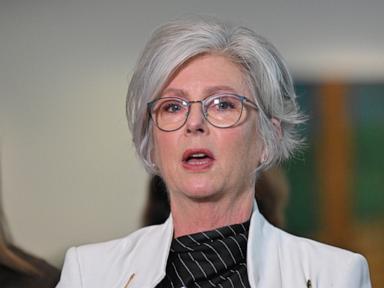
Independent federal MP Helen Haines has been discharged from hospital following an alleged deliberate SUV collision in regional Victoria, an incident that leaves the Indi representative recovering at home while police investigate the circumstances behind the crash. The immediate medical crisis has passed. Yet the broader shockwave rippling through Canberra and regional Australia has barely begun.
Standard wire reports treat a story like this as a straightforward blotter item. A politician gets hurt, paramedics respond, hospital doors open and close, and a suspect faces questioning. That approach misses the real story entirely. When an elected official is allegedly targeted with a motor vehicle in broad daylight—or even caught in an escalating confrontation that turns vehicular—the incident exposes deep structural vulnerabilities in how regional Australian democracies operate.
The Regional Vulnerability Trap
Metropolitan politicians move inside a protective bubble that most voters never see. In Sydney, Melbourne, or Canberra, high-profile parliamentarians operate within dense networks of federal security protocols, rapid-response police precincts, and controlled public appearances. Regional members like Helen Haines inhabit a completely different reality.
Representing the sprawling rural electorate of Indi in north-eastern Victoria demands constant, unscripted proximity to constituents. You cannot represent towns like Wangaratta, Wodonga, Benalla, and Bright from behind a security perimeter. The job requires driving hundreds of kilometers a week along quiet country highways, showing up alone at local agricultural shows, and walking down main streets where anyone can approach your car window.
This accessibility is the lifeblood of independent politics in Australia. Haines built her political career—and retained a seat that once belonged to conservative heavyweights—by being relentlessly present in community halls and local cafes. Voters in rural seats despise aloofness. They expect their federal member to be reachable, visible, and grounded in everyday town life.
That exact accessibility creates an acute security blind spot. Unlike cabinet ministers who travel with Australian Federal Police close personal protection teams, backbenchers and crossbench independents rely largely on standard local policing and basic office security upgrades. When a threat materializes in a regional parking lot or along a quiet rural road, there is no advance security sweep. There is no trailing protective detail. There is only the politician, their staffer if they are lucky, and whatever unfolds in front of them.
Why Vehicles Have Become the Weapon of Choice in Political Confrontations
Modern threat assessments across Western democracies have tracked a disturbing shift in how political aggression manifests on the street. Firearm restrictions in Australia remain among the strictest in the developed world, successfully keeping gun violence out of the political sphere. Angry or unstable individuals rarely have access to high-powered weapons.
They do, however, have keys to two-ton SUVs.
Over the past decade, security analysts and law enforcement agencies have watched motor vehicles evolve from mere transportation into instruments of intimidation and physical harm. A vehicle requires no specialized black-market acquisition, draws zero suspicion until the moment of impact, and inflicts massive kinetic force. In rural electorates, where large four-wheel-drive vehicles and heavy utilities are standard daily drivers, an approaching SUV blends seamlessly into the background noise of local traffic.
Consider a hypothetical scenario that illustrates how quickly routine constituent friction can escalate into a vehicular incident. Imagine a local resident nursing a grievance over water rights, renewable energy transmission lines, or pandemic-era mandates—issues that have generated intense heat across regional Victoria. That individual spots their local member's vehicle leaving a community event. What begins as an impulse to block an exit, force a conversation, or tail a car aggressively can cross the threshold into a collision within seconds.
Law enforcement investigators have to untangle intent from recklessness in these moments, a distinction that carries enormous legal weight. Proving that a driver deliberately weaponized a vehicle requires establishing clear state of mind, reviewing dashcam or CCTV footage, and interviewing witnesses who often saw only a chaotic blur of metal and braking tires. Regardless of what prosecutors ultimately prove in court, the psychological effect on public officials remains identical. Every idling engine in a quiet parking lot suddenly carries a different weight.
The Slow Boil of Australian Political Hostility
To understand how an Australian MP ends up in a hospital bed after an alleged vehicle attack, you have to look at the steady erosion of civic boundaries over the last several years. Australian politics has always been rough-and-tumble, defined by sharp parliamentary invective and blunt pub-test skepticism. What has changed is the migration of online rage into physical spaces.
During the height of recent national debates—spanning lockdowns, energy transitions, and cultural flashpoints—the volume of threats directed at federal parliamentarians surged dramatically. Australian Federal Police data has consistently shown a sharp upward trajectory in reports of harassment, stalking, and explicit threats of violence against MPs and senators.
For a long time, the political establishment treated this spike as an online nuisance. Staffers were told to block abusive accounts, filter emails, and install heavier locks on electorate office doors. Electorate offices across the country received panic buttons, reinforced reception glass, and updated mail-screening procedures.
Those measures protect people inside buildings. They do nothing when a representative steps onto the pavement.
Regional independents occupy a particularly exposed position in this polarized climate. Party-aligned politicians can deflect anger onto a national brand, a prime minister, or a party platform. An independent MP owns every vote personally. When constituents feel unheard, betrayed, or furious about federal policy, there is no party apparatus absorbing the blow. The frustration lands squarely on one individual's shoulders.
The Unspoken Toll on Electorate Staff and Families
Public reporting naturally focuses on the elected official—Helen Haines's hospital admission, her treatment, and her discharge. Behind the headlines sits an entire ecosystem of staffers, volunteers, and family members who absorb the secondary shockwaves of every security incident.
Electorate officers in regional towns are usually locals themselves. They shop at the same supermarkets as the people calling the office to scream threats. Their children attend the same schools. When an MP is injured in a violent or allegedly deliberate incident, those staffers are forced to confront an uncomfortable calculation about whether public service is worth personal physical risk.
Parliamentary departments have rolled out trauma counseling, defensive driving courses, and situational awareness training in recent years. On paper, the support framework looks comprehensive. In practice, cultural expectations inside political offices often undermine those safeguards.
Political staffers operate under immense pressure to keep their boss visible, approachable, and responsive. Telling an MP to cancel a street-corner listening post because security feels loose runs counter to every instinct of modern retail campaigning. Nobody wants to be the aide who made the local member look scared of their own voters. So the appearances go ahead, the schedules stay packed, and the vulnerability persists.
What Happens When Security Tightens Too Much
Every time a high-profile incident strikes a lawmaker—whether it is an egging, a physical shove, a death threat, or an alleged vehicular collision—predictable calls follow for tighter security. Security consultants propose stricter protocols, police review response times, and parliamentary administrators audit risk assessments.
Yet there is a genuine dilemma here that defies easy policy fixes. If you surround regional MPs with visible security details, restrict their movements, and fence off public events, you fundamentally alter the nature of Australian representative democracy.
The quiet magic of Australian politics has always been its egalitarian informality. Voters expect to bump into their federal representative at the bakery on a Saturday morning and tell them exactly what they think about interest rates or hospital funding. Once politics retreats behind tinted windows and security cordons, cynicism deepens. Voters begin to view elected officials not as neighbors entrusted with a temporary job, but as a guarded ruling class detached from ordinary life.
Conversely, leaving lawmakers exposed to escalating physical hostility carries an equally steep democratic cost. Good people simply stop running for office.
Look at the recruitment challenge already facing local councils and state parliaments across Australia. Community leaders, doctors, teachers, and small business owners increasingly look at the toxicity directed at public figures and decide the personal price is too high. Helen Haines entered politics from a background in rural nursing and medical research, driven by a desire to fix regional healthcare and integrity in government. If entering public life requires accepting the risk of being run down by an SUV, the pool of decent, community-minded candidates shrinks fast.
The Investigative Questions That Still Matter
As Helen Haines transitions from hospital recovery back toward parliamentary duties, the immediate news cycle will inevitably move on to the next legislative battle in Canberra. That would be a mistake. Several concrete questions demand clear answers over the coming weeks.
First, law enforcement and parliamentary security authorities need to clarify whether prior warning signs existed. In almost every case where political hostility crosses into physical action, a trail of escalating behavior precedes the event—threatening phone calls, aggressive social media posts, or repeated appearances at electorate offices. Understanding whether existing threat-monitoring systems flagged any risk before the collision is essential to evaluating whether current protocols actually work.
Second, the Department of Finance and the Australian Federal Police must examine the glaring resource gap between metropolitan ministerial security and regional backbench protection. Geography should not dictate whether an elected official receives adequate physical safeguards. If rural travel exposes MPs to unique transit and isolation risks, security budgets need to reflect that reality rather than relying on one-size-fits-all metropolitan assumptions.
Finally, political leaders across the spectrum bear responsibility for the temperature of public discourse. Words do not directly steer an SUV, nor do they absolve an individual driver of personal accountability for their actions. Yet relentless dehumanizing rhetoric—framing political opponents as enemies, traitors, or existential threats—creates the exact permission structure that unstable individuals use to justify physical aggression.
Helen Haines walking out of hospital is unquestionably good news for her family, her staff, and the people of Indi. Her recovery closes the immediate medical chapter. Whether Australia's political system learns anything meaningful from how she ended up there remains entirely unresolved.