Silence.
In the cleanrooms of Hsinchu and the sterile, vibration-dampened labs of Shenzhen, silence is the most expensive commodity on earth. You can hear the low, rhythmic thrum of air filtration systems cycling particulate matter out of the atmosphere every six seconds, and beneath that mechanical hum, you can almost hear the quiet panic of engineers staring at schematics they are no longer legally permitted to build.
For the past three years, I have watched the global semiconductor supply chain fracture from the inside out, sitting across from foundry executives in Taipei and hardware founders in Austin who suddenly found themselves turned into reluctant geopolitical foot soldiers. When you hold a modern flagship processor between your thumb and forefinger, it feels like a weightless fingernail of iridescent glass. Yet inside that thumbnail sit tens of billions of transistors, etched by ultraviolet light bounced off mirrors so flat that if you expanded one to the size of Germany, its highest imperfection would be less than a millimeter tall.
That microscopic perfection is what keeps the modern world spinning. And right now, it is the single sharpest wedge between Washington and Beijing.
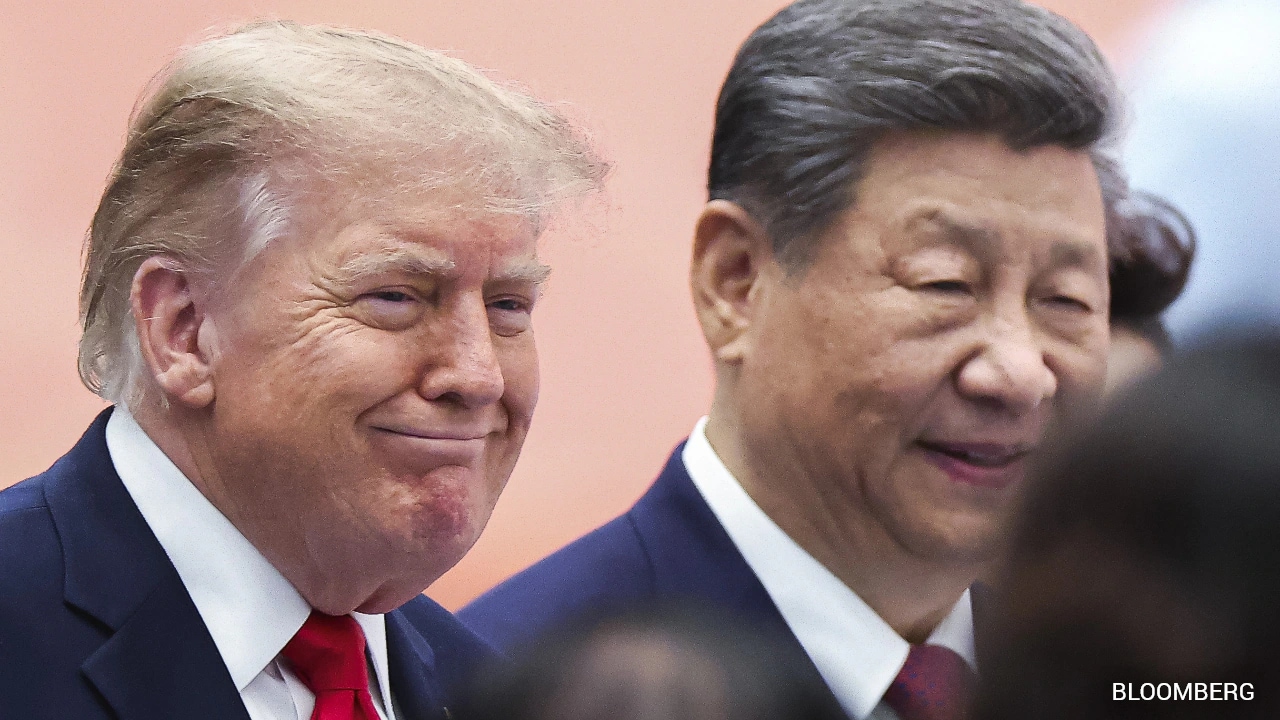
To understand why Chinese President Xi Jinping has spent recent diplomatic cycles leaning heavily on Donald Trump in an effort to contain the escalating chip war with the United States, you have to strip away the sterile language of trade tariffs and export controls. You have to look at what happens when a superpower realizes its entire twenty-first-century ambition runs on silicon it cannot yet print on its own.
The Chokepoint Nobody Sees
Imagine, as a hypothetical illustration of what plays out daily inside China’s premier artificial intelligence labs, a lead systems architect named Chen in Hangzhou. Two years ago, Chen’s team was racing to train a next-generation foundation model capable of automating logistics across half of Asia. His budget was effectively bottomless. State-backed venture funds were pouring billions of yuan into his servers.
Then the rules changed.
First came the restrictions on advanced logic chips—processors like Nvidia’s A100 and H100 architectures, alongside the stripped-down export variants tailored specifically for the Chinese market. Next came the tightening vise on high-bandwidth memory, the specialized stacked memory dies without which an AI accelerator starves for data like a Formula 1 engine running on a clogged fuel line. Finally, the blockade reached the factory floor itself, cutting off access to extreme ultraviolet lithography machines built by the Dutch giant ASML and precision deposition tools engineered in California.
Chen still had billions of yuan. He still had thousands of brilliant programmers. What he did not have was a legal pathway to buy the machinery required to etch circuits smaller than seven nanometers at commercially viable yields.
To make sense of why this hurts so deeply, think of advanced chipmaking not as manufacturing, but as baking a soufflé inside an earthquake. A single speck of dust ruins the wafer. A slight drop in yield turns a profitable fabrication plant into a furnace burning tens of millions of dollars a week. China’s domestic champion, SMIC, proved it could produce seven-nanometer chips using older deep ultraviolet equipment through painstaking multi-patterning techniques—essentially running the same wafer through the lithography machine four times instead of once. It was an extraordinary feat of engineering grit. It was also brutally expensive, slow, and prone to defects.
You cannot scale an AI superpower on brute-force workarounds forever.
Why Xi Turned Toward Mar-a-Lago and the White House
When diplomacy runs out of conventional fuel, leaders look for unconventional leverage. That is the real story behind Xi Jinping’s calculated outreach to Donald Trump.
For years, Beijing’s playbook relied on retaliatory threats—restricting exports of raw gallium and germanium, launching antitrust probes into American chipmakers, and warning Washington that decoupling would trigger global inflation. Those moves stung, certainly, yet they failed to stop the tightening noose around Chinese tech firms. Every new update to the Bureau of Industry and Security’s entity list closed another loophole. Shell companies in Singapore and Malaysia were flagged. Third-party cloud rentals came under scrutiny.
So Xi shifted tactics. Rather than treating the semiconductor dispute purely as an ideological battle over national security—a framing where Washington’s hawks hold unassailable bipartisan consensus—Beijing began reframing semiconductors as a transactional bargaining chip tailored specifically for Trump’s deal-making instincts.
Consider what happens next when a leader who views alliances through the lens of trade deficits enters the room with a leader desperate to preserve his technological oxygen.
Beijing’s calculation rests on a straightforward premise: Trump dislikes multilateral consensus when it constrains American economic leverage, and he measures diplomatic success in tangible wins—agricultural purchases, manufacturing pledges, fentanyl enforcement cooperation, and broad tariff settlements. By signaling willingness to negotiate massive bilateral trade packages while simultaneously reminding Washington of China’s stranglehold over critical mineral refining and legacy chip supply chains, Xi is attempting to pull semiconductors out of the national security bunker and onto the negotiating table.
I will be honest: watching this play out from the sidelines is deeply unsettling. None of us truly know whether a transactional bargain over silicon is even structurally possible anymore. Too many career defense officials in Washington view advanced AI compute as the modern equivalent of enriched uranium. Once a technology gets categorized alongside nuclear proliferation, you do not easily trade it away for soybean contracts and tariff pauses.
The Invisible Stakes of Legacy Silicon
Yet while headlines obsess over three-nanometer AI processors, the quiet leverage Beijing holds lies at the opposite end of the technological spectrum.
Walk through any automotive assembly plant in Michigan, any medical device factory in Bavaria, or any power grid substation in Texas, and you will find thousands of mature-node chips—processors built on twenty-eight-nanometer or forty-five-nanometer architectures. They control your car’s anti-lock brakes. They regulate voltage in household appliances. They keep hospital ventilators cycling smoothly through the night.
Over the past five years, while Western subsidies chased cutting-edge logic fabs, China poured staggering sums of state capital into building dozens of mature-node foundries. By flooding the market with inexpensive legacy wafers, Beijing quietly positioned itself to become the indispensable supplier of the unglamorous silicon that keeps everyday industrial civilization running.
If Washington squeezes China’s access to the future of computing, Beijing holds a finger over the power switch of the present.
This mutual vulnerability creates a strange, tense equilibrium. American chipmakers like Qualcomm, Intel, and Nvidia still derive a massive share of their annual revenue from Chinese customers. When export controls tighten, those companies lose billions in quarterly sales—money that would otherwise fund the very research and development budgets needed to keep America ahead in the next generation of chip design. Executives in Silicon Valley know this. They whisper it in private briefings on Capitol Hill, caught between patriotic compliance and commercial self-preservation.
Xi Jinping knows they whisper it, too.
The Human Toll Inside the Supply Chain
Strip away the flags and the press briefings, and you find thousands of ordinary careers caught in the gears.
Last autumn, I spoke with a veteran materials engineer—let us call him David, though that is not his real name—who spent twenty years split between fab floors in Oregon and joint ventures outside Shanghai. His job was troubleshooting chemical slurries used to polish silicon wafers to atomic flatness. For two decades, his work was celebrated as the pinnacle of globalized cooperation: American intellectual property, Japanese chemical purity, Taiwanese manufacturing discipline, and Chinese scale working in seamless rhythm—no, not seamless, nothing in chipmaking is ever effortless, let us call it a hard-won choreography.
Today, David cannot even send an email containing basic process parameters to former colleagues in China without clearing it through three layers of corporate export-compliance lawyers. Friends who stood at his wedding now sit on opposite sides of an invisible regulatory wall, barred from discussing physics that used to be shared over late-night noodles.
"We spent thirty years building a single brain across the Pacific," David told me over coffee, staring down at his mug. "Now we are taking a hacksaw down the corpus callosum and pretending both halves will still know how to walk."
That anatomical metaphor stays with me because it captures the true cost of this conflict. Innovation in semiconductors has never been a solo sprint. It is a relay race where the baton passes across borders every few hours—a circuit designed in California, simulated with software from Oregon, etched in Taiwan using Dutch optics and Japanese photoresists, packaged in Malaysia, and assembled into smartphones in Guangdong.
Breaking that chain does not merely slow down China. It raises the cost of computing for every developer, researcher, and consumer on earth.
Can a Deal Actually Hold?
So when Xi Jinping reaches out to Trump, seeking an off-ramp to contain the chip war before it hardens into permanent technological partition, what is actually on the table?
First, Beijing wants predictability. Chinese tech giants can adapt to high tariffs or strict licensing fees; what paralyzes them is sudden, retroactive rule changes that strand half-built data centers overnight. A moratorium on new Entity List additions or a clear, stable threshold for allowable compute exports would give domestic firms breathing room to mature their own supply chains.
Second, Xi is banking on Trump’s skepticism toward subsidizing foreign competitors. Trump has repeatedly criticized the structure of the CHIPS and Science Act, arguing that tariffs, rather than federal grants to overseas foundry giants, should drive domestic manufacturing. Beijing sees an opening in that friction. If Washington’s domestic industrial policy wavers, or if allies in Europe, Japan, and South Korea grow weary of sacrificing their own equipment makers’ revenues to enforce American export bans, the united front surrounding China begins to fray.
Third, there is the unspoken reality of artificial intelligence safety and global stability. Even hawks in Washington acknowledge that total technological isolation carries severe risks. When a rival superpower is locked out of transparent global standards and forced to develop critical infrastructure entirely in the dark, miscalculation becomes far more likely.
Still, skepticism runs deep. History offers very few examples of a dominant power willingly handing its primary rival the tools needed to surpass it—especially when both sides believe the winner of the artificial intelligence race will dictate the economic and military order of the next century. Think back to the semiconductor trade wars between the United States and Japan in the 1980s. Back then, Washington forced Tokyo into strict market-share agreements and tariff penalties until Japan’s memory-chip dominance receded. And Japan was a treaty ally.
China is not an ally. It is a peer competitor with four times the population of the United States and an explicit state mandate to achieve complete technological self-reliance.
What Comes Down to the Wire
Stand outside a semiconductor fab at shift change, just as dusk settles over the industrial parks of Hsinchu or Austin or Wuxi, and you see thousands of workers streaming out of spotless white buildings in ordinary jeans and windbreakers. They look tired. They check their phones, grab street food, and head home to their families.
None of them look like soldiers fighting a cold war. Yet the microscopic patterns they spent the last twelve hours printing onto fragile discs of purified sand are the exact currency over which two nuclear superpowers are quietly bargaining behind closed doors.
Xi Jinping’s outreach to Donald Trump is neither a surrender nor a routine diplomatic courtesy. It is a recognition that time, physics, and lithography wait for no five-year plan. Beijing needs a pause in the storm to bridge the widening chasm between its domestic chip capabilities and the computational demands of the AI era. Trump, ever alert to the allure of a historic bargain that bends global trade toward Washington, holds the leverage to grant that pause—or tighten the vise until something snaps.
Inside those quiet cleanrooms, the air filters keep cycling every six seconds, sweeping away every stray particle of dust, waiting to see whether the hands guiding the world’s most delicate industry will choose to build a bridge or drop the hammer.