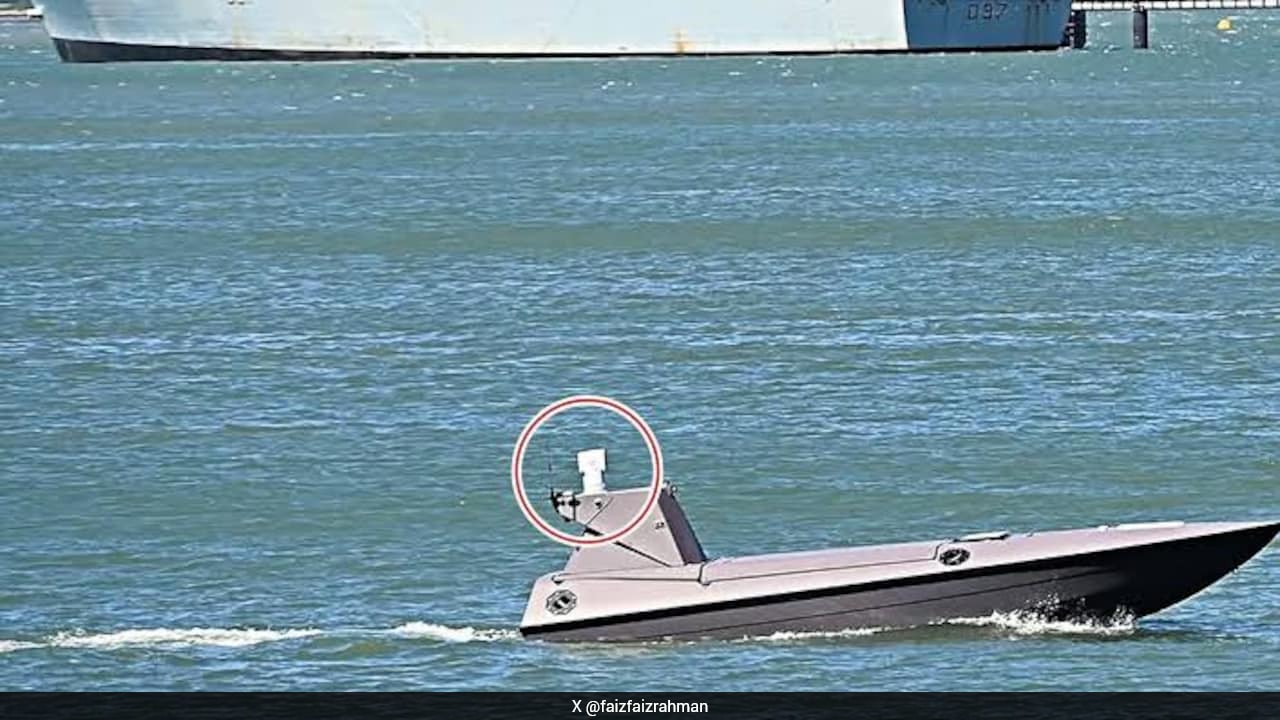
The headlines are a masterclass in comforting delusions.
Every time a military contractor or a defense ministry issues a breathless press release swearing on a stack of procurement contracts that no sensitive telemetry made its way back to Beijing, the entire security apparatus lets out a collective sigh of relief. The narrative is as predictable as it is lazy. We are told that the real danger lies in leaky data pipelines, malicious firmware updates hidden inside off-the-shelf brushless motors, and rogue Bluetooth beacons phoning home to servers in Shenzhen.
It is a comforting panic. It implies that national security is an IT problem. It suggests that if we just scrub our supply chains clean of foreign microchips, tighten our API endpoints, and audit our source code with paranoid precision, our hardware will remain pure.
I have spent the last decade watching defense contractors and critical infrastructure operators throw billions of dollars at perimeter defense while the entire foundation rots from underneath them. I have seen procurement officers reject superior commercial drone technology because of a sticker on a battery pack, only to approve proprietary, thrice-baked domestic alternatives that cost ten times as much, underperform by every measurable metric, and still rely on raw materials sourced from the exact same geopolitical rivals they are meant to deter.
The panic over data leakage misses the point entirely. The hardware already won.
The Hardware Monopoly We Pretend Does Not Exist
Let us define terms. When the UK Defence Ministry or any Western military agency launches an investigation into foreign components in unmanned aerial vehicles, they are hunting ghosts. They look for backdoors, hidden transmitters, and covert data exfiltration routines.
They are looking for espionage when they should be looking at economics.
The modern drone is not a weapon system with a camera attached. It is a flying commodity package of consumer electronics. Flight controllers, inertial measurement units, optical flow sensors, brushless speed controllers, and lithium-polymer battery chemistry are not manufactured in small, secure defense-industrial workshops in the Home Counties or the Midwest. They are rolled out of automated mega-factories in East Asia where economies of scale have achieved a level of dominance that cannot be legislated away by an emergency procurement memo.
When you buy a commercial off-the-shelf drone—or even many components designated as dual-use or custom-spec—you are buying into an industrial ecosystem that is fundamentally integrated. Trying to disentangle that supply chain after the fact is like trying to un-bake a cake because you noticed a speck of foreign spice in the flour.
I’ve watched multi-agency task forces spend six months dissecting a quadcopter circuit board down to the silicon layer, finding zero malicious code, and declaring the platform safe. That discovery is treated as a victory. It is actually an indictment.
The danger was never that the drone was sending coordinates to a mainframe in Asia. The danger is that if tomorrow morning geopolitical tensions escalate to the point of total economic decoupling, Western militaries cannot build a replacement for that drone at scale within five years.
The Lazy Consensus Of The Airgap Illusion
The lazy consensus in modern defense circles relies on a single, comforting myth: the airgap.
The assumption goes that if a device does not connect to the public internet, or if its data streams are routed through a localized, encrypted ground station, it is sovereign. It is secure. It belongs to us.
This is a child's understanding of engineering dependencies.
Imagine a scenario where a military unit fields a fleet of domestically assembled reconnaissance drones. The software is written by cleared contractors in a secure facility. The frame is milled from carbon fiber sourced from an allied nation. Every byte of telemetry stays within a closed-loop tactical network. On paper, it is an impenetrable fortress of operational security.
Now look at the supply chain of the components that went into building that fortress. The silicon wafers came from foundries dependent on specialized gases and rare earth processing controlled by the very adversary you are guarding against. The precision machinery that built the inertial sensors was calibrated using software protocols with deep global interdependencies.
Security is not just about where the data goes when the drone is in flight. Security is about who holds the cards when the factory floor needs to retool during a prolonged conflict.
By hyper-focusing on whether a military drone leaked a GPS waypoint during a routine patrol over Salisbury Plain, officials create a theater of accountability. They get to hold hearings, issue reassuring statements, and pretend that the problem is under control because no packets were dropped across an ocean. Meanwhile, the strategic vulnerability—our total dependency on foreign manufacturing capacity for the physical building blocks of modern conflict—grows wider every single day.
Why Domestic Replacement Fails Every Time
Whenever this debate flares up, the knee-jerk prescription from defense bureaucrats is domestic reshoring. We are told to spin up local manufacturing hubs, subsidize domestic foundries, and legislate a pure-play sovereign supply chain.
It sounds wonderful in a policy brief. In reality, it is a recipe for operational obsolescence.
Consumer electronics and commercial drone technology advance at a blistering pace. Iteration cycles happen in months. Defense procurement cycles happen in decades. When you force a military to rely exclusively on a protected, domestic-only manufacturing base for rapidly evolving hardware, you guarantee that your troops will be flying obsolete equipment against an adversary equipped with cheap, mass-produced, cutting-edge consumer tech.
During recent conflicts, we have seen commercial off-the-shelf platforms modified for tactical use outperform bespoke military hardware costing a hundred times as much. Why? Because market competition forces ruthless efficiency, rapid iteration, and relentless cost reduction. State-subsidized defense monopolies do not produce better gear; they produce better invoices.
When the UK Defence Ministry insists that no sensitive data went to China, they are answering a question nobody with a real understanding of hardware dependencies is actually asking. They are solving for yesterday's espionage model while completely ignoring tomorrow's attrition model.
In a modern war of attrition, the side that wins is not the side with the most secure encrypted logs. It is the side that can lose a thousand drones on Tuesday and manufacture two thousand more by Thursday.
If your domestic supply chain cannot sustain that cadence without importing raw modules, refined rare earths, and specialized components from the global East, your data security is nothing more than a neat little trick to help you feel safe while you lose the war of logistics.
The Uncomfortable Truth About Sovereign Tech
We need to stop treating national security as a data hygiene exercise.
The next time a headline breaks about foreign hardware found in military gear, ignore the politicians talking about data exfiltration. Look at the balance sheet of manufacturing capacity. Look at where the raw materials are refined. Look at the lead times required to scale production from ten units to ten thousand.
You cannot firewall your way out of a manufacturing deficit. You cannot patch a supply chain vulnerability with a firmware update.
We are obsessed with locking the back door while the entire front wall of the industrial base has already been hollowed out by decades of outsourcing, short-term cost optimization, and strategic complacency.
The drone didn't need to send data to China. We already handed them the keys to the factory.