The air in Baja California does not simply get hot; it thickens. It presses down on your chest hours before anything moves in the sky, carrying that strange, metallic tang of an approaching atmospheric collision. Mateo knew that smell. He had lived through enough of them in his sixty years running a small fishing cooperative near Loreto to recognize the punctuation mark of the ocean turning violently against the land.
Only, Mateo and his neighbors were supposed to be dealing with the aftermath, not the sequel.
When Hurricane Polo formed off the southwestern coast of Mexico, it followed a familiar, terrifying script. Warm Pacific waters fed its core, spinning it into a tight, buzzing engine of destruction. Meteorology has names for these things—sustained winds, barometric pressure drops, category ratings—but on the ground, the nomenclature is reduced to a single question: Will the roof hold?
Polo made its initial landfall with a raw, predatory roar, chewing up coastal infrastructure, flattening makeshift shelters, and dumping enough water in twenty-four hours to drown a desert. Families packed what they could carry into the beds of battered pickup trucks, retreating toward the foothills where the scrubby brush offered little protection against flying debris, but at least kept them above the surging tides.
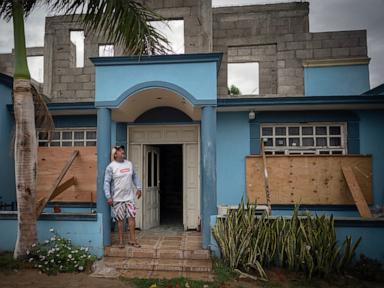
Then came the eerie lull. The eye passed. People emerged into the blinding sun to survey the wreckage. Tin roofs were peeled back like sardine cans. Power lines lay tangled in the dirt like dead serpents. Mud choked the streets, turning familiar neighborhoods into gray, unrecognizable swamps.
That is when the radar screens in Mexico City lit up again.
Hurricanes are not neat, orderly creatures that arrive, do their damage, and politely dissipate into the open ocean. Sometimes, caught in steering currents and fueled by lingering marine heat anomalies, they bounce. They linger. They loop back for a second helping.
Polo was stubborn. After brushing the coast and losing a fraction of its punch over the rugged terrain of the Baja Peninsula, it wobbled back out over the relatively warm waters of the Gulf of California. For a tropical system, that body of water acts like a recharger plugged straight into an electrical socket. The storm gathered its skirts, re-centered its eye, and set its sights on a second landfall further north.
Consider the sheer psychological weight of that moment. Fatigue is a physical hazard during natural disasters. When you have spent thirty-six hours hauling sandbags, bailing water out of a living room, and comforting crying children in the dark, your reserves are entirely gone. The human body is simply not built to sustain high-alert adrenaline for days on end.
Yet, as Polo reorganized over the water, emergency broadcast systems began flashing warnings once more. Evacuation orders that had just been lifted were hastily reinstated. Relief supplies that had barely begun trickling into the worst-hit zones had to be rerouted or secured against the incoming wind.
This is the hidden cost of modern extreme weather events. We tally the damage in dollars, insured losses, and damaged square footage, but those metrics miss the erosion of human resilience. Every double-strike storm chips away at the baseline stability of a region. When a community is hit twice in rapid succession, the recovery timeline does not just double; it multiplies exponentially because the second blow arrives while everyone is still flat on their back from the first.
Meteorologists tracking Polo noted an unusual confluence of atmospheric steering currents that allowed the storm to maintain its structural integrity longer than typical models predicted. It was a stark reminder of how much we still do not fully grasp about the micro-physics of coastal storms in a warming world. Water temperatures off the coast of Mexico have been trending upward for years, acting as an invisible accelerator for systems that historically would have fizzled out over cooler currents.
Back in Loreto, Mateo did not care about steering currents or sea surface temperature anomalies. He cared about the water line creeping up the base of his neighbor’s concrete-block home. He cared about whether the diesel generator had enough fuel to run the water pump for another twelve hours.
When Polo’s second landfall hit, it lacked the initial element of surprise, but it made up for it with sheer, grinding persistence. It rained for three straight days. Rivers that had been dry arroyos for a decade transformed into raging brown torrents, cutting off towns and isolating entire communities from medical aid. Helicopters grounded by high winds sat idling on tarmac strips, their rotors drooping while people waiting for insulin or antibiotics looked up at empty gray skies.
There is a profound vulnerability in watching the horizon turn the color of bruised iron. You realize, with startling clarity, how thin the veneer of our daily routines actually is. We build our lives out of drywall, glass, and asphalt, pretending permanence is guaranteed, while the atmosphere operates on a scale of raw, indifferent power that can erase human endeavor in an afternoon.
As the winds finally began to die down and the stubborn clouds broke into jagged strips of blue, the true scale of Polo's double-punch became visible. Roads were washed out in chunks the size of delivery trucks. Fishing boats sat high and dry a quarter-mile inland, deposited there by storm surges that defied easy mapping.
The cleanup would take months, maybe years. For some, the losses were permanent—not just property, but the quiet, unshakable sense of security that comes from believing your home is safe from the elements.
Yet, down on the muddy waterfront, amidst the wreckage of shattered docks and salt-ruined gear, a line of people had already formed with shovels and buckets. They were not waiting for government forms or official decrees. They were simply clearing the path, one heavy shovelful of silt at a time, staring out at an ocean that looked deceptively calm once more, waiting to see what the next tide would bring.