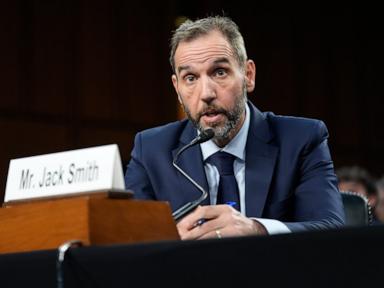
The intersection of criminal prosecution and executive power generates an irreconcilable institutional tension. When former Special Counsel Jack Smith formally informed lawmakers that he stands by the decisions to charge Donald Trump, the statement crystallized a fundamental debate regarding the mechanics of federal oversight, the boundaries of prosecutorial discretion, and the systemic durability of independent legal mandates. Far from a routine bureaucratic defense, this declaration exposes the underlying calculus governing how independent investigators evaluate evidence, manage temporal constraints, and navigate the volatile terrain of political accountability.
To understand the weight of this declaration, one must deconstruct the architecture of the Special Counsel framework. Established under Code of Federal Regulations Title 28, Section 600, the mechanism is designed to insulate sensitive investigations from perceived conflicts of interest within the Department of Justice. Yet, this insulation creates a paradox. While the Special Counsel operates with operational autonomy, the ultimate enforceability of their findings is bound by Departmental policy, judicial interpretation, and the shifting dynamics of electoral politics. For another look, see: this related article.
The decision to bring federal charges against a former chief executive rests on a distinct economic and legal cost function. Prosecutors weigh the strength of the evidentiary record against the systemic cost of pursuing a trial that intersects with an active political cycle. In this specific case, the investigative record encompassed thousands of pages of documentary evidence, grand jury testimonies, and classified material reviews. The core debate centers not on the existence of these materials, but on the threshold required to justify formal indictments when the target is simultaneously a political candidate.
The Three Pillars of Prosecutorial Risk Assessment
Evaluating the validity of high-stakes charging decisions requires examining three distinct vectors of risk that every independent prosecutor must navigate. These vectors dictate the operational trajectory of any complex federal probe. Similar insight regarding this has been published by NPR.
Evidentiary Integrity and Proof Standards
The primary pillar involves the strict adherence to evidentiary thresholds. Federal prosecutors operate under the principle that an indictment must be supported by admissible evidence capable of securing a conviction beyond a reasonable doubt before a jury. In the investigations overseen by Smith, the charges spanned willful retention of national defense information and obstruction of justice, alongside efforts to overturn the 2020 election results.
The legal architecture governing classified documents relies on the Espionage Act, a statute that demands rigorous proof of intent and mishandling. Critics frequently argue that charging decisions in this domain lack historical precedent, ignoring the unique statutory nature of the documents involved. From a technical standpoint, the evidentiary burden required prosecutors to map every document's chain of custody, access logs, and handling protocols. The decision to stand by these charges reflects an assessment that the evidentiary documentation met statutory criteria, regardless of external political friction.
Temporal Friction and Judicial Calendars
The second vector concerns the velocity of the judicial system relative to the political calendar. Federal prosecutions involving complex white-collar or national security charges routinely span years from initial subpoena issuance to final appellate resolution. When the target of an investigation occupies or seeks high public office, this temporal friction introduces severe operational complications.
Pre-trial motions, immunity determinations, and classified information procedures under the Classified Information Procedures Act create structural delays. These delays are not tactical anomalies; they are baked into the due process architecture of the federal judiciary. The interaction between these procedural safeguards and an immutable electoral timeline creates an acute institutional clash. When a prosecution collides with an election, the timeline itself becomes a variable that alters public perception of the legal outcome, irrespective of the underlying merits of the case.
Institutional Precedent and Systemic Fallout
The third vector evaluates the long-term precedent established by the prosecution. Charging a former head of state creates a profound structural baseline for future administrations. Detractors argue that such actions lower the threshold for political weaponization of the justice system, establishing a tit-for-tat dynamic where successive political factions utilize federal indictments as tools of political competition.
Conversely, proponents of the prosecution argue that failing to enforce federal statutes against high-ranking officials creates an immunity class, violating the foundational principle that no individual stands above the law. This creates a zero-sum dilemma for institutional design. If immunity is granted based on political status, the rule of law is compromised; if prosecution proceeds, the perception of neutrality is challenged. The Special Counsel framework attempts to resolve this tension by delegating the decision to an insulated official, yet the final judgment remains subject to intense public and legislative scrutiny.
The Mechanics of Bureaucratic Review and Internal Checks
Beyond external risk vectors, independent investigations operate under rigorous internal controls designed to prevent arbitrary decision-making. The Department of Justice maintains internal oversight divisions, including the Office of Legal Counsel and specialized review committees, which examine charging documents for consistency with prior precedent.
When an independent counsel drafts an indictment, the document undergoes multiple rounds of internal red-teaming. Prosecutors must anticipate defense motions, constitutional challenges regarding executive privilege, and statutory interpretation disputes. The assertion that the investigative team stands by its charges is rooted in this internal testing process. The legal theories advanced in the indictments were subjected to peer review by career attorneys who specialize in white-collar crime, obstruction, and national security law.
However, internal consensus does not guarantee external judicial validation. Federal judges appointed across different administrations interpret statutes through varying judicial philosophies. The friction observed during the pretrial phases of these cases demonstrated how differing judicial interpretations of statutory breadth can disrupt even the most meticulously prepared charging documents.
The Legislative Oversight Dynamic
The interaction between Jack Smith and lawmakers represents an institutional ritual of accountability. Congressional oversight committees possess constitutional authority to investigate the administration of justice, request investigative files, and summon officials for testimony. However, this oversight exists in constant tension with Department of Justice confidentiality protocols, grand jury secrecy rules, and the separation of powers doctrine.
When lawmakers question a departing Special Counsel, the objective shifts from administrative oversight to historical record-creation. Each political faction seeks to extract soundbites that validate their preexisting narrative regarding the legitimacy of the probes. For the defense of the investigative team, the strategy relies on procedural formality. By emphasizing adherence to internal guidelines, adherence to Department of Justice manuals, and reliance on career prosecutors and grand juries, the testimony reinforces the bureaucratized nature of the decisions.
This dynamic reveals a fundamental limitation of legislative inquiry into prosecutorial actions. Congress can alter statutory frameworks, adjust funding levels, or modify oversight mandates, but it cannot retroactively invalidate prosecutorial discretion once exercised. The testimony ultimately serves as a marker in the historical archive, framing the official defense of actions that will be analyzed by legal scholars, political scientists, and historians for decades.
Structural Failures in the Public Discourse
Public discourse surrounding these prosecutions consistently suffers from conceptual reductionism. Pundits and commentators tend to frame complex legal maneuvers as binary choices between pure political motivation and absolute impartial justice. This dichotomy ignores the routine, highly technical nature of federal investigative work.
Federal prosecutors do not operate in a vacuum of pure theory. They work within strict internal review boards, consult with appellate specialists, and draft speaking indictments designed to withstand rigorous judicial scrutiny. When Smith stated that he stands by his decisions, he was referencing this internal machinery of validation. The indictment documents were not drafted by a single individual acting on impulse; they were vetted through layers of institutional review within the Department of Justice.
Yet, ignoring the structural flaws of the process is equally misleading. The reliance on legacy statutes designed for vastly different eras of espionage and governance creates friction when applied to modern political figures. Furthermore, the absence of clear statutory rules regarding the prosecution of presidential candidates leaves a dangerous vacuum. Future jurisprudence will likely need to address these gray areas through explicit legislative clarification or judicial rulemaking.
Strategic Forecast and Systemic Adaptation
The conclusion of cyclical investigations does not resolve the underlying systemic vulnerabilities exposed by these proceedings. Instead, it inaugurates a period of institutional reassessment. The Department of Justice faces mounting pressure to codify clearer guidelines regarding the timing and propriety of investigating major political figures during active election cycles.
If the current framework remains unchanged, future administrations will operate under the shadow of reciprocal investigations. To mitigate this risk, structural reforms must focus on enhancing the transparency of internal prosecutorial review boards and establishing objective criteria for evaluating high-profile targets. These measures will not eliminate the political controversy inherent in prosecuting leaders, but they can restore procedural predictability.
The definitive path forward requires separating the administrative machinery of justice from electoral timetables. Until statutory adjustments decouple federal investigations from the political calendar, independent prosecutors will continue to find themselves at the center of institutional storms, forced to defend complex legal filings against the unyielding velocity of political reality.