A standard cargo ship sits low in the water, carrying thousands of steel shipping containers packed with everything from microchips to sneakers. Now imagine that ship frozen in place at a deep-water pier. The engines are off. The crew is restless. On shore, two massive corporations—one based in China, the other in Singapore—are locked in a legal chokehold over a complex chain of shipping contracts.
In the old days, this deadlock would mean years of brutal, expensive litigation. Lawyers in expensive suits would hurl motions across a courtroom in London or New York. The ship would rust. The goods would rot or become obsolete. Millions of dollars would vanish into legal fees, and by the end, both companies would hate each other too much to ever do business again.
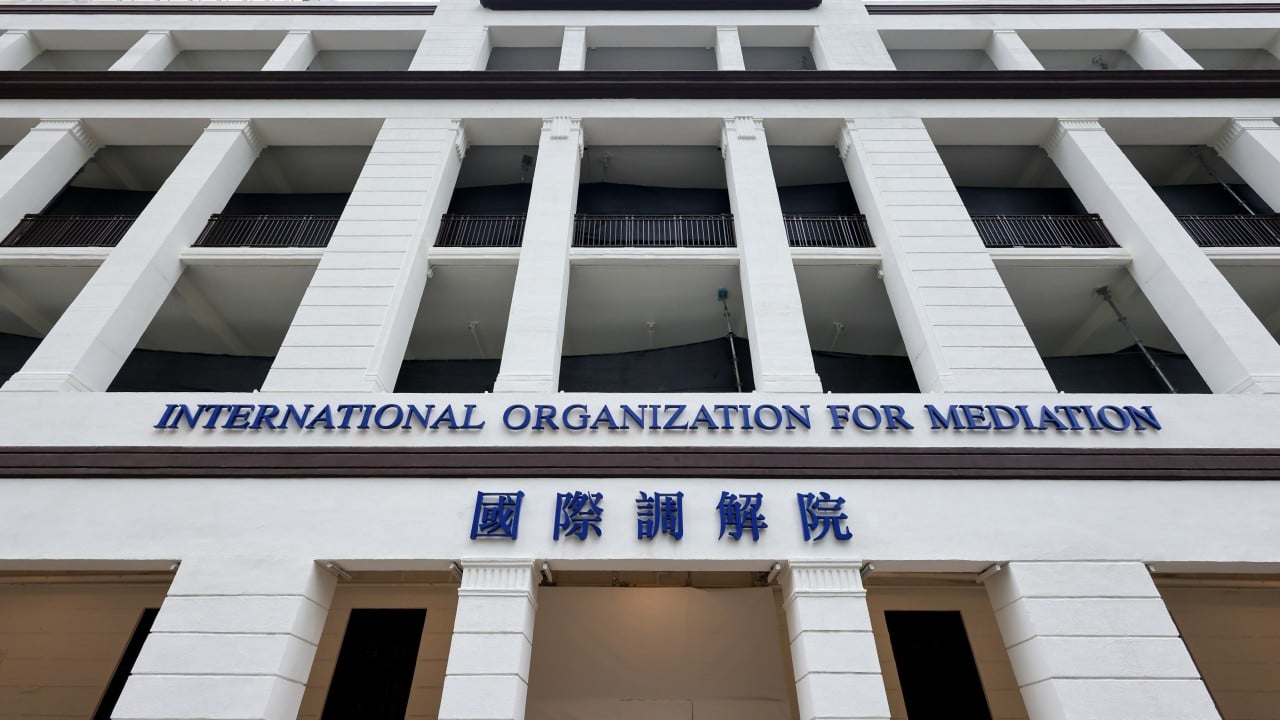
But a few weeks ago, something different happened. The two companies didn't go to court. Instead, they took their multi-party maritime dispute to a historic, brick building in Hong Kong—the Old Wan Chai Police Station. Inside, sitting around a table, they talked. They hammered out a confidential, written settlement agreement that unknotted the entire contractual chain. The ship could move again. The relationship was saved.
This was the first official maritime victory for the International Organization for Mediation, known as IOMed.
It is easy to let your eyes glaze over when reading international trade news. Headlines scream about billion-dollar lawsuits, corporate warfare, and geopolitical posturing. We are conditioned to look at conflict as a sport where someone must be crushed for another to win. But the real story of modern global commerce is happening quietly, without the drama of a judge’s gavel.
I will admit that when I first heard about a new intergovernmental mediation body setting up its headquarters in Hong Kong, I was skeptical. Global diplomacy feels fractured right now. Trust is a rare commodity. Why would a company from Singapore—a nation that hasn’t even signed onto this specific mediation treaty—trust a newly minted organization to handle its multi-million-dollar headache?
The answer is surprisingly human: because fighting is exhausting.
Litigation and traditional arbitration are built on a framework of escalation. You hire a champion to attack the other side's weakest point. But mediation flips the script. It focuses on what people actually want, not just what their contracts say they are entitled to. It is the legal equivalent of pulling two furious people out of a shouting match and asking them, "What is the actual problem we are trying to solve here?"
Consider the sheer logistics of the settled maritime case. A charter-party dispute rarely involves just two people. It is a domino effect of ship owners, charterers, sub-charerers, and cargo owners. If one link breaks, the whole chain collapses into a mess of cross-claims. To resolve this through traditional courts is like trying to untangle a massive ball of yarn by pulling violently on both ends. You just make the knot tighter.
Teresa Cheng Yeuk-wah, the secretary-general of IOMed, recently spoke about this landmark case. Because of strict confidentiality rules designed to protect the businesses involved, she couldn't share the names or the exact dollar amounts. In a world obsessed with public call-outs and viral corporate drama, there is something deeply refreshing about that silence. It creates a safe harbor where executives can drop their guards, admit their vulnerabilities, and find a compromise without losing face.
This single successful case is a proof of concept. It proved that even if a country hasn't formally joined the treaty, its businesses will still choose the room where nobody fights if they believe the mediator is fair.
The momentum is shifting fast. When IOMed launched last autumn, 37 nations signed up. Now, that number has grown to 46 signatory states, and the number of contracting states has exactly doubled from eight to 16. Representatives from this Hong Kong-based body are traveling to places like Riyadh, Dubai, Algiers, Rabat, and Vienna. They aren't selling aggressive legal strategies. They are selling peace of mind.
But the ambitions of this quiet movement don't stop at the ocean’s edge.
Look at where the world is going. We are no longer just trading grain and steel across oceans. We are trading digital assets, managing complex commodity markets, and launching commercial satellites into orbit. Think about what happens when two private corporations from different sides of the globe have a dispute over a satellite collision or a shared piece of space infrastructure. Who has jurisdiction? Which country's court gets to decide?
The old legal frameworks are entirely unsuited for the speed and scale of these emerging sectors. If you think a maritime lawsuit takes a long time, imagine trying to litigate the ownership of data passing through a satellite network.
This is exactly why the organizers behind this mediation movement are already studying dispute resolution mechanisms for the space economy. They are preparing to set up dedicated committees to handle conflicts in areas that didn't even exist a generation ago. They are building the rules for the future while the rest of the world is still arguing over the past.
Hong Kong is uniquely positioned for this shift. By combining its historic common law framework with a new, flexible system that integrates mediation, arbitration, and litigation, the city is trying to create a one-stop shop for corporate disagreements. If you want to fight it out in a commercial court, you can. But you can also choose a "mediation-first" approach, or bring a mediator into the room halfway through an arbitration proceeding if you realize that fighting is costing you more than you could ever win.
It is easy to get cynical about international institutions. Many of them feel like relics of a simpler era, paralyzed by bureaucracy and unable to adapt to a changing world. But watching a new framework grow from an idea into an operational entity that actually resolves real-world friction offers a glimmer of genuine optimism.
We will always have conflicts. Human beings, and the massive corporations they build, are driven by competing interests, pride, and misunderstandings. The goal shouldn't be a world where disagreements never happen. That is impossible. The goal should be building better tables to sit around when those disagreements inevitably arrive.
Somewhere right now, another cargo ship is crossing an ocean, its hull cutting through the dark water, carrying the literal pieces of our global economy. The people who own the ship and the people who bought the cargo might see things differently tomorrow. But they now have a quiet room waiting for them, a historic building where the goal isn't to destroy the opposition, but to simply keep the ship moving.